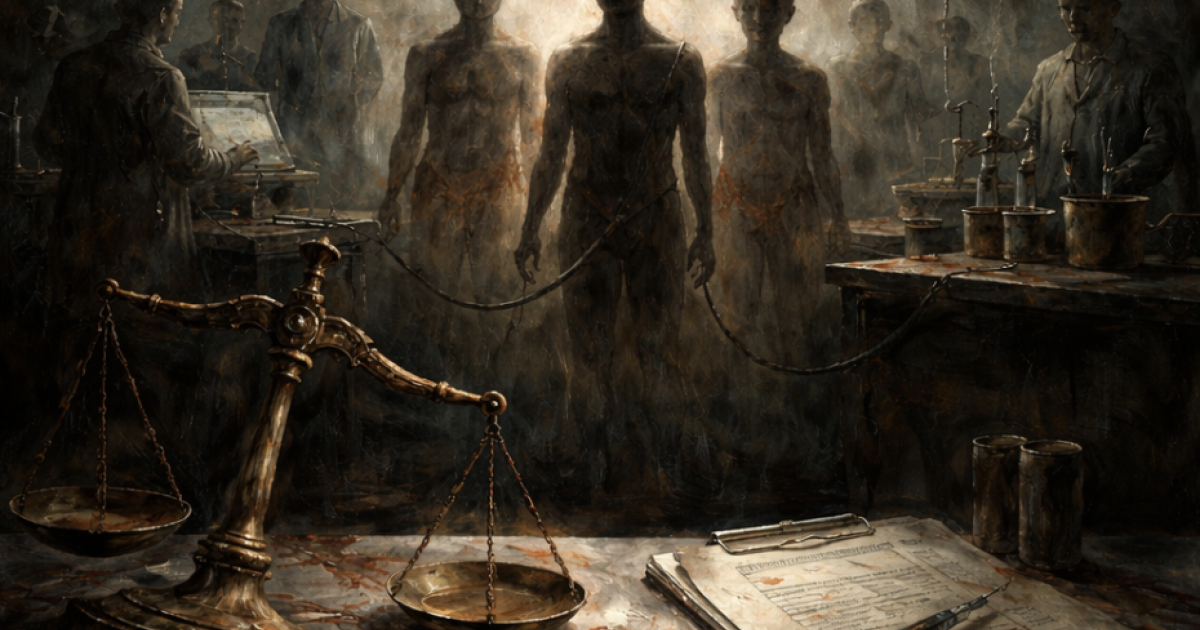
The Experiment: An ‘ethically unjustified’ medical study
“Free treatment by county health department and government doctors. You may feel well and still have bad blood.”
But what was “bad blood”? It was a nonmedical term used at the time to refer to a variety of ailments such as anemia and fatigue.
What the PHS really wanted to study was the history and spread of syphilis — a contagious venereal disease — in Black males and how the disease might differ in white patients. But the men of Macon County weren’t told that.
Participants were promised free medical care — which most had never been able to afford before — as well as rides to and from the clinics, free meals on exam days and a promise that their families would receive money to pay for their burials when the time came.
The original plan was to study the disease for several months and then follow up with treatment. But when funding for the experiment dried up not long after it began, the treatment phase was quietly dropped. Participants were given placebos — fake medicine aimed at making patients feel like they were receiving treatment — but no actual treatment.
When some of the participants enrolled in the Army after the start of World War II and were found to be infected with syphilis, PHS researchers stepped in to prevent military doctors from treating them.
Credit: National Archives
Credit: National Archives
In 1947, penicillin became the standard treatment for syphilis in the U.S. Again, researchers from the PHS convinced local doctors in Macon County to not treat the participants with the new drug.
It wasn’t until the 1950s that doctors reading published data of the study began raising ethical questions. In 1966, a venereal disease investigator raised concerns with the Communicable Disease Center, now known as thee Centers for Disease Control and Prevention — which, by that time, controlled the experiment.
Getting an unsatisfactory response from the CDC, the investigator took the story to a newspaper reporter.
The Washington Star broke the story on July 25, 1972, and it appeared on the front page of The New York Times the next day.
The media coverage resulted in congressional hearings. The CDC appointed an advisory panel to review the study. The panel determined the study was “ethically unjustified.” The CDC officially halted the study on Nov. 16, 1972.
The next spring, the Department of Health, Education and Welfare ordered that all necessary medical care be provided to survivors of the study. Two years later, that was expanded to wives, widows and children of study participants.
By the numbers
The study included 600 African American men who were told they had “bad blood.”
By 1972, 28 of the men had died from syphilis. 100 of the men had died from complications resulting from their untreated condition. In addition, 40 spouses were infected with syphilis and 19 children were infected with syphilis at birth.
Credit: Charles Apple / The Spokesman-Review
Credit: Charles Apple / The Spokesman-Review
Our Sources
Sources: “Bad Blood: The Scandalous Story of the Tuskegee Experiment” by James H. Jones. Tuskegee University Bioethics Center, Centers for Disease Control and Prevention, National Archives, the Washington Post, Scientific American, History.com, McGill Office for Science and Society.
All photos from the National Archives.
Timeline
Summer 1973: A class action lawsuit is filed on behalf of participants and their families.
1974: The suit is settled out of court, resulting in more than $9 million for study participants.
May 16, 1997: President Bill Clinton issues a formal apology for the study.
January 2004: The last study participant dies. The last widow dies in 2009.
Today: Participants’ children continue to receive medical and health benefits, the CDC says.
Subscribers: Read this story as a full page with graphics in the AJC ePaper
Click or tap to open this page from the Aug. 4, 2022 ePaper
Credit: AJC ePaper
Credit: AJC ePaper