Covid Vaccines: Cardiac Damage by LNPs, mRNA and Spike Protein
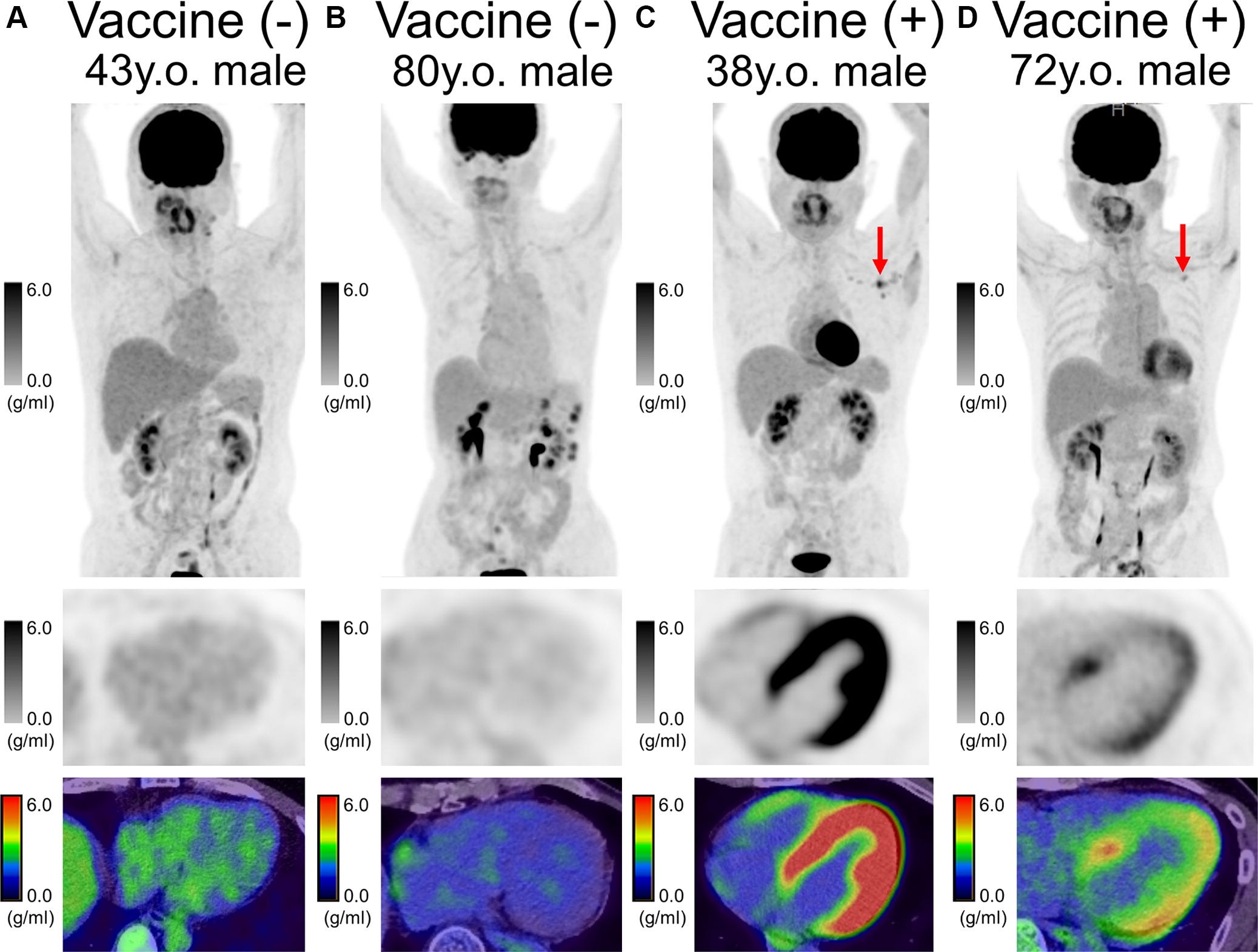
Image Source: Sep.19, 2023 – Nakahara et al
-
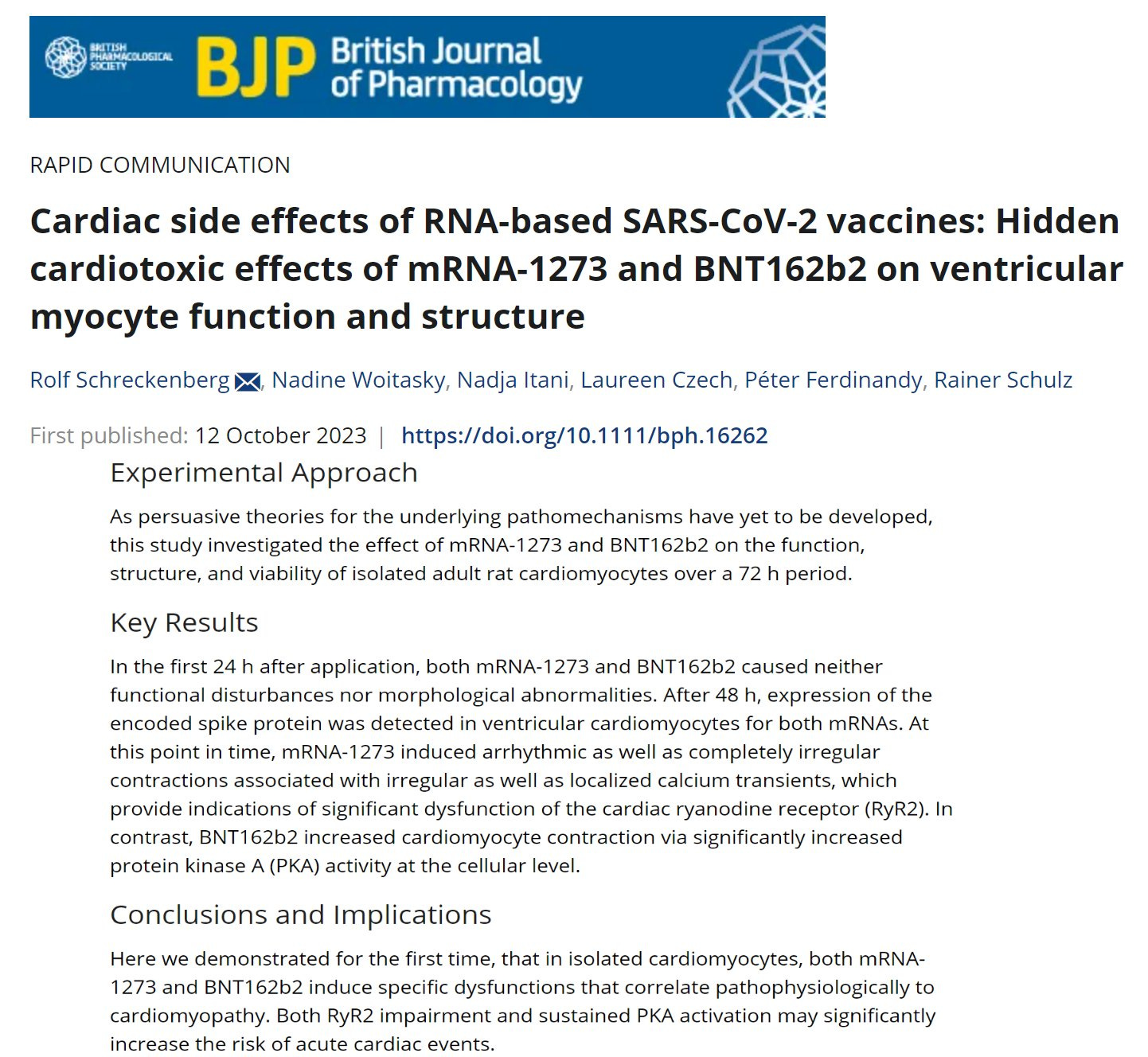
Oct. 12, 2023 – Schreckenberg et al – Cardiac side effects of RNA-based SARS-CoV-2 vaccines: Hidden cardiotoxic effects of mRNA-1273 and BNT162b2 on ventricular myocyte function and structure
- Sep. 19, 2023 – Nakahara et al – Assessment of Myocardial 18F-FDG Uptake at PET/CT in Asymptomatic SARS-CoV-2–vaccinated and Nonvaccinated Patients
- Aug. 17, 2023 – Parry et al – ‘Spikeopathy’: COVID-19 Spike Protein Is Pathogenic, from Both Virus and Vaccine mRNA
- May 5, 2023 – Barmada et al – Cytokinopathy with aberrant cytotoxic lymphocytes and profibrotic myeloid response in SARS-CoV-2 mRNA vaccine–associated myocarditis
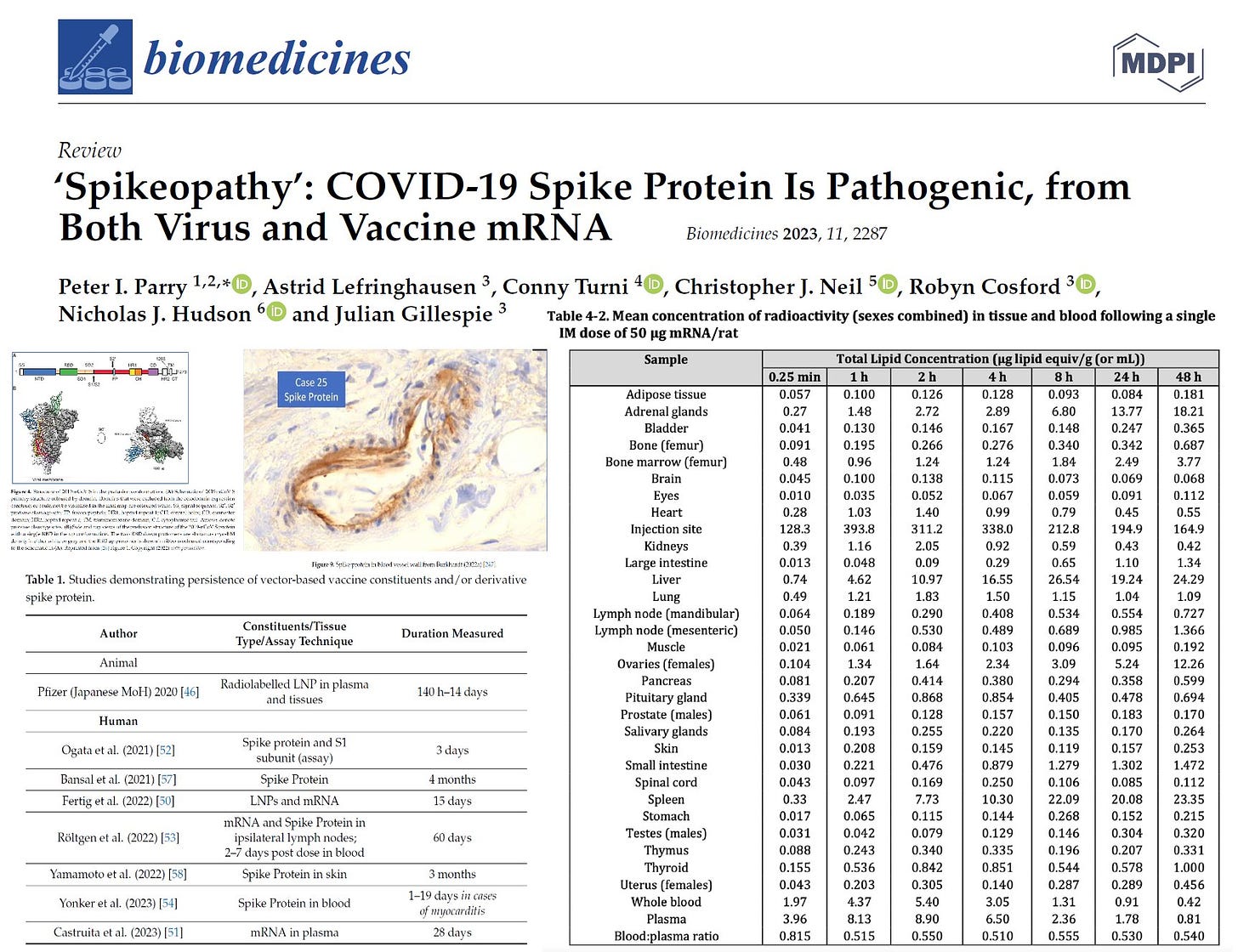
Aug. 17, 2023 – Parry et al – ‘Spikeopathy’: COVID-19 Spike Protein Is Pathogenic, from Both Virus and Vaccine mRNA
- SARS-CoV-2 spike protein is pathogenic, whether from the virus, mRNA or adenovectorDNA vaccines.
- Biodistribution rodent study data show lipid nanoparticles carry mRNA to all organs and cross blood-brain and blood-placenta barriers. Some of these tissues are likely to be impervious to viral infection; therefore, the biohazard is particularly from vaccination.
- Lipid-nanoparticles have inflammatory properties.
- Modification of mRNA with N1-methylpseudouridine for increased stability leads to the production of spike proteins for months. It is uncertain how many cells and from which organs mRNA spike proteins are produced, and therefore, the exact effective dose delivered per vaccine vial is unknown.
- Long-term fate of mRNA within cells is currently unknown.
- mRNA and adenovector DNA vaccines act as ‘synthetic viruses’.
- In the young and healthy, and even in many older individuals with vulnerable comorbidities, the encoding-based COVID-19 vaccines will likely transfect a far more diverse set of tissues than infection by the virus itself.
- Evidence suggests reverse transcription of mRNA into a DNA copy is possible. This further suggests the possibility of intergenerational transmission if germline cells incorporate the DNA copy into the host genome.
- Production of foreign proteins such as spike protein on cell surfaces can induce autoimmune responses and tissue damage. This has profoundly negative implications for any future mRNA-based drug or vaccine.
- Spike protein exerts its pathophysiological effects (‘spikeopathy’) via several mechanisms that lead to inflammation, thrombogenesis, and endotheliitis-related tissue damage and prion-related dysregulation.
- Interaction of the vaccine-encoded spike protein with ACE-2, P53 and BRCA1 suggests a wide range of possible biological interference with oncological potential.
- Adverse event data from official pharmacovigilance databases, an FDA-Pfizer report obtained via FOI, show high rates and multiple organ systems affected: primarily neurological, cardiovascular, and reproductive.
- Pfizer and Moderna mRNA COVID-19 vaccines’ clinical trial data independently interpreted has been peer-review and published to show an unfavourable risk/benefit, especially in the non-elderly. The risks for children clearly outweigh the benefits.
- Repeated COVID-19 vaccine booster doses appear to induce tolerance and may contribute to recurrent COVID-19 infection and ‘long COVID’.
- Treatment modalities for ‘spikeopathy’-related pathology in many organ systems, require urgent research and provision to millions of sufferers of long-term COVID-19 vaccine injuries.
Gene-based technologies:
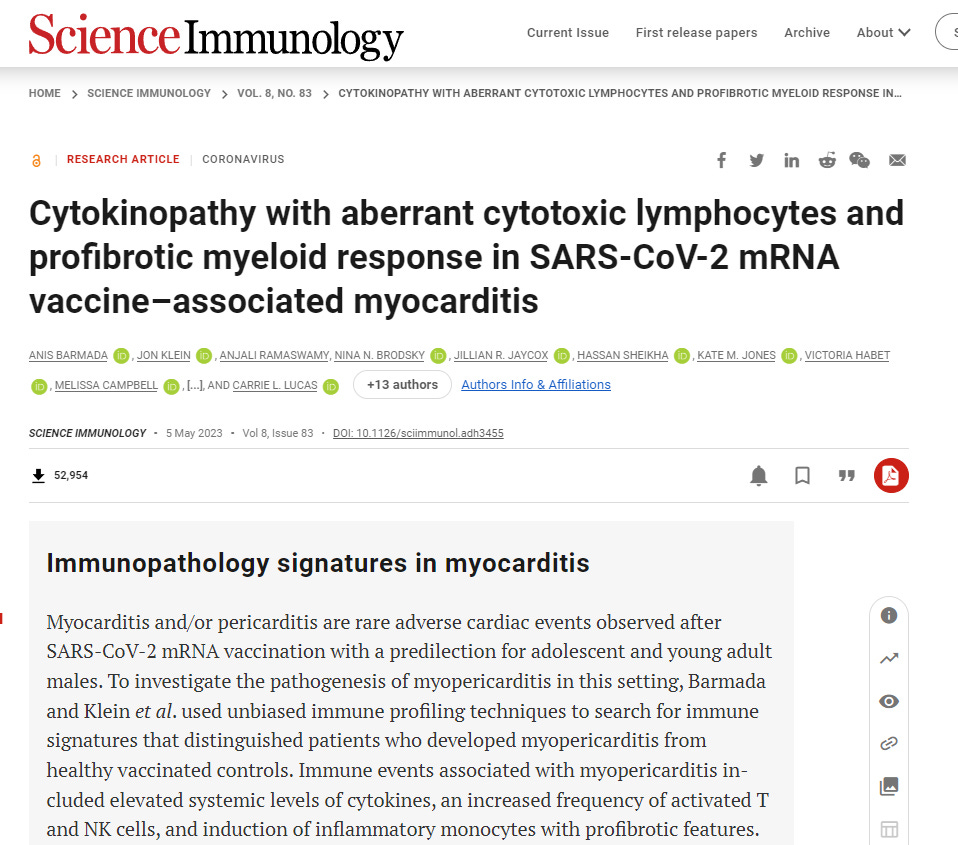
May 5, 2023 – Barmada et al – Cytokinopathy with aberrant cytotoxic lymphocytes and profibrotic myeloid response in SARS-CoV-2 mRNA vaccine–associated myocarditis
These four studies, all published in the last 4 months, add to the growing body of evidence of COVID-19 Vaccine Injury to the heart.
I will summarize the key findings as follows:
- Lipid Nanoparticles (LNPs) with mRNA are delivered throughout the body, including the heart, and they can be found throughout the heart, in cardiac cells as well as non-cardiac cells.
- LNPs increase certain inflammatory cytokines that may contribute to heart inflammation (varies with type of LNP and mRNA inside)
- Novavax nanoparticles are also inflammatory and can cause heart inflammation
- Pfizer & Moderna spike proteins are different, their LNPs are different
- Pfizer & Moderna modified mRNA is long-lasting – found in blood plasma at 28 days, in lymph nodes at 60 days after jab
- Vaccine spike production is unpredictable, small amounts of mRNA in distant locations can produce high quantities of spike protein
- Myocarditis: Can be caused by Pfizer, Moderna, AstraZeneca, J&J, Novavax – the spike protein is the problem that’s causing heart inflammation and all of these COVID-19 vaccines produce spike protein.
- Both Pfizer and Moderna spike proteins impair heart cell function, but in completely different ways, once enough spike protein is made by heart cells
- Both Pfizer and Moderna spike proteins cause cardiomyopathy which is clinically diagnosed as myocarditis or pericarditis
- 3x dose of Pfizer mRNA does not produce effects seen with Moderna, it just worsens Pfizer effects
- On metabolic imaging (FDG PET/CT) the heart inflammation caused by Pfizer and Moderna looks similar and can last up to 6 months
- On metabolic imaging (FDG PET/CT), axillary lymph node inflammation on the side of mRNA injection, can last up to 4 months.
- myocarditis is not an autoimmune process, it is a cytokinopathy
- Pfizer & Moderna vaccination increases systemic inflammatory cytokines, some of which stimulate cytotoxic NK cells and T-cells which infiltrate cardiac tissue and cause inflammation
- Pfizer & Moderna spike proteins ALSO directly impair heart cell function by affecting contractility via sustained stimulation of Protein Kinase A (Pfizer) or messing with calcium channels (Moderna)
- Imaging done months after vaccination shows cardiac abnormalities persist –cardiac fibrosis (scarring), which increases risk of arrhythmia that can lead to sudden cardiac death.
- risk of COVID-19 mRNA Vaccine myocarditis is as high as 1 in 30 or 1 in 35 per one dose of vaccine.
Many questions still remain:
*
Note to readers: Please click the share button above. Follow us on Instagram and Twitter and subscribe to our Telegram Channel. Feel free to repost and share widely Global Research articles.
Dr. William Makis is a Canadian physician with expertise in Radiology, Oncology and Immunology. Governor General’s Medal, University of Toronto Scholar. Author of 100+ peer-reviewed medical publications.