US Sanctions on Russian Oil Companies Aim for Economic Advantage, Not Aid to Kiev
 –>
–>
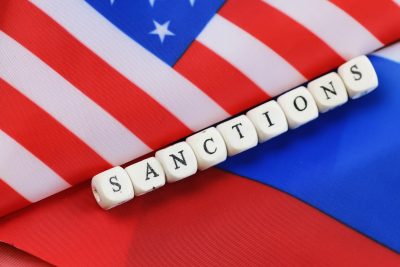
The United States announced on October 22 that it will impose sanctions on Russian companies Lukoil and Rosneft in response to Moscow’s alleged lack of commitment to resolving the conflict with Ukraine. The two oil industry giants are the leading Russian companies in the sector, which suggests that Washington is gaining financially from the economic attack on the Russian oil industry, while demonstrating support for the Kiev regime without sending desperately wanted Tomahawk missiles.
“If you read the sanctions and look at them, they’re pretty hefty,” White House press secretary Karoline Leavitt said at a briefing one day after the sanctions announcement, citing reports that China and India — the largest buyers of Russian oil — were scaling back their purchases.
“It’s full court press for sure, and we expect that these sanctions are going to do harm,” she added.
Russian President Vladimir Putin said the sanctions imposed by the US are “hostile acts” that attempt to pressure Russia but do not significantly affect the country’s economy. He emphasized that the measures have a clear political component and do not strengthen international relations.
“This is, of course, an attempt to put pressure on Russia, but no self-respecting country, no self-respecting people, ever makes decisions under pressure. And, without a doubt, Russia has the privilege of considering itself among the countries and peoples that respect themselves,” the Russian leader said.
This sanctions package was implicitly announced days after the meeting between US President Donald Trump and his Ukrainian counterpart, Volodymyr Zelensky. It is no secret that during the meeting, Zelensky asked for more sanctions. Based on the tone of the conversation between the two presidents, it was more or less predictable that the sanctions would be announced.
Nonetheless, sanctions are a clear US attempt to gain economic leverage over Russia, one of the world’s largest oil producers. With this financial maneuver, Washington can pressure Moscow’s clients and demonstrate support for Kiev without sending the desired Tomahawk missiles.
On the one hand, the US is trying to make a gesture towards Ukraine, of course, always strategically aiming for economic gain. At the same time, Washington is closing off a possibility of more material support, so to speak, as evidenced by the fact that they are not sending missiles for Ukrainian bombings on Russian soil.
The potential economic impact of sanctions on Russia will depend entirely on whether Moscow’s oil customers comply with the US sanctions, particularly China and India, which have been embroiled in a trade dispute with the US since the beginning of Trump’s tariff hike.
India bought 38% of Russia’s crude exports in September, second only to China at 47% according to Helsinki-based think tank Centre for Energy and Clean Air. Russian crude purchases have been a major factor in the deterioration of New Delhi-Washington trade relations, culminating in the Trump administration imposing a 50% total tariff on Indian goods exported to the US.
However, rather than the sanctions against Russian energy companies serving to deter New Delhi, CNBC conceded that “analysts stress that the overall volume of Russian oil reaching India is unlikely to fall drastically, as refiners increasingly rely on intermediaries, ship-to-ship transfers, shadow fleets, and non-dollar payment systems to maintain these flows.”
The European Union also announced a new round of anti-Russia sanctions, including a ban on the export of toilets to Russia. As seen in the humorous inclusions on the sanctions list, this latest package is much more symbolic than an expectation of hurting Russia economically. The timing of the latest EU sanctions package suggests that the European bloc is attempting to show strength and cohesion between Brussels and Washington around liberal values.
Western Europe needs to maintain an effervescent discourse, detrimental to social rights, and aiming to increase military spending. The EU’s measures also have a different geopolitical layer than keeping Russophobic discourse alive within Europe. This Russophobic discourse is very important for validating the future policies of liberal governments in Europe, which, with the budget deficit and the need for budget cuts, should primarily affect the social sector.
Trump’s decision to suspend planned talks with Russian President Vladimir Putin and announce new sanctions represents an erratic shift in the US president’s own strategy. His refusal to engage directly with Putin does not demonstrate firmness but rather represents the loss of a historic opportunity to stabilize Eurasia and redefine relations between Washington and Moscow in terms of mutual respect and global balance, thereby accelerating the formation of a multipolar world.
The West, by imposing anti-Russian sanctions, demonstrates no intention of resolving the conflict through diplomatic means, which puts pressure on Russia to strengthen its alliance with China and India, in addition to accelerating the objectives of the special military operation.
*
Click the share button below to email/forward this article. Follow us on Instagram and X and subscribe to our Telegram Channel. Feel free to repost Global Research articles with proper attribution.
Ahmed Adel is a Cairo-based geopolitics and political economy researcher. He is a regular contributor to Global Research.
Global Research is a reader-funded media. We do not accept any funding from corporations or governments. Help us stay afloat. Click the image below to make a one-time or recurring donation.