No, COVID vaccines don’t contain nanotechnology that can be programmed via 5G wireless networks
CLAIM: A patent held by Moderna proves its COVID mRNA vaccine contains “programmable” nanotechnology that can interact with 5G communications technology.
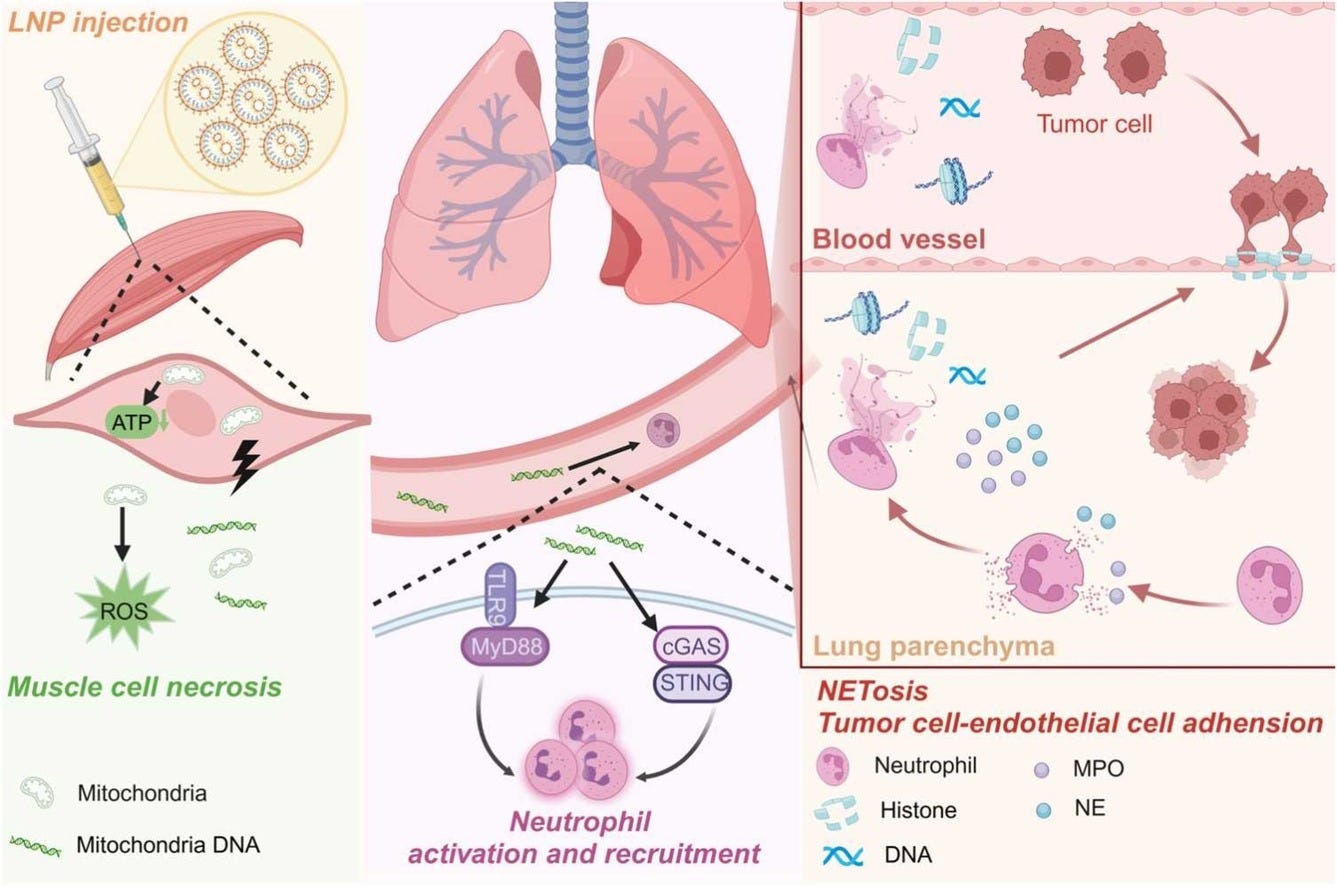
AP’S ASSESSMENT: False. While it’s true mRNA vaccines contain nanoparticles, the term simply refers to the size of the lipids, or fats, used as a coating in the immunization, according to experts. The term “programmable” is also used in the patent to refer to the ability to modify and adjust those nanoparticles depending on the need, they said. It does not mean they can be programmed to interact with wireless networks.
THE FACTS: A video that is being widely shared on social media claims pharmaceutical companies secretly embedded nanotechnology into COVID-19 immunizations that can somehow connect people to 5G.
The clip features a woman discussing one of Moderna’s patents related to its mRNA-based coronavirus vaccine.
The woman notes references in the patent to “lipid nanoparticles” in the vaccine, including ones with a “cationic,” or positive, charge.
“They host positive electro magnetic fields,” she claims over ominous sounding music. “There is no lipid in nature that does that. They’re using the term ‘lipid’ instead of ‘nanotechnology.’”
The woman goes on to point out that the patent describes nanoparticles that are “fully programmable” and claims it suggests the vaccines are “both pre programmable as well as they can receive programs from an external source.”
“So we were right all along,” the text over the video clip reads. “5G is affecting you if you got the VAX, and or the the jabs.”
But the video incorrectly describes the terms as they’re used in the patent, say federal regulators and vaccine experts.
“Nanoparticles” simply refer to the size of lipids, which are the fatty compounds used to coat and protect the mRNA, explained Michael Imperiale, a molecular biologist at the University of Michigan Medical School in Ann Arbor.
The lipids, he explained, allow the mRNA to be infused into a person’s cells, he wrote. Messenger RNA, or mRNA, is the genetic material in the vaccine that teaches the cells how to fight off COVID-19.
It’s also not accurate that “no lipid in nature” has a cationic charge, as the video clip suggests, says E. John Wherry, director of the Institute for Immunology at the University of Pennsylvania Medical School in Philadelphia.
“These charges are very simple, completely normal, chemistry,” he explained in an email. “Just like the sodium (Na+) and chloride (Cl-) in table salt (NaCl) come together because of these positive and negative charges, lipid membranes come together because of these positive or negative charges in their head groups. Nothing at all nefarious about this.”
As to the notion that these naturally-charged, lipid nanoparticles are somehow “programmable” to interact with 5G wireless networks, that’s also a misnomer, says Stanley Perlman, professor of microbiology and immunology at the University of Iowa in Iowa City.
The patent is describing how the lipid nanoparticle coating Moderna has developed can be modified, depending on the objective in question, he said.
“Programmable does not have the same meaning as it might in IT,” Perlman explained.
Wherry and other experts concurred. “There’s no conceivable way that these – again, completely normal – chemical charges have anything to do with control by external signals like 5G,” he wrote.

Spokespersons for the Massachusetts-based Moderna, which has had its patents misrepresented before, didn’t respond to emails seeking comment this week.
But the U.S. Food and Drug Administration, in an emailed statement, dismissed the video as “completely false and misleading.”
The agency declined to comment on the patent’s language, instead pointing to information about the lipid nanoparticle in the Moderna vaccine found in the approval and authorization documents posted on its website.
“There are no microchips in any vaccines, including COVID-19 vaccines,” the FDA wrote. “Vaccine lipid nanoparticles cannot interact with 5G technology.”
___
This is part of AP’s effort to address widely shared misinformation, including work with outside companies and organizations to add factual context to misleading content that is circulating online. Learn more about fact-checking at AP.