Appendicitis After Pfizer COVID-19 mRNA Vaccine. Most Common Serious Adverse Event and It’s Harming Kids. What About Turbo Cancers of the Appendix?

Papers reviewed
*
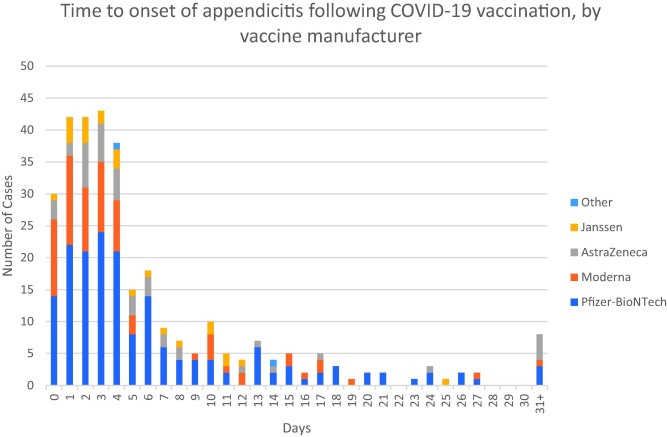
- Appendicitis occurs commonly due to obstruction of appendiceal lumen, can be due to a fecalith or lymphoid hyperplasia.
- 161 (48%) had imaging to support the diagnosis
- Theory: COVID-19 vaccines produce robust Th1 immune responses and there is a hypothesised link between an increased Th1 immune response and a sub-type of appendicitis that is likely to require surgery
- 49% were in age group 18-44, 31% were in 45-64, median age 42 years old.

As of Nov. 16, 2023, WHO VigiAccess Database reports:
- 2555 cases of Appendicitis
- 700 Appendicectomy

Appendix Cancer (Turbo Cancer)

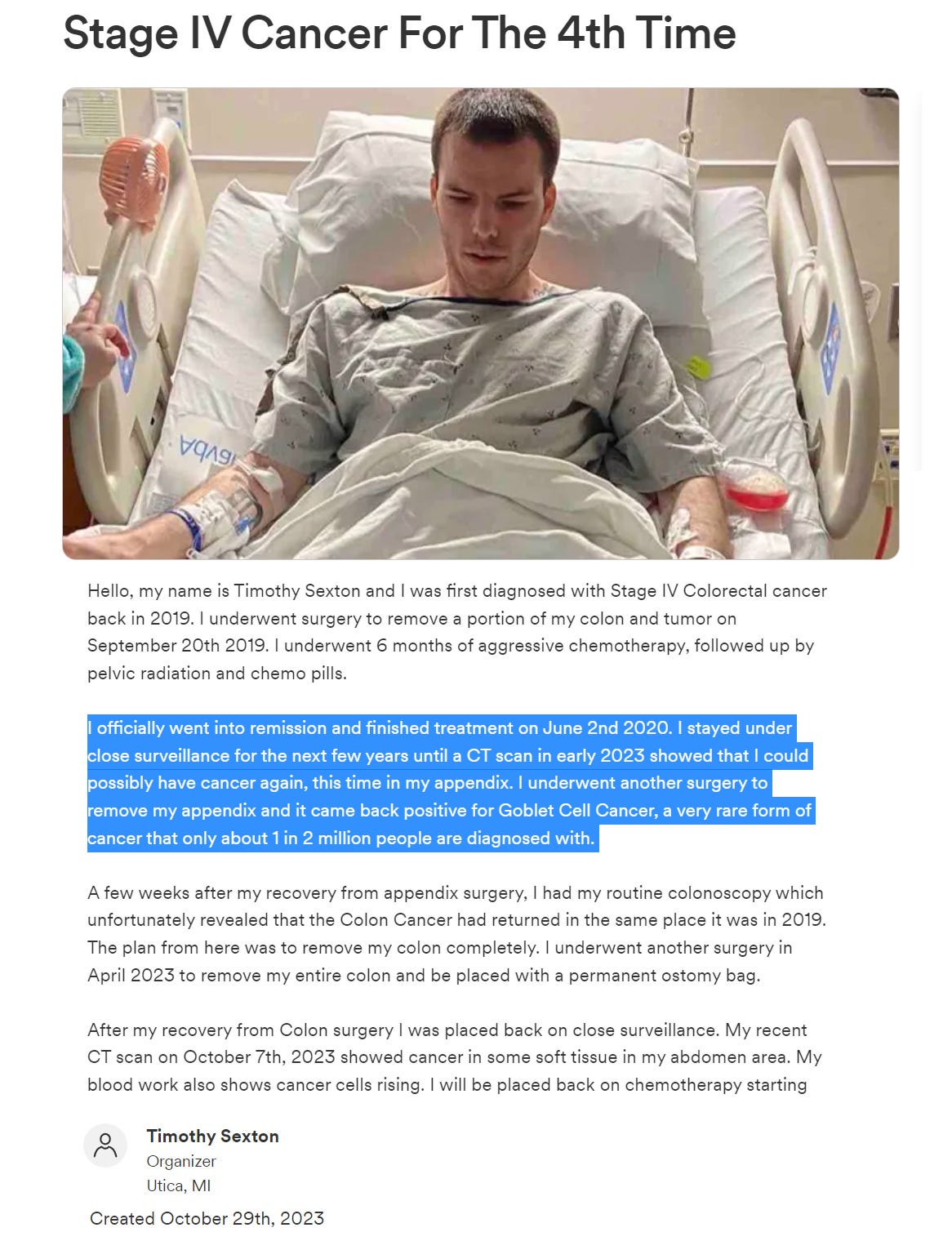
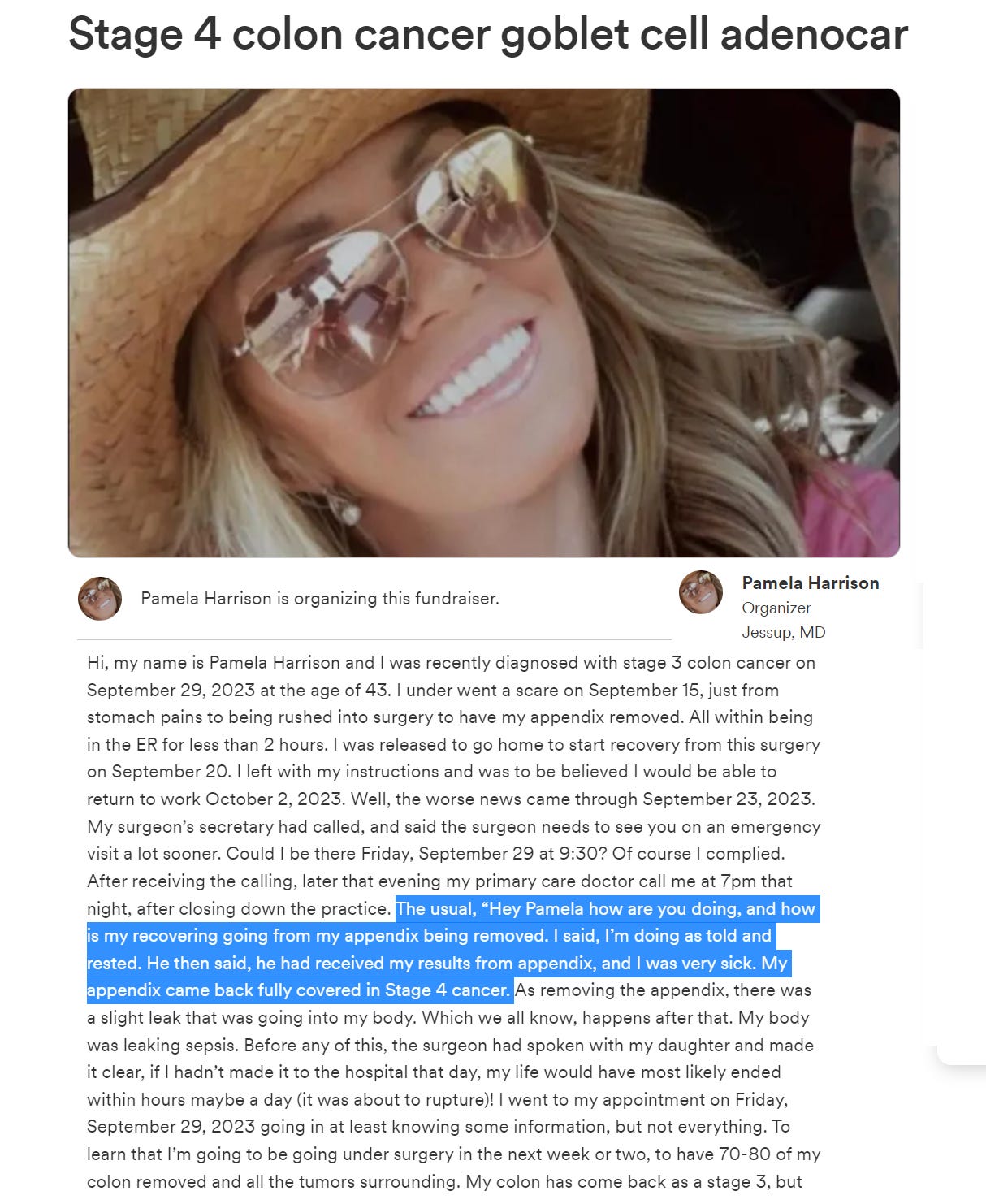


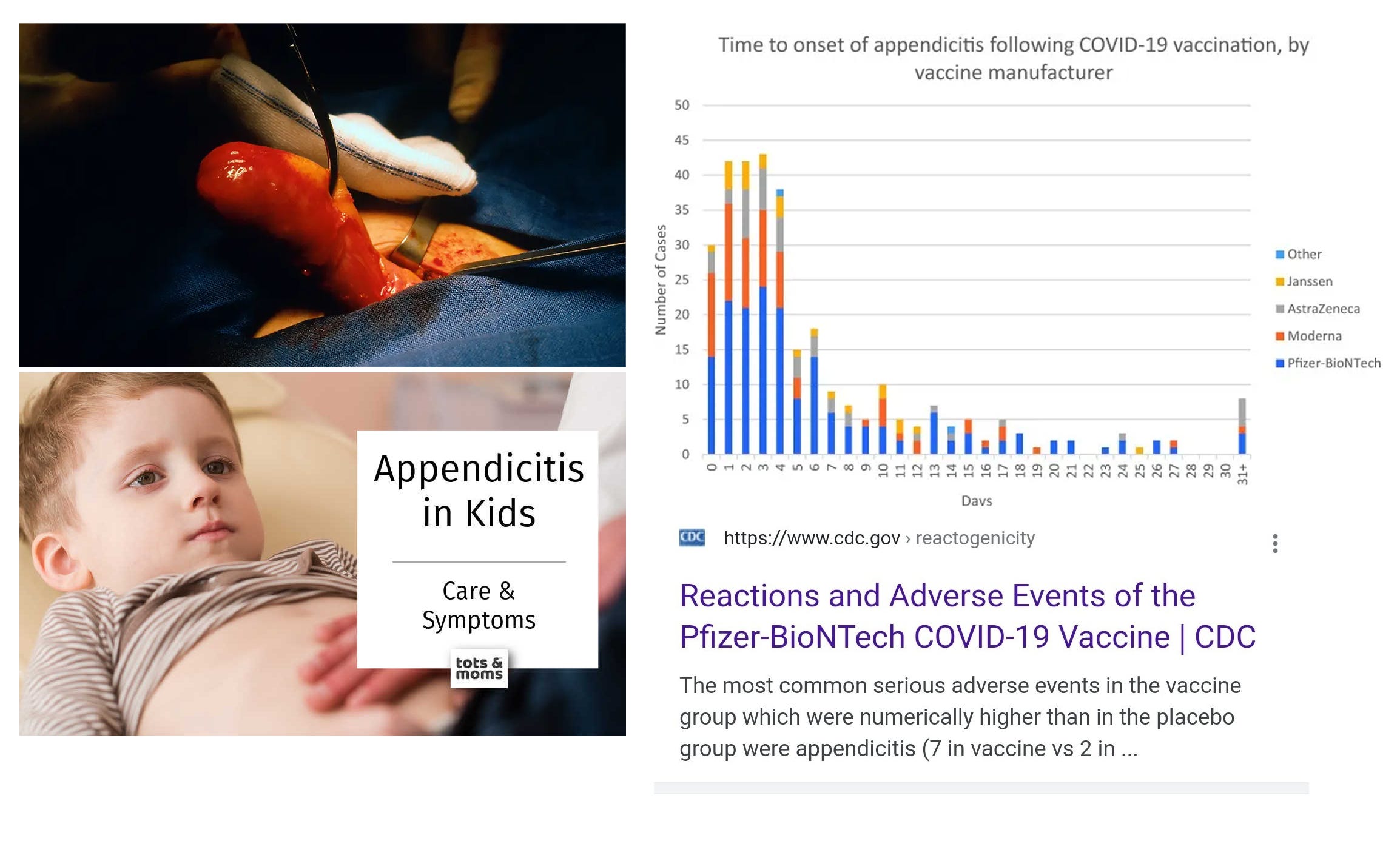
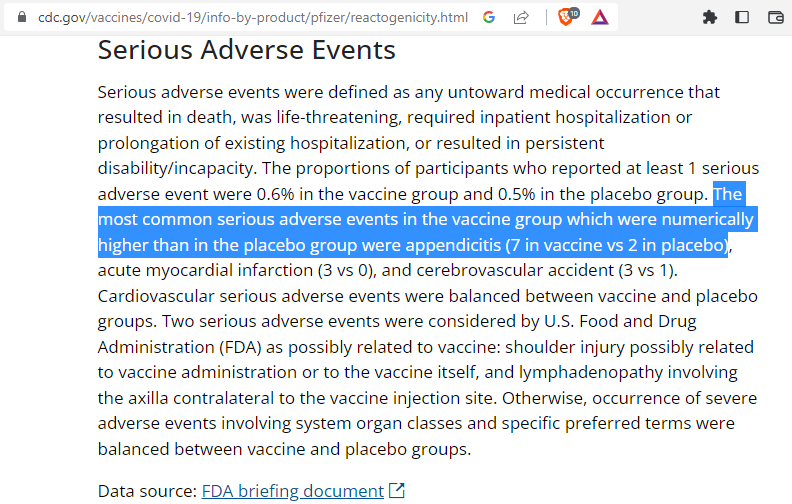
According to CDC and FDA, appendicitis was the most common Serious Adverse Event (non-fatal) for the Pfizer COVID-19 mRNA Vaccine Trial.
FDA suggested more studies, so 3 major studies were done and they were sponsored by either Pfizer, CDC or Astrazeneca (and a few other big pharma companies).
Understandably, they found no link between COVID-19 mRNA Vaccines and appendicitis, and their financial sponsors were satisfied.
2500 reported cases of Appendicitis in WHO VigiAccess, times an under-reporting factor of 100, means potentially 100,000s of cases worldwide.
Does this seem like an acceptable “Serious Adverse Event”?
- 90% were classified as serious
- 85% were hospitalized
- 26% were life-threatening
- 2% were disabled
- 0.3% died
- dozens of children under age 12 injured in VAERS requiring surgery, including a 20 month old girl from New York with a ruptured appendix after Moderna mRNA Vaccine.
*
Note to readers: Please click the share button above. Follow us on Instagram and Twitter and subscribe to our Telegram Channel. Feel free to repost and share widely Global Research articles.
Dr. William Makis is a Canadian physician with expertise in Radiology, Oncology and Immunology. Governor General’s Medal, University of Toronto Scholar. Author of 100+ peer-reviewed medical publications.
Featured image is from Dr. Rath Health Foundation