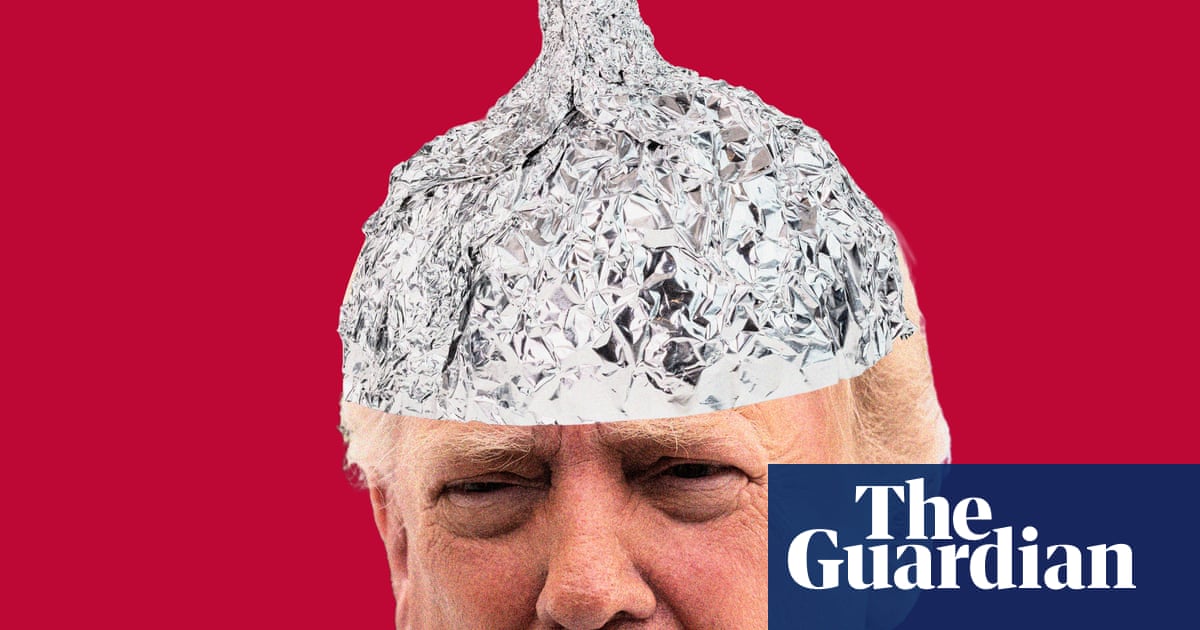
The Conspiracy Theory That Says a Lot About How Much Trumpworld Has Changed
Sign up for the Slatest to get the most insightful analysis, criticism, and advice out there, delivered to your inbox daily.
On March 6, a group called the Oversight Project published a bombshell finding: Joe Biden’s signature on almost every document he approved through his presidency was identical.
The conclusion, the Oversight Project found, could only be that the documents had been signed by autopen, a device that reproduces a signature. And although other past presidents have used autopens to sign documents in absentia or overly burdensome paperwork, for the Oversight writers, indicators of Biden’s aging, evident in public appearances toward the end of his term, raised questions about his own autopen use.
“For investigators to determine whether then-President Biden actually ordered the signature of relevant legal documents, or if he even had the mental capacity to, they must first determine who controlled the autopen and what checks there were in place,” the Oversight Project wrote on X.
In the conservative world, this report was met with excitement, though perhaps not as the “historic” scandal the Oversight Project claimed it was. On March 9, Fox News alerted its audience to “concerns over who controlled” the Biden White House. On Saturday, Jeff Clark, a leader of the “Stop the Steal” movement, wrote on X that “one or more aides of Biden” were “controlling an autopen of Biden’s signature, despite Biden clearly having been senile for all or most of his time in office.”
Almost immediately, this found its way to the White House, where President Donald Trump, on March 6, the day the report was published, wondered aloud during an Oval Office meeting with the NATO secretary general, “Who was signing all this stuff by autopen?” He added, “Nobody’s ever heard of such a thing.”
On Sunday night, after he had some time to think it over, Trump seemed to have come to a decision based on that information. He wrote on social media that he was declaring certain documents Biden had signed to be “VOID, VACANT, AND OF NO FURTHER FORCE OR EFFECT, because of the fact that they were done by Autopen.” Biden, he wrote, “did not sign them but, more importantly, he did not know anything about them!”
There was more than one problem at the core of this hyped-up story. As the National Archives told Snopes, the Oversight Project had studied not scans of physical documents but digital files published in the Federal Register—which features the documents with a copy of Biden’s signature pulled from a single graphic file sent by the administration at the beginning of the term. The basic premise of the Oversight Project’s entire investigation, in other words, was wrong.
So how did an entirely incorrect assertion end up driving a major political challenge by the president against his predecessor’s actions? For one, the autopen claims seemed custom-made to excite Trump. First, they fortified his feeling that Biden had been a weak president, too mentally incapacitated to run the country with the kind of strength that he, Trump, embodies. In the narrative that the right teased out from the Oversight Project report, Biden had snoozed his way through his final months in a haze of dementia while deep state actors—corrupt advisers and rabidly ideological aides—went wild, spitting out presidential proclamations with the help of autopen technology. It was an image that the Oversight Project itself leaned into, describing Biden in a statement Thursday as a “Hologram president.” That feebleness had meant that Biden was not a legitimate president, a thought Trump seems to relish.
Second, and more importantly in a practical sense, the autopen idea allows Trump justification for exerting his power over his predecessor, overriding his actions, and making Trump’s perceived enemies even more vulnerable. The Oversight Project report focused largely on the preemptive pardons Biden signed at the end of his term. These had been for his son Hunter, Anthony Fauci, and all members of the House select committee that investigated the Jan. 6 insurrection, including Liz Cheney—all, themselves, targets of right-wing conspiracy theories about the Biden family, the COVID pandemic, the 2020 election, the intelligence agencies, and the insurrection. This detail seemed to energize Trump. Speaking on Air Force One on Sunday, Trump asserted that these pardons were “null and void because I’m sure Biden didn’t have any idea that it was taking place, and somebody was using an autopen to sign off and to give pardons to, as an example—it’s just one example—but the J6 unselect committee.”
Never mind the precedent this would set for one president to undo the pardons of another; never mind the photographic evidence of Biden signing some of the executive orders mentioned in the investigation; never mind that courts have already settled the matter, finding autopen signatures to be valid; never mind that Trump himself has used an autopen at times. What matters here is that the idea builds into a broader conspiracy theory about the deep state villains controlling the Biden administration and opens a path for Trump’s allies to question almost everything the previous president did that they don’t like.
As for why such shoddy detective work was taken seriously, it should be noted that the group behind the publication is an arm of the Heritage Foundation, the powerful right-wing think tank that authored Project 2025, which lay the groundwork for the ongoing gutting of federal agencies. The Heritage Foundation has in recent years used Oversight Project investigations to spread misinformation about immigration and elections. But Heritage also has a decades-old reputation as a legitimate political force in Washington. For this reason, the autopen claims quickly made their way into certain conservative-friendly mainstream news outlets.
Trump, in typical style, mixed ranting with trolling, posting a photo on Sunday depicting Biden’s official portrait as an autopen signature, implying that his whole presidency was fraudulent. (The J.D. Vance repost of that meme has 114 million views on X.) In a press briefing Monday, White House press secretary Karoline Leavitt defended Trump’s assertions, challenging a journalist who asked about evidence to back up the claims of Biden’s ignorance of what he was signing: “You’re a reporter. You should find out.” Similarly, Sen. Mike Lee, a noted troll, had wondered on social media on March 10 if “President Biden” was “actually a robot”—but also asked, in a more serious tone, who “controlled the autopen.” The blend of jokes and accusations so often in these cases makes it hard to parse how much Trump believes in the autopen conspiracy, how much he really cares, and whether he actually plans to follow through on its implications.
Oddly, this autopen report didn’t end up popping as much as one might expect in the most conspiracy theory–addled internet spaces; Trump’s deployment of the autopen idea as evidence that evil left-wing actors had been in control during the Biden administration may have butted up against some of the QAnon-style theories that Trump had been secretly in control. But the autopen episode also shows that the MAGA movement no longer needs fringe conspiracy theory communities to build its grand narratives; with people such as Kash Patel in positions of power, conspiracy theorists are the mainstream.
Take, for example, some of the other stories of the week. On conservative social media, users accused an NPR reporter who accidentally tapped Trump in the face with a boom mic of trying to assassinate the president, perhaps with traces of fentanyl on the mic. (Contact poisoning from fentanyl is another unscientific idea popular on the right.) Tucker Carlson, who still captures a sizable audience as an independent pundit, amplified influencer Candace Owens’ claims that French President Emmanuel Macron’s wife is secretly trans. Elon Musk insisted that the stranded astronauts were political prisoners of the Biden administration.
During Trump 1.0, right-wing conspiracy theories were still fraught enough to have caused scandal. Toward the end of that term, when the president declined to fully disavow QAnon, it was a major story. But between those terms, a massive conspiracy theory—the stolen election—became central to the party’s entire identity, and signing on to that belief became a loyalty test for both supporters and major figures within the administration, including Senate-confirmed Cabinet members. The autopen episode, pushed by a formerly staid think tank, cycling through Trump talking points with near-instantaneous speed, unfiltered by fact-checking and unchecked by pushback of any kind among figures on the right, shows just how differently these conspiracy theories are being received in the new Trump era. The administration’s relationship to conspiracy theories has fundamentally shifted from its first iteration. It’s all, in a way it never was in the first term, so very mundane.
Get the best of news and politics
Sign up for Slate’s evening newsletter.