Earth is (always has been) round, so why have the flat-out wrong become …
It’s one thing to believe the world is flat; it is yet another to convince the scientific establishment. One of Rowbotham’s followers, a man named John Hampden, sought out a reputable scientist that he could drag into the debate.
Oddly, that man ended up being Alfred Russel Wallace, the co-discoverer of natural selection. In 1870, Hampden wrote to Wallace proposing a £500 wager on the shape of the Earth (roughly £60,000 in today’s money). The plan was to carefully measure the curvature of the water’s surface on the Fens—assuming there is any—and settle the matter once and for all. Wallace, much to the chagrin of his fellow scientists, accepted the wager.
Wallace and Hampden met in early March, 1870, at Downham Market, at the northern end of the Old Bedford River, ready to perform the great experiment. A team of assistants erected six-foot-tall poles, with colored markers at the top, at one-mile intervals along a six-mile stretch of the canal, between Downham and the small town of Welney. If the Earth really was curved, the middle markers ought to be raised relative to the end markers by several feet; as Wallace wrote, “with a good telescope curvature will be easily seen if it exists.”
Mike Hughes / YouTube
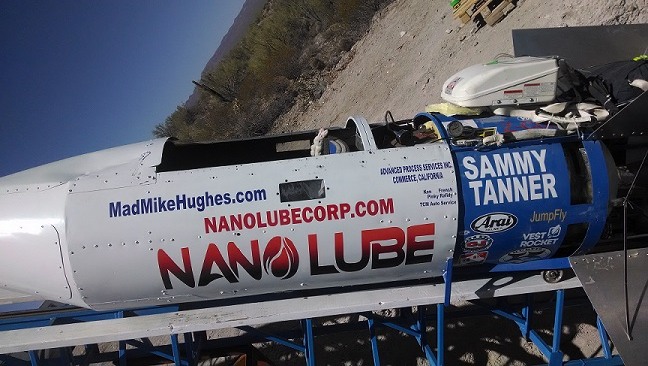
Notable modern public proponents of flat Earth falsities include a man who built his own rocketship…
Mike Hughes / YouTube

Maddie Meyer/Getty Images
…and [checks the text once more] NBA superstar Kyrie Irving? Huh? (Apologies to resident Ars Boston sports fans like Jon Brodkin.)
Maddie Meyer/Getty Images
Notable modern public proponents of flat Earth falsities include a man who built his own rocketship…
Mike Hughes / YouTube
…and [checks the text once more] NBA superstar Kyrie Irving? Huh? (Apologies to resident Ars Boston sports fans like Jon Brodkin.)
Maddie Meyer/Getty Images
Case closed
The ancient Greeks knew that the world is round; observing the Earth’s shadow during a lunar eclipse, as Aristotle noted, makes it pretty clear. There were other hints that, whatever shape the Earth might be, it couldn’t be flat: As a sailing ship sails over the horizon, its hull disappears from view first; then its sails, and the top of its mast last of all.
None of this was as compelling as the testimony of those who sailed all the way around; in 1522, Ferdinand Magellan’s crew pulled it off (though Magellan himself didn’t make it; he was killed during a battle in the Philippines). Just two decades later, in 1543, Copernicus published his groundbreaking work On the Revolutions of the Heavenly Spheres, arguing that the Earth was just like the other planets; viewed from the right perspective, our whole world was just a little ball floating in space. When Yuri Gagarin orbited the planet in his Vostok spacecraft in 1961, no one was surprised that his voyage took him in a circle. Five and a half years later, the astronauts on board Apollo 8 travelled so far from Earth that our home planet was reduced to a marble suspended in the blackness of space, famously captured in Bill Anders’ “Earthrise” photograph. His fellow astronaut Jim Lovell remarked that, from the distance of the Moon, he had no trouble hiding the Earth behind an outstretched thumb.