The Problem with NATO Is Its Existence
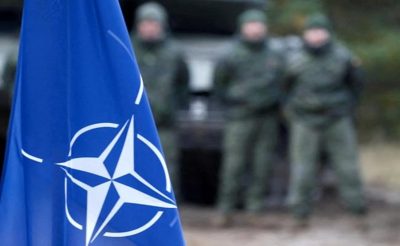
One hears the self-aggrandizing accolades from the West constantly: “NATO is the most successful alliance in history” — former NATO Secretary General Jens Stoltenberg writes from 2019 in an op-ed. Then in 2024, reflecting a popularly held Western belief, former Secretary of Defense Lloyd Austin lauds:
“NATO is the most powerful and successful alliance in history.”
Yet, just a couple of years earlier in 2022, after a 15-year mission, NATO withdrew in humiliation from Afghanistan; the Taliban were not to be denied.
How do we reconcile the reality of NATO’s humiliating defeat with Austin’s laudatory comments?
NATO was never the most powerful military alliance in history — such praise must surely go to the Allies in WWII: Russia, the US, Britain and the Commonwealth nations.
Since ‘the Wall’ fell in ‘89, NATO’s record is not without considerable blemish: its illegal intervention in Kosovo, “legitimized” only by the fact that there was a humanitarian crisis occurring; its humiliation in Afghanistan; and still further, its strategic failure looming in Ukraine.
Is NATO up to the task of defending Europe from a purportedly “expansionist” Russia in a conventional NATO-Russia conflict?
Let us begin with some distinctions. Unlike Russia, no major NATO nation is industrially mobilized for war; Russia, however, outproduces NATO on 155mm shells for use in Ukraine. This alone undermines the assertion that Russia is poised – intends — to take more of Europe in the next few years. One thing is certain, if NATO actually believed this, it would be vigorously mobilizing – and it’s not.
More importantly, it is likely that NATO could not mobilize at the speed or scale needed to produce the levels of equipment, ammunition and troops to match Russia — and certainly not without a protracted period (i.e. years) of sustained buildup to do so. The problem is both lost industrial capacity and diminished financial wherewithal. Among the largest NATO countries, Germany is the only state with a debt to GDP ratio below 100% (62.5%).
To achieve a realistic possibility of success, U.S. forces would need to deploy at scale into continental Europe. The current assumption of NATO military planners is that in case of a Russian attack on a European NATO country, 100,000 US troops stationed in Europe would need to be rapidly augmented by up to 200,000 additional US troops, concentrated in US armored units best suited for the East European battlefield. This assessment assumes President Trump does not begin a troop reduction in Europe as previously reported.
In addition, the overwhelming majority of American equipment and logistics would have to travel by sea requiring a protracted period of buildup towards readiness and increased vulnerability to submarine and missile attack.
Moreover, NATO airports, sea ports, training and logistics bases would be exposed to conventional ballistic missile attack, against which it has extremely limited defenses. Indeed, in the case of the Oreshnik missile, no defense.
An Oreshnik missile arriving at Mach 10+ would devastate a NATO arms factory, or naval, army and air force base. As in Ukraine, Russia’s ballistic campaign would also target NATO transport, logistics and energy infrastructure. The subsequent economic impact would rapidly spread across the European continent, now increasingly dependent on LNG.
Nor, for that matter, would NATO forces necessarily be able to protect Europe’s hydrocarbon imports, in particular oil and LNG so critical to Europe’s economic survival. Losses due to NATO sea supply vulnerability would not only degrade military production, but also bring accelerating economic hardship to NATO citizenry; as inflationary pressures and energy shortages mount with the outbreak of war, there would occur a rapid escalation of political pressure to settle the conflict.
Perhaps and more importantly, other than a handful of NATO trainers forward deployed to Ukraine, their forces are trained according to a “pre-drone maneuver doctrine” and have no real-world experience of modern peer-to-peer attritional fighting on the battlefield. Whereas the Russian Army has close to three years’ experience now, and is unarguably the world’s most battle-hardened.
Furthermore, NATO doesn’t seem to actually have a strategy vis-à-vis its opponents. In Afghanistan, for example, NATO never seemed able to articulate a specific campaign strategy. In 2022, notwithstanding numerous Russian warnings about NATO expansion constituting a red-line, NATO was wholly unprepared, strategically, for the obvious possibility of war breaking out — as evidenced again by its inability to match Russia’s 155mm shell production.
Moscow, for its part, through the person of the President of the Russian Federation, Vladimir Putin, speaks stridently against war with Europe; moreover, Putin offers sound justification for doing so: too many people would perish on both sides in a conventional conflict, and the nuclear option is pure insanity – civilization itself will perish.
Yet, even today, NATO’s Ukraine strategy is opaque, perhaps best summarized as “double-down on the rhetoric, arm Ukraine as best we can and hope the US doesn’t pull the plug, completely” — that is not a strategy – it’s a prayer.
It seems that an easy NATO victory with Russia, which many in the West continue to espouse, cannot be assumed – and certainly not assured — to eventuate. But this view prevails in the West, while continuing to press on, hoping that the “wishful thinking” of NATO might eventually prevail in Ukraine, notwithstanding an abundance of evidence to the contrary.
On the other hand, NATO “enthusiasts” might want to, at least, consider the assessment of many Western realists — that NATO expansion was the catalyst for the Russo-Ukraine War. Moscow has warned the West repeatedly for decades, that such expansion eastward constituted a “red line.” So too did some of the West’s most able strategic thinkers: George Kennan in 1996, Henry Kissinger, Jack Matlock even Bill Burns in his famous ‘Nyet means Nyet’ diplomatic telegram and most recently John Mearsheimer with his 2014 forecasts. All ignored.
The “inconvenient truth” is that NATO now exists to confront the alleged “threats” created by its own continuing existence. Yet, as our discussion illustrates, NATO does not have the capacity to, with any degree of certainty, defeat the alleged threat that its continuing existence has created.
Perhaps, this is the time to have an honest conversation about the future of NATO, and ask three questions. How do we return to the sustainable peace in Europe that all sides to the Ukraine conflict seek? Is NATO the primary obstacle to this sustainable peace? And does it make sense to spend billions of euros (and sink deeper into debt) preparing for conflict with a country that not only doesn’t want war and contends neither side would prevail in either a conventional or nuclear conflict — unless it is to distract the electorate at home from serious domestic problems to justify the need for your own existence – is this why NATO still exists?
*
F. Andrew Wolf, Jr. is director of The Fulcrum Institute, a new organization of current and former scholars, which engages in research and commentary, focusing on political and cultural issues on both sides of the Atlantic. After service in the USAF (Lt.Col.-Intel) Dr. Wolf obtained a PhD-philosophy (Wales), MA-theology (Univ. S. Africa), MTh-philosophical theology (TCU-Brite Div.). He taught philosophy, humanities and theology in the US and S. Africa before retiring from university.
He is a regular contributor to Global Research.
Featured image is from Al Mayadeen English
Global Research is a reader-funded media. We do not accept any funding from corporations or governments. Help us stay afloat. Click the image below to make a one-time or recurring donation.