Louisiana has a new law to collect ‘chemtrails’ reports. Hundreds have poured in.
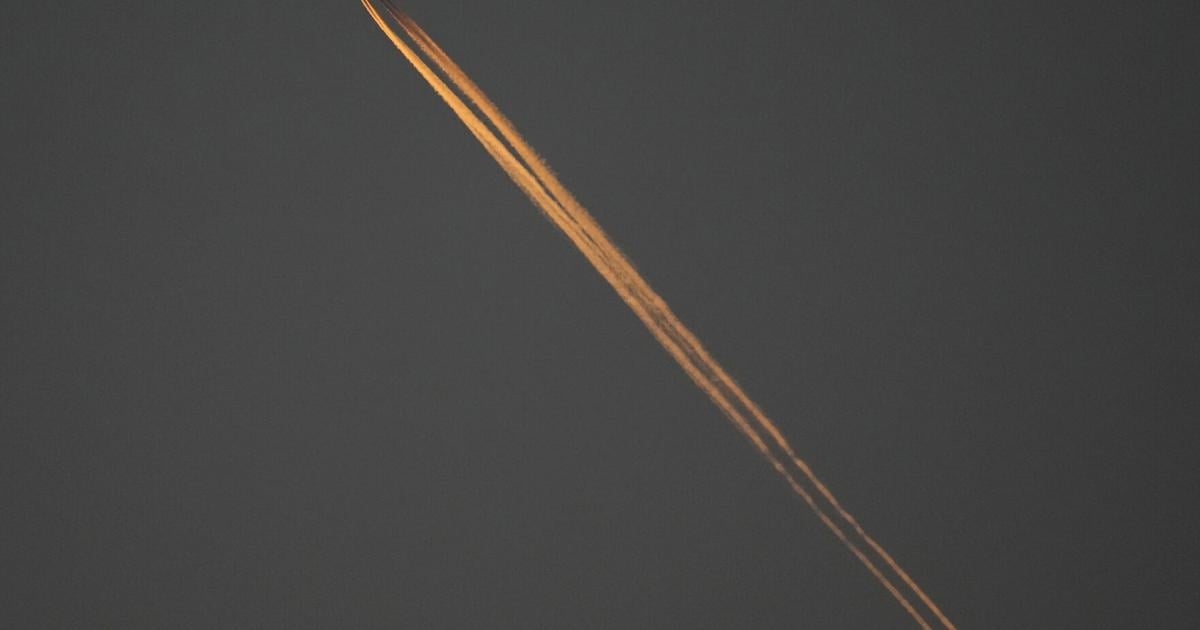
The reports are alarming.
Angry residents say the Louisiana skies are being sprayed with chemicals, creating “tic-tac-toe” shapes up above, or in one case, an “Acura logo.”
The supposed culprit: Chemtrails, a long-debunked conspiracy theory that scientists say is not accurate.
The Louisiana Department of Environmental Quality, the state agency charged with regulating the state’s expansive petrochemical industry, among other sectors, has collected more than 400 such reports since just this summer, when the Republican-led Legislature passed a bill requiring them to track such reports.
A handful of Republican state lawmakers have encouraged their constituents to write in, propping up the conspiracy theory that the condensation trails airplanes leave behind are, in fact, dangerous chemicals or heavy metals.
The new law passed by the Legislature did more than require LDEQ to collect such reports. It also banned climate geoengineering and cloud seeding, which are real technologies designed to combat climate change or generate greater precipitation for agricultural or other purposes. Neither are used in Louisiana, according to state and federal regulators.
The debate about chemtrails among state lawmakers prompted a clash over longstanding farming practices, nascent climate technology and outright conspiracies. And as a result, the state environmental regulator is now required to collect reports of such alleged activities.
Records show that more than 400 of the reports received by LDEQ allege that condensation trails long left by airplanes are the long-debunked “chemtrails.”
“This garbage has been going on here for years,” one resident reported to the state system. “At some point We the People need a Say about this…..We are being poisoned and Our tax dollars are funding this.”
Another resident in Metairie in October wrote, “Very typical aerial dispersions of aerosols in lines or trails … some in straight lines, some in long narrow crosses and one in the shape similar to the auto emblem for an Acura vehicle. As usual they remained in place and gradually spread out to form cloudlike areas. Some shut off at certain points as the valve was turned off on the tank that was being utilized.”
This summer, President Donald Trump’s administration sought to dispel the chemtrails theory and published webpages addressing chemtrail conspiracy theories and explaining how condensation trails work.
The Environmental Protection Agency calls chemtrails “a term some people use to inaccurately claim that contrails resulting from routine air traffic are actually an intentional release of dangerous chemicals or biological agents at high altitudes for a variety of nefarious purposes, including population control, mind control, or attempts to geoengineer Earth or modify the weather.”
Still, the EPA’s efforts have not dissuaded at least one state lawmaker. State Sen. Valarie Hodges, a Denham Springs Republican, recently told residents to report sightings of “chemtrails” to the state. That advice appears to have prompted an uptick in reports. Hodges didn’t respond to messages for this story.
“Have you noticed strange white trails crisscrossing our skies lately? Many residents across our state are reporting heavy chemtrails, contrails, geoengineering, and cloud-seeding activity — and now there’s a new Louisiana law addressing it,” Hodges posted on Facebook, prompting hundreds of comments. “Our skies belong to We the People, not to corporations, contractors, or agencies experimenting with our weather. Let’s document, report, and demand transparency.”
Chemtrails vs. cloud seeding
Louisiana for decades had a process for permitting cloud seeding, a practice of releasing tiny silver iodide particles into clouds to enhance precipitation. It is used in nine mostly arid states, but it was never used here, likely because Louisiana has abundant rainfall.
A handful of studies have suggested silver iodide is not harmful, though questions remain about whether the prolonged use and accumulation of the compound may cause health or environmental problems.
Jennifer Finley, spokesperson for the state Department of Agriculture and Forestry, said, “No license was ever issued under the law just repealed.”
The state’s new law also bans solar geoengineering, a technology that does exist but is still in its infancy. It’s a highly contentious source of debate among climate scientists and advocates, some of whom believe that spraying compounds high into the atmosphere to reflect sunlight could help mitigate the effects of climate change. Louisiana has felt the effects of climate change particularly acutely, with worsening hurricanes, rising heat-related deaths and more.
A 2016 study surveying the world’s leading atmospheric scientists debunked the theory that “chemtrails” are harmful chemicals being released from high-flying aircraft. Surveys have found a small share of Americans believe in the theory, which the study’s co-author Steven Davis said grew with widespread adoption of the internet. Davis said at the time that the study is important to establish basic scientific facts, like refuting the chemtrails theory.
State Sen. Mike Fesi, R-Houma, sponsored the bill to ban cloud seeding and climate geoengineering. The bill removed the state’s ability to permit cloud seeding activities and required LDEQ to receive and monitor reports of alleged spraying of chemicals into the air at over 1,000 feet. Fesi declined interview requests for this story.
Throughout the legislative debate, Fesi repeated debunked theories that people are spraying hazardous chemicals in Louisiana to modify the weather or climate, though he offered no evidence. Republicans easily passed the measure into law, over the objections of Democrats who noted that much of the debate centered around the debunked “chemtrails” theory.
‘Chemtrail’ reports logged into state system
Meagan Molter, spokesperson for the Department of Environmental Quality, said the agency didn’t ask for the bill and that the new law doesn’t require the agency to do anything other than receive the reports.
With a real environmental hazard, like a chemical spill, the agency follows up on reports and responds to the hazard. But the new “chemtrails” reports are simply logged in the system.
“These are strictly for data collection,” Molter said. “It does not interfere with our daily regular duties we have by law to go and investigate things that are actually in our purview, like spills. We have a team whose whole job is to take these calls and reports and go out and investigate.”
The agency set up a separate system to receive reports of chemtrails and has tried to make clear to residents that they should report oil spills or other emergencies through normal channels.
“It is our job to take any and all reports from concerned citizens,” she said.