Moon dust may be hiding signs of pulverised alien technology, scientist says
Pulverised technology from collapsed alien civilisations may lie scattered across the solar system, including on the Moon, a new study suggests.
The likelihood of advanced aliens living at the same time as humans is small due to the vastness of the universe, but there’s a chance we may stumble upon the ruins of an extinct extraterrestrial civilisation, Oxford astrophysicist Brian Lacki argues.
Ongoing attempts at finding aliens focus heavily on detecting “active” signals from beyond the solar system such as radio waves. But, Dr Lacki notes, even humans started sending radio signals into the vastness of space only in the last century or so. To find advanced aliens, therefore, it may be a better strategy to look for “passive” signs of their technology, such as relics that last for billions of years, he argues in a yet-to-be peer-reviewed paper posted in arXiv.
The astrophysicist theorises three types of “passive” alien technology signs – occulter, glinter, and diffuser.
An occulter is a space object that blocks light from a bright source like a star, creating something like an artificial eclipse.
An extinct advanced civilisation could have created an occulter, whose transit signature would seem unnatural to astronomers on the Earth. Unlike “active” alien signs like radio signals, the occulter would have no power source, no radio transmitter, no maintenance, and would simply move around in orbit forever, periodically causing a dip in the brightness of its star.
Glinter refers to a giant lens or mirror-like object that an advanced civilisation may build to redirect or concentrate a star’s light. It is similar to how our satellites reflect sunlight, only on a much bigger scale.
Diffuser, the simplest kind of a “passive” alien sign, simply scatters light falling on it in many directions. It may be used to obtain a very distinctive spectrum. Humans use such technology on some spacecraft, including lunar rovers, to conduct retroreflector experiments. A spacecraft diffuser scatters light in a specific manner to help calibrate telescopes on the Earth and to help study the atmospheric effects of other planets and moons.
Dr Lacki says we may spot remnants of such technologies in space even if the aliens behind them are long gone.
One technology that astronomers believe can confirm advanced alien presence is the famous Dyson Sphere. It was named after British-American physicist Freeman Dyson, who theorised that an advanced civilisation facing mounting energy needs would eventually harness most or all of the energy from its star. This could be achieved by using solar panels in space to capture and beam energy to the planet or through swarms of orbiting spacecraft forming a rigid shell around the star and harnessing its energy.
.png)
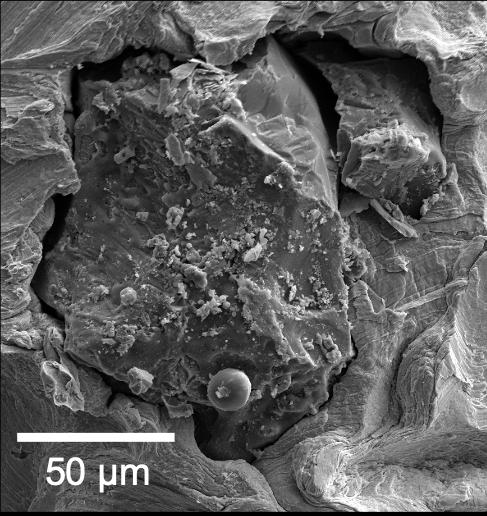
While locating an intact Dyson Sphere is challenging, Dr Lacki argues, we may be able to find “technograins”, or dust from the destruction of such technology, in the vastness of the space.
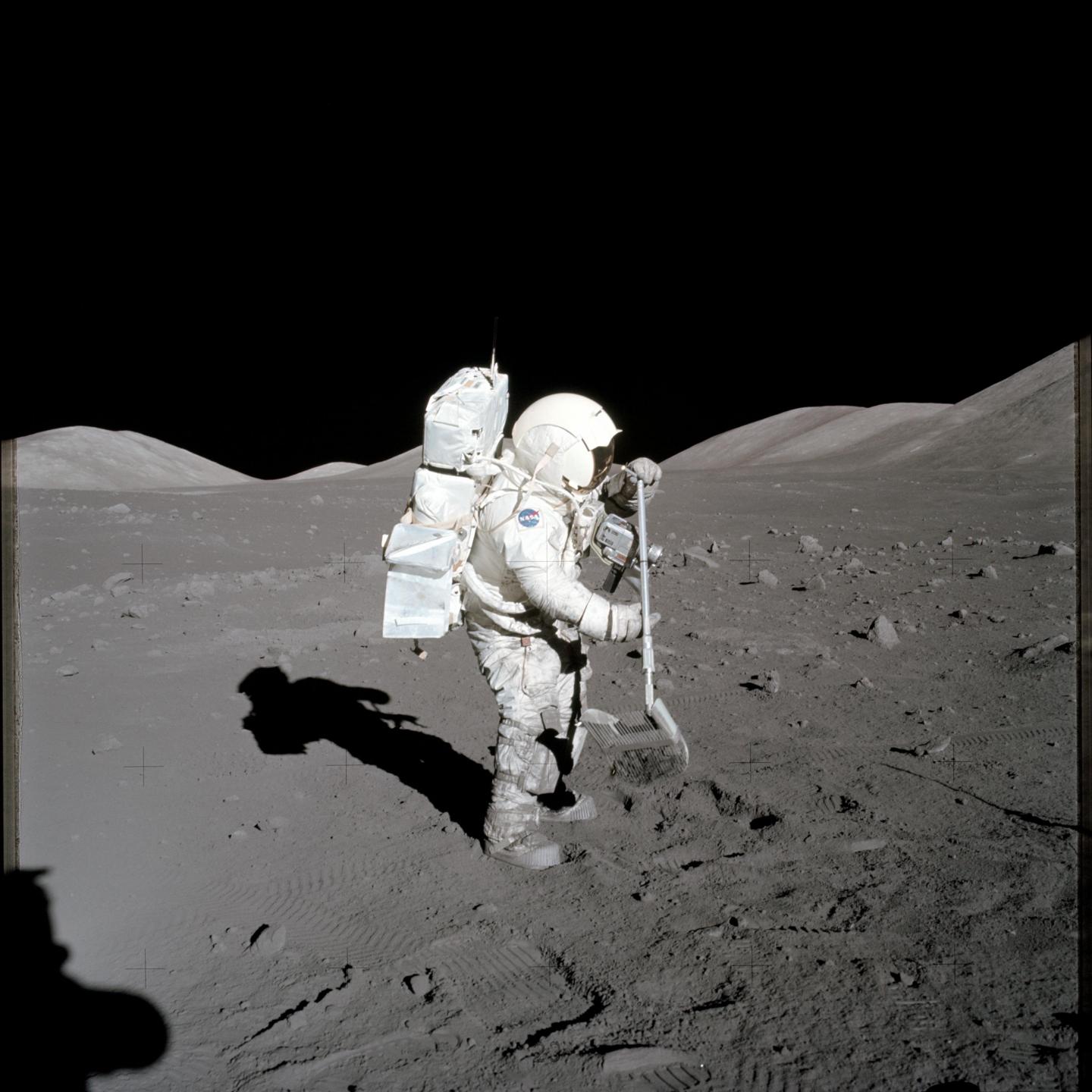
Alien technograins may get caught in solar wind and fly to other star systems, the paper argues. As our solar system moves through the Milky Way galaxy, its planets and moons may sweep through and pick up some alien dust. If we were to sift through the Moon’s regolith, he says, we might get lucky and find alien dust.
What we might ultimately detect from advanced aliens might not be “macroscopic objects deliberately placed, but dust, the unintended microscopic testament to our possible predecessors still waiting to be found”, he says.