UFO Update: NASA Astronaut Reveals Planned Test for Extraterrestrial Life
A NASA astronaut preparing for a grueling eight-month stint in orbit has revealed a plan to test for extraterrestrial life on the International Space Station (ISS).
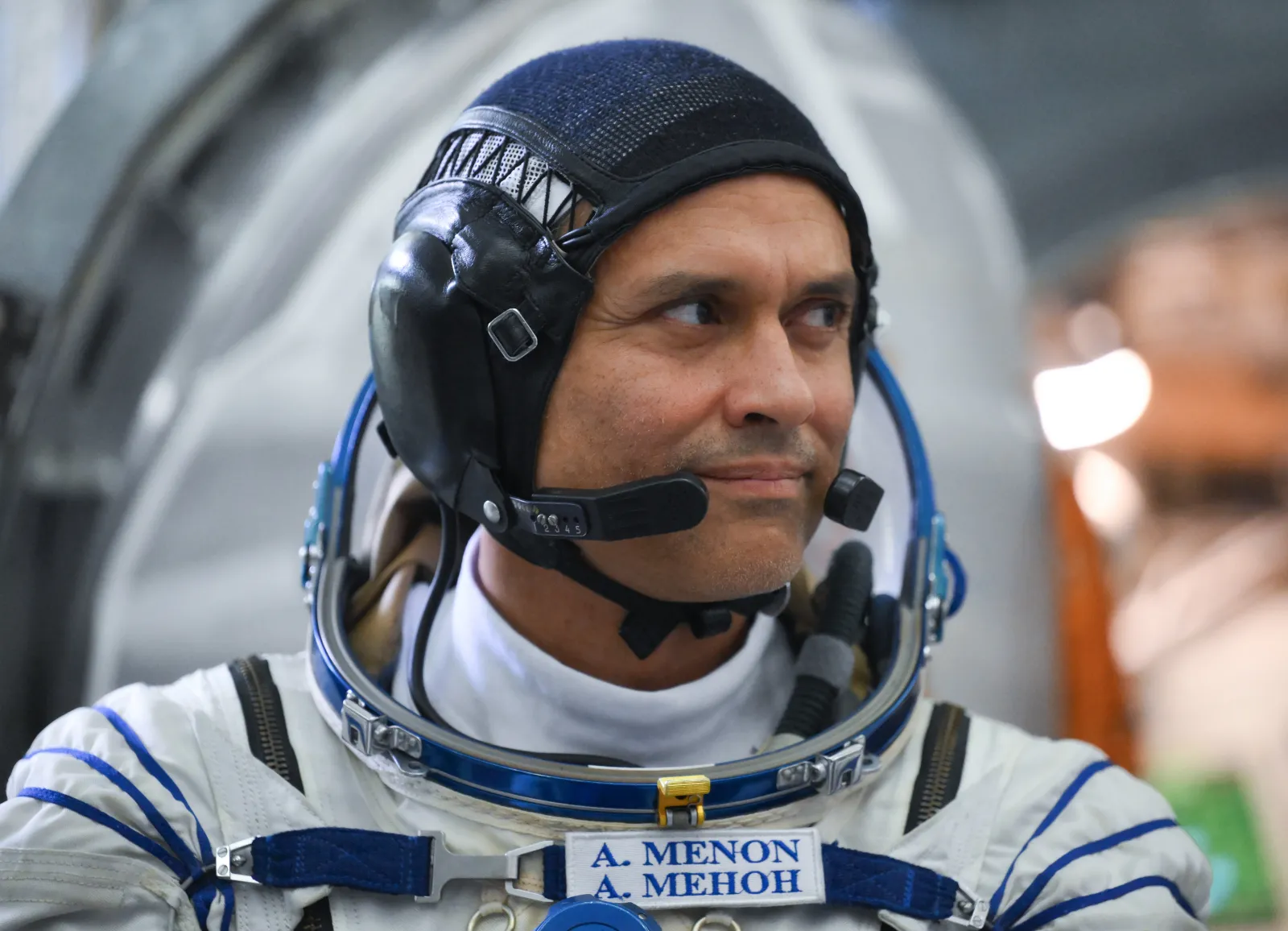
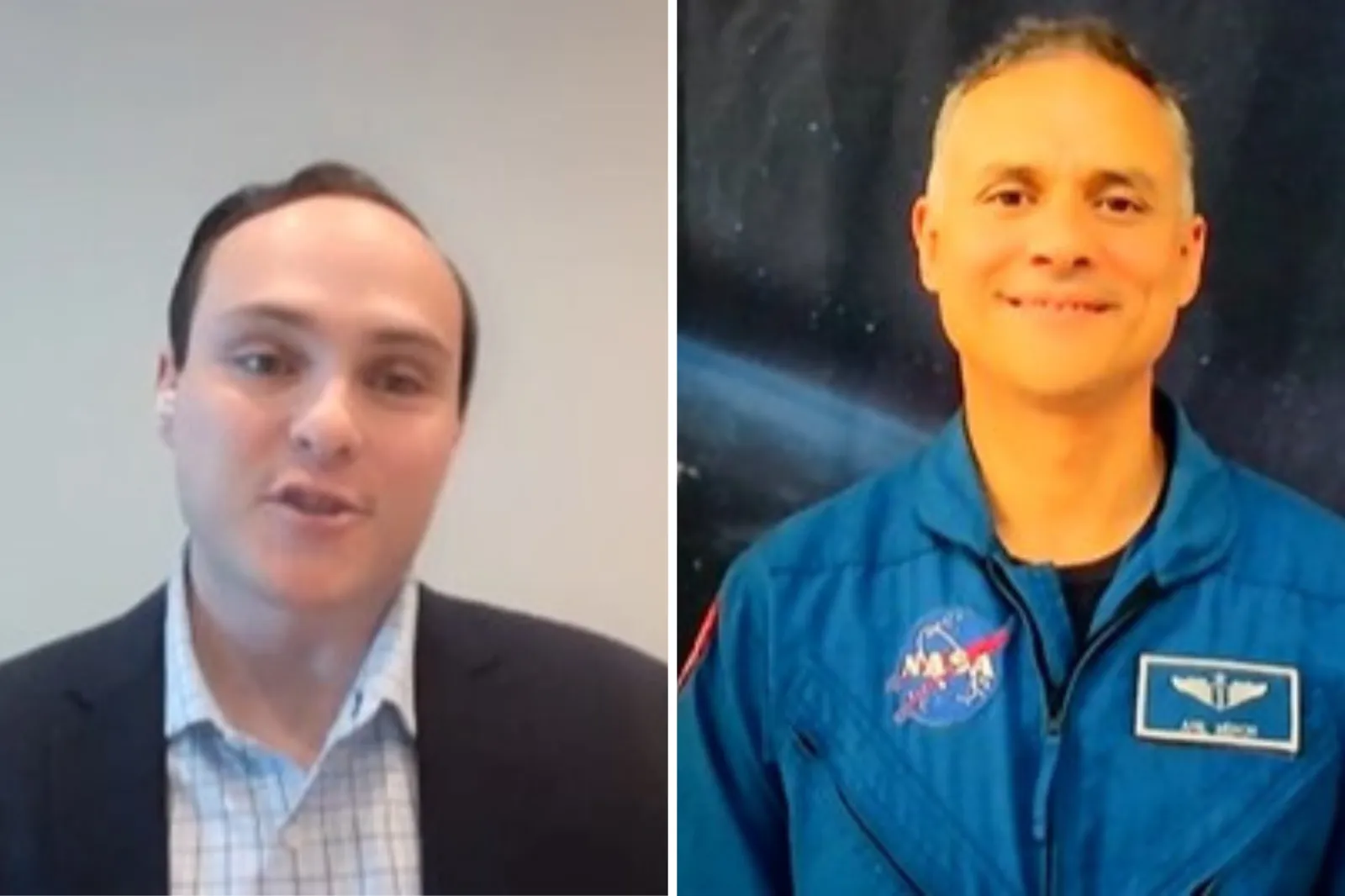
Dr. Anil Menon, an emergency medicine physician and U.S. Space Force colonel, is scheduled to launch aboard the Soyuz MS-29 mission next month. While his primary objective centers on the physiological tolls of long-duration spaceflight, Menon confirmed plans to carry out the search for microbiological life during a series of spacewalks.
“What we’re looking to see is if there is any bacteria that can survive on the external side of the space station,” Menon told Newsweek.
The experiment aims to determine whether biological organisms can survive the brutal, unfiltered environment of open space, characterized by cosmic radiation and extreme thermal swings.
“Past reports made us think perhaps it’s possible, but it wasn’t clear if we had a really good control, like we might have potentially contaminated it,” Menon said. “So I think we’re going back. We’re going to do a good job of having a very controlled experiment and that’ll be some more exciting science to follow in terms of just other things living in space.”
Menon added that he plans to publicly share the results of those tests, especially in the wake of the U.S. government’s decision to declassify multiple UFO sightings.
“Now that it’s declassified, I could totally tell you if I encounter them. So I for sure will follow up with this if I have any interaction with extraterrestrials. I give you that solemn promise. But it wasn’t something that I necessarily set out to do,” he added.
However, the physician and flight surgeon-turned-astronaut’s main focus when he gets to the ISS will be studying the impact of space travel and low-gravity environments on the human body—including on his own.
“I am most excited about the opportunity to just be in space and experience the changes that happen to the human body up there,” Menon told Newsweek. “I’ve spent most of my life studying through medicine, health, and disease. And then I spent all my special time, like specialization in space medicine. And so it’s just, it’s such a unique thing to actually see how that happens.
“It’s actually like—you usually don’t want this to happen, but it’s like the doctor becoming the patient,” he continued. “But in these unique cases, it’s really worthwhile because there’s just so much to learn and so much nuance to it.”
That research will be crucial when it comes to plans for humans to travel to—and one day even live on—Mars.
“That’s the whole reason we have the space station, to figure out what those challenges are, figure out countermeasures and make it possible,” Menon said. “So for example, you know that every month you lose in space about 3% of your bone mass. Now imagine that compounding over time. You would just be susceptible to fractures from anything.
“But we found from the space station, because it’s such a good stepping stone, that you can actually prevent that by certain types of exercise. So we got those exercise equipment up there. Now Mars will be a bit different because, because it actually has some gravity, instead of like lifting like 100 pounds on your shoulder, you can lift 300 pounds on your shoulder and it’ll give you the same effect. You can’t do that on the space station. You need to have some sort of resistant exercise. But I think there’s a lot more avenues on a place like Mars to getting those kind of Earth-like pressures and gravity-like impact that will affect your body positively,” he continued, adding that humans are “amazingly resilient.”
Menon acknowledged that there could be other challenges to living on Mars, including toxic chemicals such as perchlorates. “That’s why we’re…now using the Earth and Moon base as a platform to do those things and just open up even more doors for us,” he added.
When asked about his own personal challenges for the mission, Menon said the main issue would be missing the people he left behind.
“My wife and kids… I’m going to miss them a lot. But luckily we’ll have some, we’ll have the opportunity to like do video calling and stuff,” he added.
Who Is Anil Menon?
Menon is an American physician, engineer, military officer and NASA astronaut known for his unique combination of expertise in medicine, aerospace engineering and human spaceflight. Born and raised in Minneapolis to Indian and Ukrainian immigrant parents, he pursued an extensive education, earning a degree in neurobiology from Harvard University and both a medical degree and a master’s in mechanical engineering from Stanford University.
Before becoming an astronaut, Menon built a distinguished career in aerospace medicine. He worked as a flight surgeon for NASA, helping support astronauts living and working aboard the ISS. He later became the first flight surgeon at SpaceX, where he played a key role in preparing astronauts for the company’s early crewed missions, including the historic Demo-2 flight that returned human orbital launches to the United States.
In addition to his civilian work, Menon has served in the U.S. military as a flight surgeon and is a colonel in the United States Space Force. His career has also included humanitarian missions, providing medical assistance after major disasters like the 2010 earthquake in Haiti and the 2015 one in Nepal.
In 2021, Menon was selected as a member of NASA’s astronaut class and completed his astronaut training in 2024. As of 2026, he has been assigned to his first spaceflight, serving as flight engineer on Expedition 75 aboard the ISS. He is scheduled to travel to the station on the Soyuz MS-29 mission.
What Mission Is Menon Embarking On?
Menon is embarking on his first spaceflight mission to the ISS as a flight engineer on Expedition 75. He will travel aboard the Soyuz MS-29 spacecraft with Russian cosmonauts Pyotr Dubrov and Anna Kikina.
The mission is scheduled to launch from the Baikonur Cosmodrome in Kazakhstan on July 14. Once aboard the ISS, the crew is expected to spend about eight months in orbit conducting scientific research and technology demonstrations.
During the mission, Menon will participate in experiments focused on human health in space, including studies of blood flow, vein structure and blood composition in microgravity. He will also help test methods for producing intravenous fluids from the station’s water supply—research that could support future long-duration missions to the moon and Mars.
This assignment is particularly significant because it marks Menon’s transition from supporting astronauts as a flight surgeon and space medicine expert to becoming a space traveler himself. After years of helping others prepare for missions, he is now preparing to live and work aboard the ISS as a member of its crew.
What Is the Purpose of the Soyuz MS-29 Mission?
The primary objective of the Soyuz MS-29 mission is to use the space station as a critical steppingstone for humanity’s next giant leaps: the moon and Mars. A primary focus will be deciphering how microgravity relentlessly degrades the human body.
While ISS astronauts mitigate this using specialized resistance exercise equipment, a journey to Mars will introduce entirely new environmental challenges, such as the toxic soil substances like perchlorates.
Could Elon Musk’s Rocket Plans Impact Mars?
Menon was also asked about Elon Musk’s plans to fly passengers from city to city with rockets.
The astronaut said that there was still “a lot of technology we need to prove to get there” in terms of Mars transportation.
“I don’t doubt that he is capable and SpaceX is capable of getting there. They’ve shown that they can do a lot harder things, but in the process of getting there,” he said. “I think what you do is you figure out some of those challenges. Like, just like going to Mars, we figure out some of the health challenges, doing point-to-point transfer, we figure out some of the technological challenges, and we figure out how to solve it.
“I mean, think about just energy utilization. We’ve figured out how to make cleaner energies to take energies that were existing for hundreds of years and figure out systems and plants that make them more sustainable and cleaner. So I think all of these processes, there is a way forward. We just need to thoughtfully move forward. And I have full confidence that that will be part of the process.”
What to Know About the US Declassifying UFO sightings
The mission comes at a time of heightened public fascination with what lies beyond our atmosphere, amplified by the U.S. government’s recent declassification of several Unidentified Anomalous Phenomena (UAPs)—historically known as UFOs.
In 2026, the U.S. government began releasing batches of previously classified UAP records, including military reports, videos, photographs, audio recordings, witness statements and investigative documents from agencies such as the Department of Defense, NASA the FBI and intelligence organizations. The releases are part of a broader transparency effort intended to make historical UAP records available to the public.
The documents describe a wide range of unusual sightings reported by military personnel, pilots, astronauts, law-enforcement officers and civilians. Some reports involve objects described as discs, spheres, “orbs” or lights exhibiting unusual flight characteristics. The releases also include previously unseen military sensor footage and historical reports dating back decades.
However, despite the attention surrounding the disclosures, neither the Pentagon nor NASA has said that the released materials constitute evidence of alien spacecraft or extraterrestrial technology. Many cases remain unexplained because of limited data, but “unexplained” does not automatically mean “alien.”