Tuesday, March 10, 2026

Conspiracy Resource

Conspiracy news & views from all angles, up-to-the-minute and uncensored

Archives

COVID-19

Prominent scientists demand retractions from journals that published ‘unsound’ articles downplaying possible COVID-19 lab origins
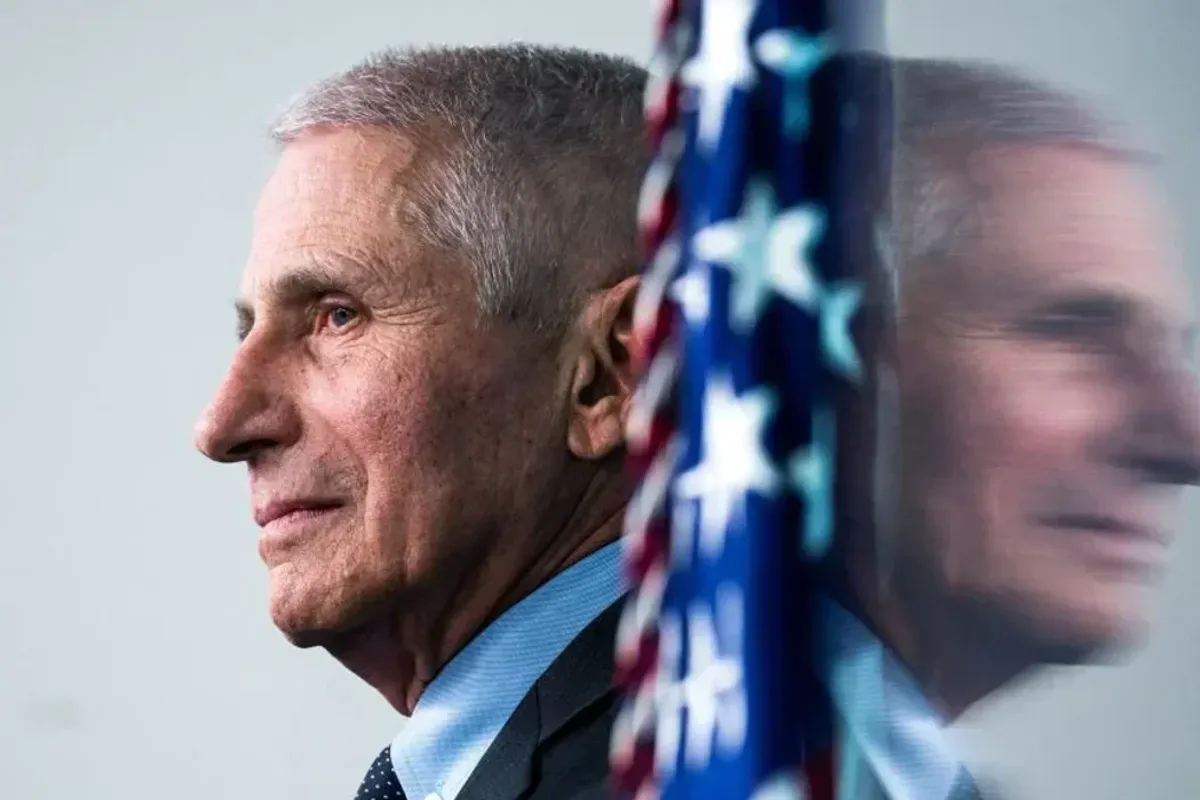
Former National Institute of Allergies and Infectious Diseases director Anthony Fauci, EcoHealth Alliance boss Peter Daszak, and
elements of their inner circle were far from the only people in the Western medical establishment who actively downplayed the possibility that COVID-19 leaked from a lab where the likely patients zero executed dangerous experiments on coronaviruses with American taxpayer dollars.

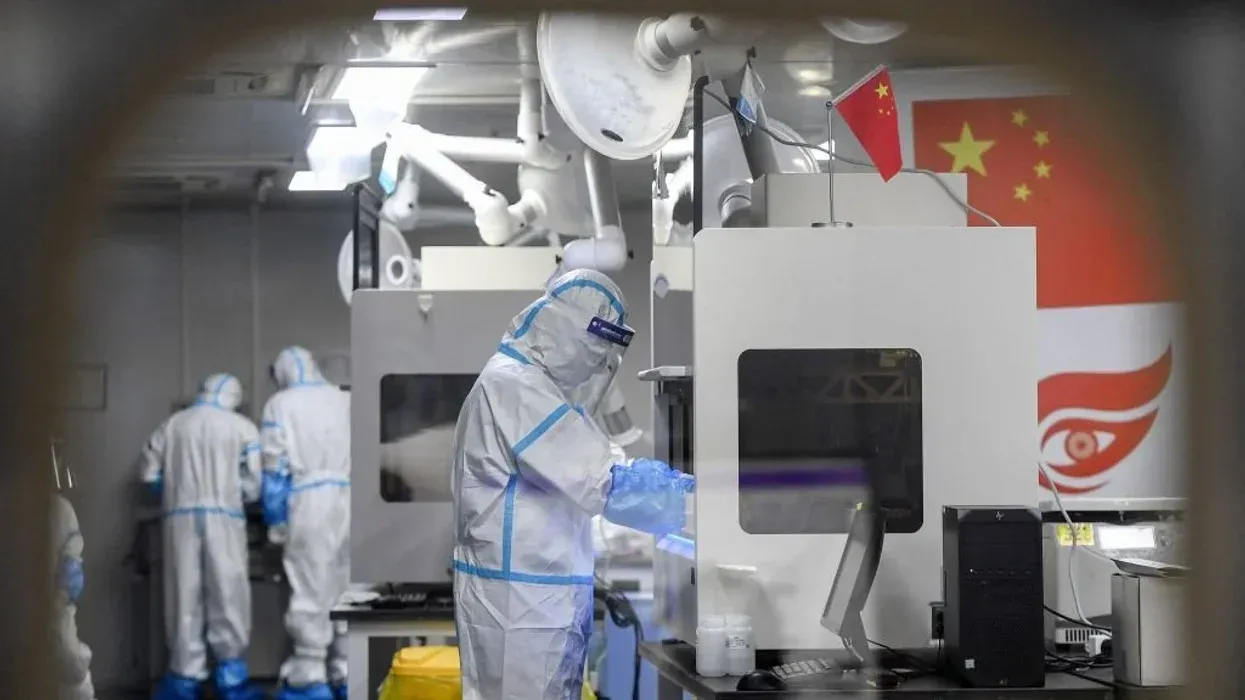
Early in the pandemic, multiple scientific publications ran articles decrying “conspiracy theories” that suggested the virus may have originated in the Wuhan Institute of Virology. Various authors argued, instead, that it was more likely that the virus made a cross-species leap into humans, possibly at a Chinese wet market.

Now that it’s abundantly clear that the lab origin theory was all along the
most likely explanation, molecular biologist Dr. Richard H. Ebright of Rutgers University and dozens of other scientists are seeking accountability for perceived efforts to cure the origins narrative. They have sent open letters to the editors of the journals Science, Emerging Microbes & Infections, and Nature Medicine, requesting the retraction of “scientifically unsound papers” concerning the origins of the virus.

“Scientists have a responsibility to science and the public to point out scientific misconduct, particularly scientific fraud, when they discover it,” Dr. Ebright told Blaze News. “This is especially true for scientific misconduct on matters of high public importance, like the origin of COVID-19.”

Emerging Microbes & Infections

The first of the four papers of interest was published online in Emerging Microbes & Infections on Feb. 26, 2020, and authored by
Shan-Lu Liu and Linda Saif of Ohio State University; Susan Weiss of the University of Pennsylvania; and Lishan Su of the University of Maryland.

The paper, entitled, “No credible evidence supporting claims of the laboratory engineering of SARS-CoV-2,” stated, “There are speculations, rumours and conspiracy theories that SARS-CoV-2 is of laboratory origin. Some people have alleged that the human SARS-CoV-2 was leaked directly from a laboratory in Wuhan where a bat CoV (RaTG13) was recently reported, which shared ∼96% homology with the SARS-CoV-2.”

After downplaying a number of possible lab-made culprits, including a
chimeric coronavirus that could replicate in human airway cells and possibly transmit to humans, the authors concluded, “There is currently no credible evidence to support the claim that SARS-CoV-2 originated from a laboratory-engineered CoV.”

The
June 14 open letter to the editors of the journal stated, “The authors’ and editor’s private email communications, obtained through an Ohio Public Records Act request, provide compelling evidence that there is clear basis to infer the paper may be the product of scientific misconduct, up to and including fraud.”

When Weiss, for instance, expressed uncertainty about how the
furin cleavage site could possibly end up in the virus naturally, her colleague Liu “completely agree[d]” but signaled a greater eagerness to dispel the notion that the “furin site may be engineered.”

Despite publicly suggesting there was no credible evidence of a lab origin, Weiss noted days before the publication of her paper:

Henry and I have been speculating- how can that site have appeared at S1/S2 border- I hate to think it was engineered- among the MHV strains, the cleavage site does not increaser (sic) pathogenicity while it does effect entry route (surface vs endosome). so for me the only significance of this furin site is as a marker for where the virus came from- frightening to think it may have been engineered.

Concealed doubts and persuasive counterpoints were not the only things said to have compromised the integrity of the paper.

University of North Carolina virus expert
Ralph Baric has long toyed with coronaviruses. Years ahead of the pandemic, he expressed an interest in continuing to experiment with a chimeric virus that could infect human lung cells. He even shared transgenic mice with the Wuhan lab where Chinese virologist Zhengli Shi was executing radical experiments.

In violation of publisher Taylor and Francis’ authorship policies, “Ralph Baric and Shi Zhengli, despite clear conflicts of interest, made substantial contributions to the manuscript but were not credited as authors or acknowledged,” said the letter.

Besides secretly involving people with potential conflicts, Su, Liu and the journal’s editor-in-chief Shan Lu reportedly also had “privileged information about a SARS-CoV-2 infection in a Beijing lab in 2020,” but decided to keep this under wraps.

Su wrote to Lieu on Feb. 14, 2020: “Your former colleague was infected with sars2 in the lab?”

“Yes,” responded Liu. “He was infected in the lab!”

“I actually am very concerned for the possibility of SARS-2 infection by lab people. It is much more contagious than SARS-1. Now every lab is interested in get a vial of virus to do drug discovery. This can potentially [be] a big issue. I don’t think most people have a clue,” wrote Shan Lu.

Despite weighing in heavily on the paper, Lu elected not to be included in the coauthorship, stating in a Feb. 12, 2020, message, “I definitely will not be an author as you guys did everything. It can also keep things somewhat independent as the editor.”

Extra to collapsing the distance between author and editor, Lu subsequently admitted he accepted the paper with “basically no review.”

“Taken together, the authors’ and editor’s private communications indicate the paper is a product of scientific misconduct, up to and including fraud, by the authors and by the Editor-in-Chief of
Emerging Microbes & Infections, Shan Lu,” said the open letter. “Now that these documents have come to light, we urge Emerging Microbes & Infections to issue an Expression of Editorial Concern for this paper and to initiate a retraction process.”

Taylor and Francis, the publisher of the journal, said in a statement to Blaze News, “We can confirm that the Editor of the journal forwarded the open letter to Taylor & Francis on 14th June and that our Publishing Ethics & Integrity team are investigating the concerns raised, in accordance with the Committee on Publication Ethics guidelines and our Editorial Policies.”

Nature Medicine

The journal Nature Medicine published the controversial paper “The Proximal Origin of SARS-CoV-2” on March 17, 2020, which Fauci used on multiple occasions to suggest to the American public that COVID-19 was not a lab leak but rather an animal virus that jumped to a human.

Blaze News
previously reported that despite privately discussing the prospect that the natural-origins theory was rubbish, the paper’s four official authors — Kristian Andersen, W. Ian Lipkin, Edward Holmes, and Robert Garry — concluded, “We do not believe that any type of laboratory-based scenario is plausible.”

Andersen, a Danish evolutionary biologist and Scripps Research Institute immunology professor, was especially doubtful in private about the conclusion he gave his name to.

On Jan. 31, 2020, Andersen
wrote to Fauci, “You have to look very closely at the genome to see features that are potentially engineered. … I should mention that after discussions earlier today, Eddie [Holmes], Bob [Garry], Mike [Farzan], and myself all find the genome to be inconsistent with expectations from evolutionary theory.”

On Feb. 8, Andersen
stated, “Passage of SARS-like CoVs have been ongoing for several years, and more specifically in Wuhan under BSL-2 conditions. … The fact that Wuhan became the epicenter of the ongoing epidemic caused by nCoV is likely an unfortunate coincidence, but it raises questions that would be wrong to dismiss out of hand. Our main work over the last couple of weeks has been focused on trying to disprove any type of lab theory, but we are at a crossroad where the scientific evidence isn’t conclusive enough to say that we have high confidence in any of the three main theories considered.”

Andersen also
expressed concern about a paper penned by Ralph Baric and Zhengli Shi concerning the apparent insertion of furin cleavage sites into SARS, which he and his colleagues figured for a “how-to-manual for building the Wuhan coronavirus in a laboratory.”

Last month, Ebright and five others
wrote to Joao Montiero, the chief editor of Nature Medicine, requesting a retraction. They noted that documentation obtained through public records requests along with congressional testimony from Andersen and Garry “provide conclusive evidence of misconduct.”

The letter does not mention Fauci’s
alleged involvement in the development of the paper but instead World Health Organization scientist Jeremy Farrar’s unacknowledged role in the “paper’s development, including its prompting, organizing, editing, and approval.”

‘It is imperative that this misleading and damaging product of scientific misconduct be removed from the scientific literature.’

“This omission of a significant role played by the head of a funding agency, allegedly to maintain his ‘independence,’ represents a serious breach of publishing ethics that completely undermines the credibility of the journal and calls into question the motivation behind the paper,” said the letter. “The classification of the paper as an ‘opinion’ rather than a ‘research article’ further exacerbates the issue, as the authors’ intentional withholding of Farrar’s involvement damages public trust in the editorial process.”

Ebright and scores of other scientists
pressed Nature Medicine last year for a retraction as well, noting in an open letter dated July 26, 2023, “It is imperative that this misleading and damaging product of scientific misconduct be removed from the scientific literature. We, as STEM and STEM-policy professionals, call upon Nature Medicine to publish an expression of editorial concern for the paper and to begin a process of withdrawal or retraction of the paper.”

Blaze News reached out to Montiero for comment, but he did not respond by deadline.

Science

Ebright, Stanford University epidemiologist
Dr. Jay Bhattacharya, and dozens of other scientists signed another open letter on June 14 to the editors of the journal Science with regards to two papers: “The Huanan Seafood Wholesale Market in Wuhan was the early epicenter of the COVID-19 pandemic,” and “The molecular epidemiology of multiple zoonotic origins of SARS-CoV-2,” both of which named Jonathan Pekar of the University of California, San Diego, as an author along with Andersen, Holmes, Garry, evolutionary biologist Andrew Rambaut, and Michael Worobey of the University of Arizona.

Blurbs leading into the papers, which were both largely funded by Fauci’s NIAID — whose parent agency
supported and financed research at the Wuhan lab — and published on July 26, 2022, stated, “The precise events surrounding virus spillover will always be clouded, but all of the circumstantial evidence so far points to more than one zoonotic event occurring in Huanan market in Wuhan, China, likely during November–December 2019.”

According to the scientists seeking retractions, the analyses and the premises of “Worobey et al. 2022 and Pekar et al. 2022 are unsound,” and the papers may be “products of scientific misconduct, up to and including scientific fraud.”

“Phylogenomic evidence, epidemiological evidence, and documentary evidence all indicate that SARS-CoV-2 entered humans in July-November 2019,” says the letter. “Arguments based on data for the Huanan Seafood Market on or after mid- to late December 2019 — as in Worobey et al. 2022 and Pekar et al. 2022 — cannot, even in principle, shed light on spillover into humans that occurred one to five months earlier, in July-November, 2019.”

The open letter noted that Andersen, Garry, Holmes, and others knew full well that the “premises and conclusions of their paper were invalid at the time the paper was drafted.”

A spokesman for American Association for the Advancement of Science, the publisher of the Science family of journals, confirmed to Blaze News that it had received the letter.

“We follow COPE (Committee on Publication Ethics) processes to address any concerns raised on published papers and are doing so here,” said the spokesman.

The AAAS spokesman noted in a subsequent email, “We will follow up when we make a final decision.”

Like Blaze News? Bypass the censors, sign up for our newsletters, and get stories like this direct to your inbox. Sign up here!
Read More
COVID-19

Kansas sues Pfizer for claiming its vaccine was ‘safe and effective’

Kansas Attorney General Kris Kobach (R) announced Monday that the Sunflower State is suing Pfizer for “misleading claims it made related to the COVID vaccine.”

Kobach
noted at a press conference in Topeka that “Pfizer made multiple misleading statements to deceive the public about its vaccine at a time when Americans need the truth.”

“Pfizer misled the public that it had a ‘safe and effective’ COVID-19 vaccine,” claims the
lawsuit, filed in the District Court of Thomas County, Kansas. “Pfizer said its COVID-19 vaccine was safe even though it knew is COVID-19 vaccine was connected to serious adverse events, including myocarditis and pericarditis, failed pregnancies and deaths. Pfizer concealed this critical safety information from the public.”

‘Pfizer must be held accountable for falsely representing the benefits of its COVID-19 vaccine while concealing and suppressing the truth.’

The complaint further alleges the pharma giant:

  • glossed over the waning efficacy of the Pfizer-BioNTech COVID-19 Vaccine as well as its ineffectiveness against variants and the absence of evidence it curbed transmission;
  • “used FOIA denial and delay to conceal critical data relating to the safety and effectiveness of its COVID-19 vaccine”;
  • “used an extended study timeline to conceal critical data relating to the safety and effectiveness of its COVID-19 vaccine”;
  • used confidentiality agreements to hide the possible dangers and ineffectiveness of the jab;
  • covered its tracks by destroying the vaccine control group; and
  • engaged in a propaganda campaign wherein it omitted critical data about its vaccine, vilified critics, and mischaracterized its profitable product.

While reportedly making roughly $75 billion from its COVID-19 vaccine sales inside a two-year window — selling
$57 billion of COVID products in 2022 alone — the lawsuit claims the company “worked to censor speech on social media that questioned Pfizer’s claims about its COVID-19 vaccine.”

Former New York Times reporter Alex Berenson, for instance,
claimed that Scott Gottlieb, a former U.S. Food and Drug Administration commissioner who became a senior board member of Pfizer, leaned on Twitter in 2021 in an apparent effort to censor criticism of the vaccine. It appears such pressure may have been successful on numerous occasions.

The complaint accuses Pfizer of multiple violations of the Kansas Consumer Protection Act and civil conspiracy.

“Pfizer must be held accountable for falsely representing the benefits of its COVID-19 vaccine while concealing and suppressing the truth about its vaccine’s safety risks, waning effectiveness, and inability to prevent transmission,” added the lawsuit.

Pfizer, which has produced
over 366 million doses of its COVID-19 vaccine, told The Hill the case has “no merit.”

“We are proud to have developed the COVID-19 vaccine in record time in the midst of a global pandemic and saved countless lives. The representations made by Pfizer about its COVID-19 vaccine have been accurate and science-based,” said the company.

The lawsuit comes several months after Texas Attorney General Ken Paxton
filed a similar lawsuit, claiming, “Pfizer intentionally misrepresented the efficacy of its COVID-19 vaccine and censored persons who threatened to disseminate the truth in order to facilitate fast adoption of the product and expand its commercial opportunity.”

The Texas lawsuit
moved to a federal court in January.

Kansas’ legal action also follows numerous medical admissions and scientific studies confirming the vaccines were not as advertised, as well as a
class-action lawsuit against another COVID-19 vaccine manufacturer in Britain over injuries and deaths.

Blaze News
previously reported that a peer-reviewed multinational study examining data from nearly 100 million people not only affirmed the well-documented link between the COVID-19 vaccines and increased risk of heart conditions but has also highlighted troubling links between the AstraZeneca, Moderna, and Pfizer vaccines and medical conditions such as Guillain-Barré syndrome, brain and spinal cord inflammation, Bell’s palsy, and convulsions.

The study,
published in the esteemed journal Vaccine, also noted there were “significantly higher risks of myocarditis following the first, second and third doses” of Pfizer’s BNT162b2 vaccine.

Another
peer-reviewed study published Jan. 24 in the Springer Nature Group journal Cureus suggested the COVID-19 vaccines were a rushed product with an “unacceptable harm-to-reward ratio.”

Like Blaze News? Bypass the censors, sign up for our newsletters, and get stories like this direct to your inbox. Sign up here!
Read More
COVID-19

‘NIAID cannot be trusted’: Fauci’s agency planned to make monkeypox more deadly, says congressional report

The National Institute of Allergy and Infectious Diseases under Anthony Fauci funded deadly gain-of-function research on coronaviruses at the likely epicenter of the pandemic. Although millions of Americans died from COVID-19, the NIAID apparently did not learn its lesson.

According to congressional investigators, the NIAID received approval to execute radical gain-of-function experiments on MPXV, the virus that causes monkeypox.

Monkeypox is endemic in various African regions but made a global play in April 2022. The New England Journal of Medicine indicated on the basis of diagnoses in 16 countries that 98% of the persons infected with the virus were homosexual.

Those infected with monkeypox often experience a painful rash that can look like pimples or blisters, respiratory problems, exhaustion, fever, swollen lymph nodes, and chills. Like COVID-19, monkeypox can be spread via respiratory droplets, through “direct contact with a rash or sores of someone who has the virus,” and through “contact with clothing, bedding, and other items used by a person” with the virus.

While it’s unclear what nightmarish symptoms a lab-engineered version of monkeypox could produce, it’s clear that some of Fauci’s people were eager to find out.

Over the past two years, the House Committee on Energy and Commerce — which has jurisdiction over public health agencies — has been looking into a particular research project that was “planned and/or conducted” at the NIAID prior to Fauci’s retirement.

Committee members were alerted to the experiment by a Sept. 15, 2022, interview in Science magazine, in which Dr. Bernard Moss, a NIAID pox virologist, revealed that his team was working on endowing a West African variant of monkeypox responsible for the global outbreak at the time, “clade 2,” with genes from a far more deadly variant, “clade 1.”

Whereas clade 2 has roughly a 1% mortality rate, clade 2 reportedly has a mortality rate ranging from 10%-15%.

Congressional investigators noted that Moss’ admission troubled some of his peers.

Epidemiologist Thomas Inglesby, director of the Center for Health Security at the Johns Hopkins University Bloomberg School of Public Health, told the magazine the following month that if a more powerful version of the outbreak strain ever escaped the NIAID lab, it could trigger an “epidemic with substantially more lethality.”

The committee noted in an interim staff report Tuesday, “If the experiment transferred genes from clade IIb MPXV — which caused the 2022-2023 mpox epidemic — into clade I virus, the resulting chimeric virus could have a reproductive number (R₀) of 1.10 to 2.40 coupled with a case fatality rate of 10 – 15 percent in the unvaccinated.”

According to the interim report, the Department of Health and Human Services, the National Institutes of Health, and the NIAID “repeatedly obstructed and misled” the committee about the experiment referenced by Moss in Science.

‘NIAID cannot be trusted to oversee its own research of pathogens responsibly.’

Whereas HHS and the NIH denied that that the experiment(s) had been proposed, planned, approved, or conducted, the committee noted that internal NIH documents “show this experiment was formally proposed and received approval before the NIH’s Institutional Biosafety Committee (IBC) on June 30, 2015.”

HHS Assistant Secretary for Legislative Affairs Melanie Egorin confirmed in a March 19 letter to the committee that the experiment was greenlit.

The committee has been unable to confirm whether or not the dangerous experiment actually took place but indicated there was a window of time between June 2015 and May 2023 when researchers could have done so.

In the first three years, there were reportedly no requirements imposed on the experiment. In 2018, scientists were asked only to notify the NIH’s IBC when getting ready to make clade 2 more potent.

Science indicated that at the very least, part of the experiment was conducted. Researchers moved genes from clade 2 to clade 1.

“The deliberate, prolonged effort to deceive the Committee is unacceptable and potentially criminal,” said the interim report. “HHS, the NIH, and NIAID continue to insist the GOFROC experiment transferring material from clade I into clade II was never conducted, despite being approved for a period of over eight years. However, HHS has repeatedly refuse to produce any documents to corroborate this claim.”

The report suggested that the refusal to cough up evidence might suggest “that the information not produced was unfavorable” and that the HHS is effectively lying.

Despite painting HHS as obstructionist, the report emphasized that the “NIAID is the agency that bears the most responsibility for misleading the Committee.”

The primary conclusion drawn at this point in the investigation is that NIAID cannot be trusted to oversee its own research of pathogens responsibly. It cannot be trusted to determine whether an experiment on a potential pandemic pathogen or enhanced potential pandemic pathogen poses unacceptable biosafety risk or a serious public health threat. Lastly, NIAID cannot be trusted to honestly communicate with Congress and the public about controversial GOFROC experiments.

Committee Chair Cathy McMorris Rodgers (R-Wash.) said of the report, “In order to start rebuilding trust in our government health agency guidance, agencies like the NIH must be honest and transparent with Congress and the American people.”

“This report demonstrates a disturbing lack of judgment and accountability from HHS, the NIH, and particularly, NIAID. It is unacceptable and demonstrates the clear need for reform,” added Rodgers.

Justin Goodman, senior vice president of the White Coat Waste Project — a watchdog that helped expose EcoHealth Alliance’s and Fauci’s ties to the gain-of-function experiments at the Wuhan Institute of Virology — told Blaze News, “These treacherous monkeypox gain-of-function experiments are the latest example of Fauci’s rampant waste, fraud, and abuse and disregard for taxpayers and lawmakers.”

“Even though Fauci is gone from government, his atrocious animal testing legacy is alive and well, and we’re working with Republicans and Democrats to cut NIH’s reckless spending,” continued Goodman. “The solution is simple: Stop the money. Stop the madness.”

An HHS spokesman said in a statement, “The committee is looking for an issue where there isn’t one. HHS and its divisions, including NIH, follow strict biosafety measures as our scientists work to better understand and protect the public from infectious diseases — like mpox.”

Like Blaze News? Bypass the censors, sign up for our newsletters, and get stories like this direct to your inbox. Sign up here!
Read More
Great Reset

The WHO didn’t get its pandemic treaty through. Critics say it still managed to consolidate ‘unchecked authority.’

WHO director-general Tedros Adhanom Ghebreyesus and other globalists have
campaigned feverishly in recent months to promote an international pandemic agreement, lashing out at those who dared to suggest the legally binding pact would undermine American sovereignty and burden U.S. taxpayers with yet more financial obligations, as well as at those who noted that the WHO is an untrustworthy, corruptionprone, and Chinese communist-compromised organization.

Ghebreyesus, who leaned on
concern-mongering about “Disease X” to move the needle, sought a successful vote on the globalist pact at the 77th meeting of World Health Assembly from May 27 to June 1 in Geneva, Switzerland. His hopes were dashed as the Assembly couldn’t agree on the wording or passage of the pact.

Blaze News
previously reported that the WHA did, however, manage to adopt a package of amendments to the International Health Regulations allegedly aimed at strengthening “global preparedness, surveillance and responses to public health emergencies, including pandemics.”

Critics have expressed concern that
the amendments, adopted by “consensus” contra an actual vote, might not be as advertised or even be legal under the WHO’s own rules.

American biochemist Dr. Robert Malone
claimed Monday that the “hastily approved IHR [amendments] consolidate virtually unchecked authority and power of the Director-General to declare public health emergencies and pandemics as he/she may choose to define them, and thereby to trigger and guide allocation of global resources as well as a wide range of public health actions and guidances.”

‘The WHO’s failure during the COVID-19 pandemic was as total as it was predictable and did lasting harm to our country.’

The IHR make up a legally binding international instrument authorized under Article 21 of the WHO Constitution to which all 194 member states of the WHO, including the U.S., are parties. While amendments submitted to the WHA can be advanced by consensus, decision-making by vote “is a legally available option.”

WHO member states
agreed in January 2022 to consider potential amendments to the IHR. This decision was prompted, in part, by concerns over “the negative effects of discrimination, misinformation and stigmatization on public health emergency prevention, preparedness and response as well as unnecessary interference with international traffic and trade, and recognizing the need for strengthened coordination.”

The amendments were negotiated parallel to the so-far unsuccessful pandemic pact but crafted in the same spirit.

According to Liberty Council, the proposed amendments took “major steps in the wake of COVID-19 to conform and integrate each nation’s pandemic responses by directing them to develop ‘core’ capabilities in areas of Surveillance (vaccine passports/digital health certificates), Risk Communication (censoring misinformation and disinformation), Implementation of Control Measures (social distancing/lockdowns), Access to Health Services and Products (greater sharing of resources and technologies between countries), and more.”

The Kaiser Family Foundation
reported that the Biden administration was actively engaged in the negotiations despite the urging of Republican lawmakers, such as Sens. Dr. Bill Cassidy (R-La.) and Ron Johnson (R-Wisc.), to spike the amendments, noting they would “substantially increase the WHO’s health emergency powers and constitute intolerable infringements upon U.S. sovereignty.”

Cassidy, Johnson, and the entire Senate Republican Conference told President Joe Biden in a
May 1 letter, “The WHO’s failure during the COVID-19 pandemic was as total as it was predictable and did lasting harm to our country. The United States cannot afford to ignore this latest WHO inability to perform its most basic function and must insist on comprehensive WHO reforms before even considering amendments to the International Health Regulations.”

‘We consider any such agreement to be a treaty requiring the concurrence of two-thirds of the Senate under Article II Section 2 of the Constitution.’

Like Dr. Malone and the
Heritage Foundation, the Republicans indicated that the adoption of new IHR amendments at the 77th WHA would be in violation of the WHO International Health Regulations, specifically Article 55, which states, “The text of any proposed amendment shall be communicated to all States Parties by the Director-General at least four months before the Health Assembly at which it is proposed for consideration.”

“As the WHO has still not provided final amendment text to member states, we submit that IHR amendments may not be considered at next month’s WHA,” wrote the Republican lawmakers. “Should you ignore this advice, we state in the strongest possible terms that we consider any such agreement to be a treaty requiring the concurrence of two-thirds of the Senate under Article II Section 2 of the Constitution.”

Extra to facing potential congressional pushback, the Biden administration negotiated the amendments with the foreknowledge that the U.S. might not be bound by them depending on the results of the 2024 election. After all, President Donald Trump is
expected to once again move to withdraw America from the WHO.

‘The final version of the IHRs significantly enhances the WHO’s authority.’

The WHO
said in a statement Saturday that the WHA and its 194 member countries “agreed [on] a package of critical amendments to the International Health Regulations (2005) (IHR), and made concrete commitments to completing negotiations on a global pandemic agreement within a year, at the latest.”

“The amendments to the International Health Regulations will bolster countries’ ability to detect and respond to future outbreaks and pandemics by strengthening their own national capacities, and coordination between fellow States, on disease surveillance, information sharing and response,” said Ghebreyesus. “This is built on commitment to equity, an understanding that health threats do not recognize national borders, and that preparedness is a collective endeavor.”

Despite the insinuation of consent among member nations, the Sovereignty Coalition
suggested that roughly 30% of member states were present and Ghebreyesus declined to conduct a roll-call vote.

The amendments ultimately adopted by 77th WHA include a new definition for “pandemic emergency”; another “equity”-driven international wealth redistribution mechanism; the creation of a new bureaucracy to oversee the implementation of the other half-measures; and the creation of IHR authorities for member countries to “improve coordination of implementation of the Regulations within and among countries.”

While acknowledging that the language of the amendments was weakened during the negotiations, Liberty Counsel indicated that “the final version of the IHRs significantly enhances the WHO’s authority.”

The U.S. State Department
claimed the amendments will “make the global health security architecture stronger overall while maintaining full respect for sovereignty of individual states.”

The Kaiser Family Foundation indicated that if “approved at the WHA, the [IHR] revision does not require further Congressional approval or ratification in the U.S.”

The British government
indicated that each member state has the right to evaluate “each and every amendment before making a sovereign choice of whether to accept or opt out of each — or all of — the amendments.”

Like Blaze News? Bypass the censors, sign up for our newsletters, and get stories like this direct to your inbox. Sign up here!

Read More
COVID-19

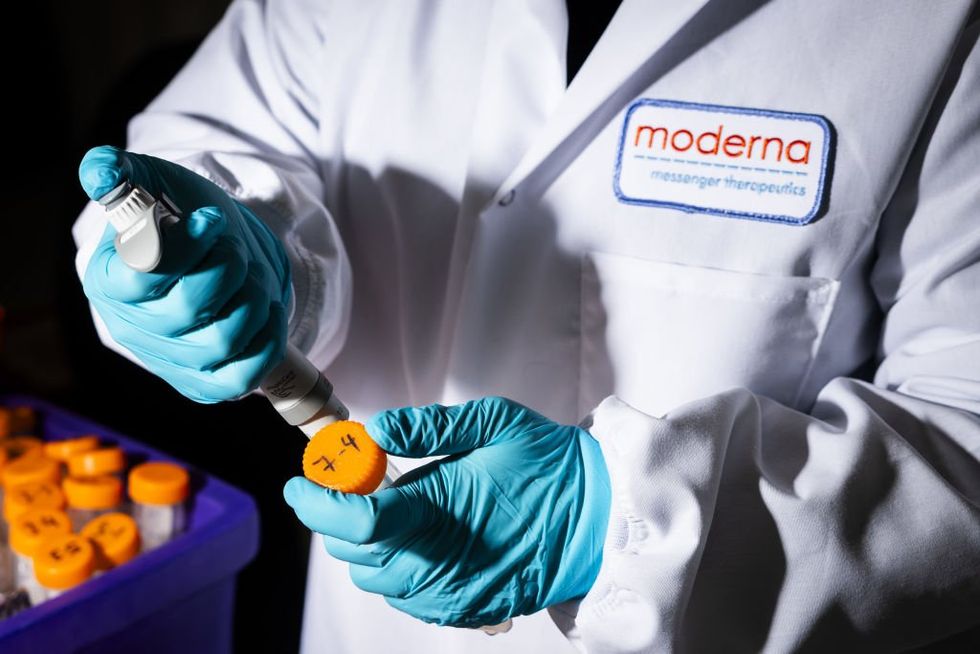
Republicans remain silent as Moderna and the FDA target our seniors

Just as we begin to fully assess the dangers of the COVID mRNA shots, the FDA has approved Moderna’s next mRNA shot for the respiratory syncytial virus without any public hearing. Regulators are also in discussions with the mRNA manufacturer to concoct a shot for the bird flu.

How is it that they can so brazenly elevate their next poison jab even as we’re still discovering the extent of the calamity from their first invention? That’s easy: a feckless Republican Party.

It should be obvious by now that mRNA should be banned altogether, yet here we are green-lighting an entirely new shot made from this poison.

The Centers for Disease Control and the FDA approved GSK and Pfizer’s RSV shots last year, including Pfizer’s shot for pregnant women, despite strong signals for pre-term births and neonatal deaths. At least the CDC and FDA held advisory meetings of their “expert” panels before doing so. But Moderna’s mRNA version of the RSV shot for seniors was quietly approved last week without any public hearing. And guess what? You can trust them that the shot is 83.7% effective with “no risks”!

Even if we took the claim of 83.7% efficacy at face value, how sick do seniors even get from a virus that mainly affects infants? Moreover, if we had a public hearing, we’d be able to scrutinize the data from Moderna’s phase-three clinical trial, which seemed to detect 200 adverse events and 10 serious events per mild case of RSV supposedly avoided. Moderna’s numbers show that for each RSV infection prevented, the shot caused 200 side effects, including 10 severe side effects. Among the total participants in the trial, those receiving the vaccine incurred an extra 10,156 side effects, including 455 rated Grade 3 or higher, in return for contracting 46 fewer cases of RSV.

The efficacy is likely a mirage. Dr. Dan Stock, a functional medicine expert and family doctor from Indiana, explained to me how the RSV vaccine of the 1960s wound up becoming “negative effective” and made kids sicker, but it didn’t occur until the second season.

“The Moderna RSV vaccine will likely have even more trouble avoiding efficacy loss than all the RSV vaccines that have come before it, and its own data show that’s true,” Stock said.

“The first indication is simply what happens whenever you make a vaccine for a rapidly changing RNA virus that only causes disease in those with compromised immune systems,” he explained. “The vaccine induces a memorized response, and rapidly a slight mutation develops that learns to evade that response, which having learned to fight one way, responds the old way to new variants.”

“Eventually, one variant, usually in year two, learns to benefit from the defective immune system’s learned response, and becomes worse than being exposed to the new variant in an unvaccinated state,” Stock said.

That’s called antibody dependent enhancement, Stock explained, and it occurs by multiple mechanisms. “The other two RSV vaccines on the market are already showing dropping efficacy approximately 18 months into their studies,” he said.

This is what we saw with the COVID shots, so, naturally, the RSV shots will be at least as bad, given their history. It should be obvious by now that mRNA vaccines should be banned altogether, yet here we are green-lighting an entirely new shot made from this poison.

We already have evidence from a Swedish study that the mRNA likely converts into DNA because it was found to integrate into the DNA of liver cells within six hours. How can Republicans not only decline to defund the COVID mRNA shots but completely ignore the FDA’s foray into RSV for seniors who have already been blasted with endless COVID shots?

At Monday’s hearing of the House Oversight Subcommittee on coronavirus with Anthony Fauci, not one Republican raised the issue of the millions of vaccine-related deaths and injuries. Subcommittee Chairman Brad Wenstrup (R-Ohio) even went so far as to thank Fauci for vaccines that “saved millions of lives.”

It is widely believed that the shots protect against critical illness, but there is no evidence of this during the period when COVID was still deadly.

Every week, new studies appear showing catastrophic damage from the first batch of mRNA shots.

A new British Medical Journal study of excess deaths in 47 countries, mainly in Europe and the United States, found that excess deaths spiked in 2021 when the vaccines were released — over and above the excess deaths in 2020, which was the first year of the pandemic without any vaccines.

Perhaps Wenstrup should read up on the academic literature from the most prestigious medical institutions in his home state of Ohio. A Cleveland Clinic study found that after monitoring 47,500 of its employees during the first part of 2024, there was a 46% greater risk of the vaccinated contracting COVID than the unvaccinated. Those with three doses were 95% more likely to get infected than people who declined the shot. People with more than three doses were a whopping 151% more likely to get infected.

In case you think “the more you inject, the more you infect” dynamic during the pandemic was limited to mild cases, a new Ohio State University study found much higher mortality from COVID among those supposedly vaccinated against it. The study, published in Frontiers in Immunology, tracked mortality outcomes among 23 vaccinated and 89 unvaccinated subjects who presented to OSU with serious cases of COVID. Shockingly (or not), there was a 70% mortality rate among those vaccinated compared with a 37% in the never-vaxxed group.

Although the sample size is small, the massive divergence in outcomes gives the results a high level of marginal significance, even when accounting for the health status of those in both groups. It is widely believed that the shots protect against critical illness, but there is no evidence of this during the period when COVID was still deadly.

As a possible culprit for the increased mortality risk among the vaccinated, the study’s authors observed an increased surge IgG4 antibodies among the vaccinated cohort. Several studies have found that the vaccines cause an unnatural surge in these tolerated, rather than neutralizing, antibodies, which could be responsible for the Trojan horse effect of allowing the virus deeper access into the body behind the defenses of the immune system.

Meantime, a new preprint from Oxford researchers examined 1 million children to compare the rates of myocarditis and pericarditis among those vaccinated as compared to those unvaccinated but recovered from COVID. They found no cases among those unvaccinated, even though the spike protein of the virus itself could harm cardiovascular health. This means that when we see all the data showing excess heart attacks beginning in 2021, it’s likely that almost all of them emanated from the vaccine, not the virus.

How many more studies, data points, and government documents do we need to uncover for it to be fashionable among Republicans to fight these mRNA shots?

What is so shocking is that the South Carolina legislature, at the behest of Republican Governor Henry McMaster, is convening a special session to take up the health czar bill to consolidate the state’s health bureaucracy without addressing a single odious policy of those agency heads. To this day, the South Carolina Department of Health and Environmental Control recommends COVID shots for infants. Where is the urgency to convene special sessions in red states to take these shots off the market?

In that sense, who could blame Moderna and the FDA for proceeding to the next mRNA poison shot when the so-called opposition party refuses to recognize the human tragedy of their first experiment?

Read More
COVID-19

It’s time to let go of Anthony Fauci

I lost my best friend almost exactly four years ago, in the waning days of May 2020. Although I am sure he is listed somewhere as a casualty of the pandemic, the actual story of his death is slightly more complicated.

He suffered all his life from severe Crohn’s disease. He had a bad flare-up at the worst possible time: February 2020, just as pandemic panic was nearing its peak. After a failed surgery that was intended to remove a problematic part of his small intestine, doctors determined that he needed an entirely new small intestine and ordered a small intestine transplant.

Here in 2024, three years after the fact, Fauci has ceased to be a person. He is now a totem.

The hospital that was treating him was not capable of performing this operation, so plans were made to transfer him to another facility. Unfortunately, almost immediately thereafter, my friend caught COVID while in the hospital, and his transfer to another hospital that might have helped him was forever delayed.

Because his condition was so poor at the outset, he had to go on a ventilator for respiratory support for weeks to address the COVID. By the time he recovered from the effects of COVID, his intestines had developed a fistula, and complications of the fistula eventually took his life.

Until the end, he remained conscious and was able to communicate, at least via text message. He was a very social person, and his one complaint about his time in the hospital was that he was not allowed to see anyone.

Day after day he expressed his wish to me to see an actual friendly face who was not a nurse. I wanted to go sit with him. I asked hospital staff if I would be allowed if I signed a waiver or whatever they required so that he would not have to spend what we both knew would likely be the last few weeks of his life alone.

I was refused.

The COVID-19 pandemic, combined with the hysterical protocols instituted in response to it, killed my best friend — and worse, made him die alone.

Where does the anger lead?

George Floyd died just a couple of days before my friend did. I barely noticed at the time; I was so consumed by anger and grief over what was happening. My friend’s desire, expressed frequently to anyone who knew him well, was for his ashes to be spread in California, where he always said he was happiest while in college.

As it became clear that COVID-19 protocols would also deny him this last dignity, events in the world at large began to sink in. I watched in amazement and slowly mounting anger as city after city was wracked by throngs of shouting people marching in the streets, with nary a mask in sight and no one telling them to get back inside and isolate.

It was impossible to avoid the conclusion that people were dying alone, deprived of even funerals, for absolutely no scientific reason at all. And it was becoming equally clear around the same time that the official story about where the pandemic came from was likely bogus — or if not bogus, certainly not as scientifically settled as leading lights, including Dr. Anthony Fauci, were making it out to be.

I don’t say all this to ask for pity. My story is merely one of millions like it in America and tens of millions more throughout the world.

My only point is this: I’ve had ample time and opportunity to stew in anger toward the medical establishment in this country and toward Fauci in particular.

And as I watched the debacle unfold before the House Coronavirus Select Subcommittee on Monday, I was seized by only one thought: This is pointless, and it needs to stop.

Getting to the truth

I have my own theories and beliefs about Fauci and his motivations, particularly when it comes to his actions to obfuscate the truth about the origins of the pandemic that has now killed millions. Suffice to say, those theories and beliefs are not flattering. I would like nothing more than for some way to be found to force Fauci to tell the whole, unvarnished truth about what he knew in those early days of the pandemic.

It should be evident by now that no such truth serum exists. And even if it did exist, it would likely only confirm that Fauci was covering his own backside in the possible event that it was discovered that the Wuhan Institute of Virology was responsible for the pandemic. There’s no real way, after all, that Fauci himself could have actually known where the pandemic started.

The reality is this: We had one shot to get an honest look at the evidence, and the World Health Organization responded by sending in a team that featured all the people who stood to gain the most from concluding that the pandemic had a natural origin, including of all people the now-disgraced Dr. Peter Daszak. The chances that the WHO task group was going to reach the truth were zero from the start, just based on how the group was conducted.

But we should not deceive ourselves. Even if honest brokers had been sent to China to investigate, the Chinese government was never going to allow a real investigation, as even the compromised WHO investigatory team was forced to admit. And the Chinese government is certainly not now going to let any actual investigation occur, short of a military invasion, which no country in the world (including the United States) will undertake.

And so we must content ourselves with the evidence we have, which is not enough to reach an ironclad conclusion. It certainly looks suspicious, and I know what I believe is the most likely source of the pandemic outbreak, but I am forced to concede that if I were called upon to prove it in a criminal court, I could not do it.

Forever and always, it seems that the best we will be able to do for ourselves when it comes to asking where the pandemic came from is “probably.” I want nothing more than to know for sure. I have spent more hours looking at this question than perhaps any other question I’ve put my mind to. And “probably” is as far as I can get.

Inept and embarrassing questions

As I watched Monday’s hearings, I was not surprised to learn that I still have plenty of capacity for anger over what has been done to us by the pandemic and also by our government in response to the pandemic.

The content of the hearings, though, made clear that continued anger at Fauci is distracting us from the bigger issue at hand. It’s also pointless. Everyone already knows what they think about Fauci, and those thoughts are likely impenetrable. The only thing more exasperating than the ineptitude of most of Fauci’s Republican interlocutors was the parade of Democrats doing their best impersonation of group of besotted Taylor Swift fans while clearly striving to be Fauci’s biggest white knight for the television cameras.

That this is personal to Fauci himself could not be clearer. Two weeks ago, one of Fauci’s top advisers, David Morens, testified before this same subcommittee about email exchanges in which he clearly advised key players in the potential lab-leak cover-up to hide emails from the public. Morens was unceremoniously blistered by both Republican and Democrat alike, with no less illustrious a right-winger than former NAACP President Kweisi Mfume (D-Md.) intoning at one point, “I think you are going to be haunted by your testimony here today. And it’s all on the record.”

Yet, sitting in the same chair, Fauci was summarily excused from responsibility for Morens by the same Democrats based on the facially laughable excuse that he didn’t really get any advice from his senior adviser.

The next virus that escapes from a lab might well be ten or a hundred times more deadly than COVID-19 was.

The number of people who have any sort of nuanced, fact-based view of Fauci and his actions is so small that it might as well be nonexistent. Here in 2024, three years after the fact, Fauci has ceased to be a person. He is now a totem, and which side of the partisan divide you sit on depends on whether you think the deity he represents is evil or benign.

This is a role that Fauci is happy to play, because it obscures the question that he doesn’t want you to ask, which is: Why would Fauci be desperate to cover up a leak from a Chinese lab in the first place? Why would it be important to him that people accept the natural origin theory?

The conventional answer is that he sought to avoid personal and professional embarrassment for having potentially funded the WIV with grant money that his agency approved. That may well play a part, but I don’t think it has played the most significant part in Fauci’s calculus at all.

I think Fauci, who is 83 and was close to retirement even at the beginning of the pandemic, is and always has been much less interested in protecting his own image than he is in protecting the kind of research that may well have caused the lab leak — research that he devoutly believes in.

Research that, without exaggeration, threatens the future of humankind.

I am talking, of course, about gain-of-function research, a phrase that as yet has only pierced the consciousness of the very most online and politically committed individuals.

That is something that needs to change, and it needs to become a nonpartisan issue, because the next virus that escapes from a lab might well be ten or a hundred times more deadly than COVID-19 was.

Dangerous experiments

Fauci, of course, has been a champion of gain-of-function research since long before COVID-19 ever existed. And he has needed to champion it, because before the COVID-19 pandemic, there was bipartisan, ongoing, and constant concern about whether it should be allowed at all.

The controversy first erupted in 2011 when a team of scientists funded by the NIH intentionally created a version of the bird flu that had an astonishing 60% fatality rate and then blithely bragged about it in a paper they sought to publish.

This obviously dangerous experiment touched off a firestorm that might have been contained exclusively to the scientific community if one of the scientists involved in peer review had not flagged a concerned official in the Obama administration. Fauci responded by taking the extraordinary step of co-authoring a Washington Post op-ed defending the need for gain-of-function research.

After years of back-and-forth, the Obama administration finally announced a moratorium on gain-of-function research in 2014, and since that time, Fauci has been fighting a tireless rearguard action to revive public funding for research that makes viruses deadlier. He also, by all accounts, worked with his superior Francis Collins to ensure that researchers were able to find loopholes in the moratorium.

Finally, in 2017, Fauci prevailed upon the Trump administration to lift the moratorium. You would be forgiven for being confused at this point if you’ve followed the modern political discourse, which has suggested that only the ultra MAGAs of the world oppose gain-of-function research.

The reality is the exact opposite: The Democrats were the first to see the danger of this research, and they were right. Republicans reversed them, and they were wrong.

Most of the media is frankly not interested in knowing the particulars of the issue, but they know that Senator Rand Paul (R-Ky.) seems to be strongly against gain-of-function research, so they assume it must be great. And around and around goes the dumb discourse about the most important issue of the last century.

The real threat

I don’t think we need any more show hearings where Anthony Fauci is alternately yelled at and feted upon. Anthony Fauci is gone. He’s never coming back to government service. By all means, people should argue about his legacy, and that book is definitely not yet closed. I have no problem with heated debate over Fauci’s legacy, but the reality is that Fauci isn’t an ongoing threat.

Gain-of-function research is. And gain-of-function research continues to exist. Worse, it’s continuing to get more and more dangerous. Incredibly, the U.S. Department of Agriculture was revealed earlier this year to have begun a new study in 2021 on an even more dangerous avian flu with, incredibly, the Chinese Academy of Sciences — an institution that oversees the Wuhan Institute of Virology.

And this is exactly what Anthony Fauci wants. He truly believes in his heart that it is the right thing for humanity for these risky experiments to go forward. He might even be right. I certainly don’t begrudge him having that opinion.

But what I do begrudge him are his efforts to keep the rest of us ordinary folks out of having an informed say on what he and his colleagues are doing with our tax dollars in the name of research. I do begrudge his dishonest campaign to split hairs with Rand Paul over what his agency has been doing in clear violation of the spirit of both the Obama gain-of-function moratorium and the P3CO framework.

The best way to fight back, though, is not to haul him in front of cameras and yell at him. He seems more or less immune to that, and he certainly at this point cannot be made to say anything he has not already said. Every one of these appearances probably just serves to help some clever businessmen to sell more of those ridiculous shirts with his face on them to his liberal fans.

The best way to fight back is to turn our attention back to where it belongs: on the risky research he’s likely been hoping we’ll forget. Our survival, quite literally, might depend on it.

Read More
COVID-19

Scientists acknowledge COVID vaccines and containment protocols may have boosted excess mortality

Dutch researchers indicated in a new peer-reviewed study that COVID-19 vaccines and governmental containment policies may have boosted excess mortality in the West.

The study, published Monday in the peer-reviewed journal
BMJ Public Health, explored excess all-cause deaths in 47 Western countries from 2020 to 2022. It indicated that during this period, there were 3,098,456 excess deaths: 87% of the countries under review suffered excess mortality in 2020; 89% in 2021; and 91% in 2022.

The researchers made clear that excess mortality “includes not only deaths from SARS-CoV-2 infection but also deaths related to the indirect effects of the health strategies to address the virus spread and infection.”

What caught the researchers’ attention was not only the persistence of high excess mortality following the pandemic but that “the highest number of excess deaths [1,256,942] was recorded” in 2021 — the year containment measures were coupled with experimental vaccination.

In 2020, when Western citizens largely only had to contend with the virus, government-limited mobility rights and shuttered schools, churches, workplaces, restaurants, and parks, there were 1,033,122 excess deaths.

In 2022, when most containment protocols had been lifted and uptake of COVID-19 vaccines was in fast decline, researchers indicated there were 808,392 excess deaths.

‘This is unprecedented and raises serious concerns.’

These massive figures reflect the difference in the number of reported deaths in a country in a given year and the expected number of deaths under normal conditions. For a baseline, the Dutch researchers used Ariel Karlinsky and Dmitry Kobak’s linear regression estimate model, which draws on “historical death data in a country from 2015 until 2019 and accounts for seasonal variation in mortality and year-to-year trends due to changing population structure or socioeconomic factors.”

“Excess mortality has remained high in the Western World for three consecutive years, despite the implementation of COVID-19 containment measures and COVID-19 vaccines,” wrote the researchers. “This is unprecedented and raises serious concerns.”

“During the pandemic, it was emphasized by politicians and the media on a daily basis that every COVID-19 death mattered and every life deserved protection through containment measures and COVID-19 vaccines,” continued the researchers. “In the aftermath of the pandemic, the same morale should apply.”

The Dutch researchers noted at the outset of their study that while experimental COVID-19 vaccines and draconian containment measures may have been effective in protecting segments of the population — particularly those with comorbidities and the elderly — they nevertheless had “detrimental effects that cause inferior outcomes as well.”

“Although COVID-19 vaccines were provided to guard civilians from suffering morbidity and mortality by the COVID-19 virus, suspected adverse events have been documented as well,” wrote the researchers.

The secondary analysis of the placebo-controlled, phase III randomized clinical trials of mRNA COVID-19 vaccines showed that the Pfizer trial had a 36% higher risk of serious adverse events in the vaccine group. The risk difference was 18.0 per 10000 vaccinated (95% CI 1.2 to 34.9), and the risk ratio was 1.36 (95% CI 1.02 to 1.83). The Moderna trial had a 6% higher risk of serious adverse events among vaccine recipients. The risk difference was 7.1 per 10,000 vaccinated (95% CI −23.2 to 37.4), and the risk ratio was 1.06 (95% CI 0.84 to 1.33).39. By definition, these serious adverse events lead to either death, are life-threatening, require inpatient (prolongation of) hospitalization, cause persistent/significant disability/incapacity, concern a congenital anomaly/birth defect or include a medically important event according to medical judgement.

Previous comparisons of established flu vaccines to the novel mRNA vaccines — which the Dutch researchers indicated have been classed in multiple French studies as “gene therapy products requiring long-term stringent adverse events monitoring” — have revealed the latter to carry a far higher risk of serious adverse reactions.

‘Both medical professionals and citizens have reported serious injuries and deaths following vaccination.’

COVID-19 vaccines have also been linked to various ailments, including heart disease, blood clots, hemorrhages, gut issues, thromboses, myocarditis, pericarditis, and autoimmune diseases. A number of these linkages have been well-demonstrated and even admitted by pharmaceutical giants,
as in the case of AstraZeneca.

The Dutch researchers indicated that some of the risks these experimental vaccines carry were realized overtime outside of clinical trials: “Both medical professionals and citizens have reported serious injuries and deaths following vaccination to various official databases in the Western World, such as VAERS in the USA, EudraVigilance in the European Union and Yellow Card Scheme in the UK.”

The researchers framed the dangers posed by the vaccines as even more troubling given the understanding that the threat posed by the virus was overblown.

The pre-vaccination infection fatality rate for persons over 60 was reportedly 0.03% and the rate was 0.07% for those over 70. It posed virtually no threat to people ages 19 and younger, who alternatively faced an infection fatality rate of 0.0003%.

Gordon Wishart, chief medical officer at Check4Cancer,
told the Telegraph, “The authors are correct to point out that many vaccine-related serious adverse events may have been unreported, and point to the fact that the simultaneous onset of excess mortality and Covid vaccination in Germany is worthy of further investigation on its own.”

Just as the vaccines were nowhere near as “safe and effective” as promised, the supposed health safety protocols appear to have had an inverse effect.

The study acknowledged that it is challenging to differentiate between the various causes of excess mortality, particularly because national mortality registries “not only vary in quality and thoroughness but may also not accurately document the cause of death,” and there was a lack of consensus in the medical community on whether to label deaths of persons infected with COVID-19 but not caused by the disease as COVID-19 fatalities.

However, they appeared confident enough to assert that “indirect effects of containment measures have likely altered the scale and nature of disease burden for numerous causes of death since the pandemic,” citing a study that indicated there was a “substantial increase” in American deaths attributed to non-COVID causes in the first two years of the pandemic.

American heart disease deaths were apparently 6% above baseline in 2020 and 2021. Diabetes deaths were 17% over baseline in 2020 and 13% over in 2021. Alzheimers disease mortality was up 19% in 2020 and 15% in 2021. Alcohol-related deaths were 28% over baseline in 2020 and up 33% in 2021. Drug-related deaths were 33% over baseline in 2020 and up 54% in 2022.

The study noted that “lockdowns, school closures, physical distancing, travel restructions, business closures, stay-at-home orders, curfews, and quarantine measures with contract tracing” had numerous adverse indirect effects such as “economic damage, limited access to education, food insecurity, child abuse, limited access to healthcare, disrupted health programmes and mental health challenges” that increased morbidity and mortality from other causes.

The researchers concluded by recommending policymakers and government officials to “thoroughly investigate underlying causes of persistent excess mortality and evaluate their health crisis policies.”

Like Blaze News? Bypass the censors, sign up for our newsletters, and get stories like this direct to your inbox. Sign up here!
Read More
COVID-19

FDA approves new Moderna mRNA vaccine without bothering with independent advisers

The U.S. Food and Drug Administration has
approved Moderna’s mRNA-1345 vaccine, which allegedly protects adults aged 60 and older from respiratory syncytial virus infection-caused lower respiratory tract disease.

The agency’s
breakthrough therapy designation approval for the drug, which will be marketed as mResvia, is only the second Moderna drug the FDA has approved. More significantly, it is the first mRNA vaccine to have been approved to address a disease other than COVID-19.

‘We did not refer your application to the Vaccines and Related Biological Products Advisory Committee.’

Even though that amounts to a big step, it appears the regulator was keen to jump past additional levels of scrutiny.

The FDA
noted in its Friday approval letter, “We did not refer your application to the Vaccines and Related Biological Products Advisory Committee because our review of information submitted in your [biologics license application], including the clinical study design and trial results, did not raise concerns or controversial issues that would have benefited from an advisory committee discussion.”

The advisory committee’s job is to review and evaluate data concerning the “safety, effectiveness, and appropriate use of vaccines and related biological products,” then provide independent expert advice to the agency.

According to the pharmaceutical company, the approval was based on “positive data from the Phase 3 clinical trial ConquerRSV, a global study conducted in approximately 37,000 adults ages 60 or older in 22 countries.”

Nearly 20,000 of the trial participants were based in the United States. There are at least 11 other studies under way examining the impact of the novel drug on other demographics.

The company claimed in a Feb. 29
overview of its trial data that the vaccine “continued to be efficacious through median 8.6 months follow-up” and was shown to prevent severe RSV disease “base on analysis of shortness of breath and medically attended RSV-[lower respiratory tract disease].”

The vaccine’s efficacy is allegedly 83.7%. Reuters noted, however, that the label indicates the shot is only 79% effective at preventing at least two symptoms of RSV, such as fever and cough.

While the overview insisted that the vaccine was relatively effective and safe, it nevertheless highlighted a number of “systemic reactions” reported within seven days of vaccination, such as headache, fatigue, myalgia, arthralgia, and chills, besides customary injection site pain.

A Moderna-funded
study published in the New England Journal of Medicine similarly alleged that a single dose of the vaccine “resulted in no evident safety concerns.”

Despite similarly having been presented as a safe vaccine, Moderna’s COVID-19 vaccine was
linked in various studies, including in an FDA-funded study, to an increased risk of myocarditis and pericarditis, particularly in men ages 18-25.

Extra to heart inflammation, the Global COVID Vaccine Safety Project — a Global Vaccine Data Network initiative supported by both the CDC and the Department of Health and Human Services —
revealed in a February study in the esteemed journal Vaccine that “Bell’s palsy had an increased [observed to expected] ratio after a first dose of [Pfizer’s] BNT162b2 and [Moderna’s] mRNA-1273.”

The study also noted that “there were also increased OE ratios for febrile seizures following a first and second dose of mRNA-1273 … and for generalized seizures following first mRNA-1273 dose and fourth BNT162b2 dose.”

Blaze News previously reported that the University of Auckland, which hosts the Global Vaccine Data Network, noted that there were safety signals for “acute disseminated encephalomyelitis (inflammation and swelling in the brain and spinal cord) after viral vector and mRNA vaccines.”

Despite outstanding concerns about its only other approved vaccine, Moderna appears confident in its product and has evidently secured the FDA’s confidence as well. Its next stop is the Centers for Disease Control and Prevention, whose Advisory Committee on Immunization Practices will review the vaccine during its June 26-27 meeting.

Analysts estimate Moderna will do roughly $340 million in RSV vaccine sales this year and possibly $830.5 million in 2025, reported Reuters.

Like Blaze News? Bypass the censors, sign up for our newsletters, and get stories like this direct to your inbox. Sign up here!
Read More
COVID-19

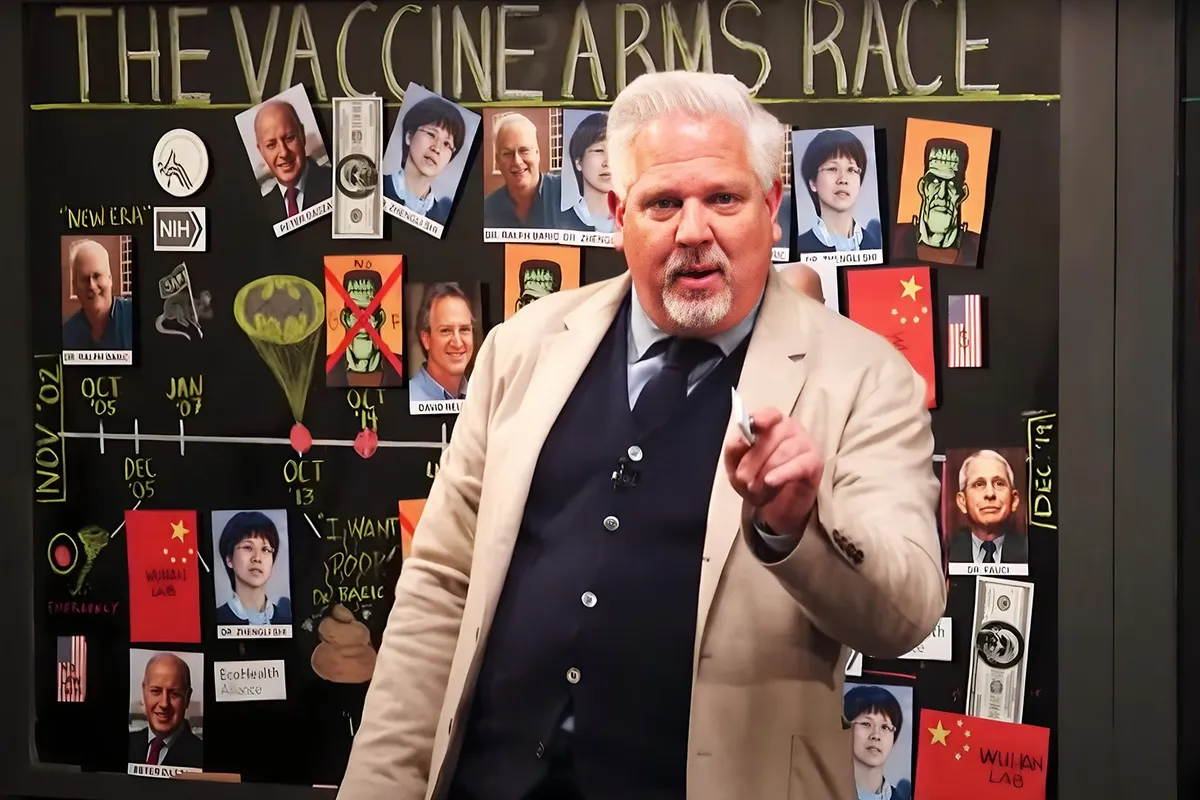
Flashback: Why did Moderna sign a government contract for its vaccines before COVID-19?

When Dr. Fauci testified before a House subcommittee on the origins of COVID-19, many thought the time had finally come for tough questions.

While the questions asked made it clear that he lied about six-foot distancing and masking — Glenn Beck knows it could, and should, have been a lot worse.

“I find this incredible that we’ve missed this,” Glenn says, noting that the government signed a contract with Moderna on December 12, 2019, that ensured the pharmaceutical company would not be held liable for its vaccines.

The contract was originally proposed in 2015.

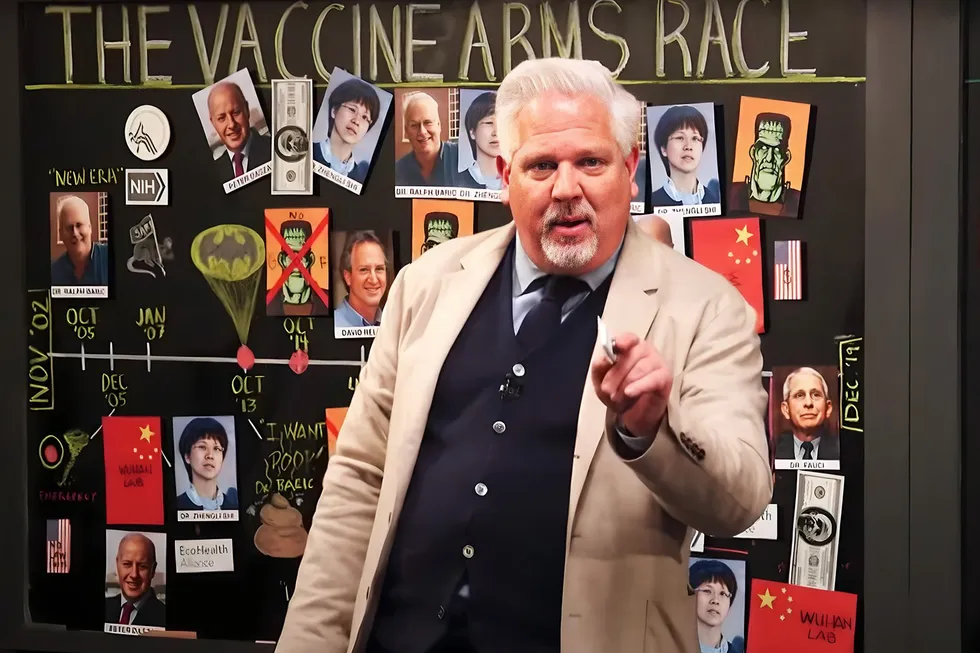
“I’ve been through many, many high level negotiations, but I’ve never seen anything that started four years before. Coincidentally, once they find the Frankenstein virus and then they negotiate for four years, and what a coincidence, they sign it just before the breakout of COVID,” Glenn says.

Not only was the pharmaceutical company ready far before the outbreak, but Dr. Fauci had been funding gain-of-function research — which he has continuously lied about.

“There’s lie number one. Then this strange, ‘Hey let’s partner with Moderna.’ I don’t think this is normal,” Glenn continues, noting that the gain-of-function research was paid for by American taxpayers.

“Where’s the money, where’s it going? My feeling is it’s going to fund more of this,” he predicts, adding, “We already know Fauci was funding the Wuhan lab. We also recently found out that he was funding experiments that killed puppies in a gruesome way. So, what else was getting funded through government and private funds?”

After following the money trail as well as endless incriminating emails, Glenn has come to a conclusion.

“Is there any other way to describe it other than Fauci and the president’s science advisor colluding behind the president’s back, withholding information from him?” he asks.

“Fauci has already been brought in front of Congress and Rand Paul caught him in a bold-faced lie. Fauci will testify again, but it’s probably time to bring in the former president’s science advisor as well.”

Want more from Glenn Beck?

To enjoy more of Glenn’s masterful storytelling, thought-provoking analysis, and uncanny ability to make sense of the chaos, subscribe to BlazeTV — the largest multi-platform network of voices who love America, defend the Constitution, and live the American dream.

Read More
COVID-19

‘Because I said so’: 5 takeaways from the Fauci hearing

Former director of the National Institute of Allergy and Infectious Diseases Anthony Fauci was
grilled by the Subcommittee on the Coronavirus Pandemic for 14 hours in January. In the lengthy interview, Fauci admitted that he was unaware of any scientific studies demonstrating that masking for children worked or that the 6-foot social distancing guidelines — which effectively shut down schools, churches, and businesses — were an effective way of curbing the spread of the coronavirus. Fauci also acknowledged that the lab leak theory was not a conspiracy theory as he previously suggested.

Fauci, who plays a starring role in BlazeTV’s “The Coverup,” appeared before the committee Monday to speak to these admissions as well as to his role in overseeing the funding of deadly gain-of-function experiments.

”Because I said so.’ That’s never been good enough for Americans and it never will be.’

Committee Chairman Brad Wenstrup (R-Ohio)
told Fauci at the outset, “Whether intentional or not, you became so powerful that any disagreements the public had with you were forbidden and censored on social and most legacy media time and time again. That is why so many Americans became so angry — because this was fundamentally un-American.”

“‘Because I said so.’ That’s never been good enough for Americans and it never will be,” added Wenstrup. “Americans do not want to be indoctrinated. They want to be educated.”

The hearing had the potential to be educational; however, Democratic committee members opted for the latter, celebrating Fauci, defending his preferred narratives, and lobbing attacks on their political opponents.

Republican lawmakers, alternatively, attempted to hold Fauci’s feet to a low-heat fire, largely failing to get results.

What follows are five key takeaways from the Fauci hearing.

1. Not so effective after all

When asked straight out by Wenstrup whether the vaccine “stopped transmission of the virus,” Fauci answered, “That is a complicated issue because in the beginning, the first iteration of the vaccines did have an effect — not 100%, not a high effect — they did prevent infection and subsequently, obviously transmission.”

‘I feel extreme confidence in the safety and the efficacy of this vaccine.’

“However, it’s important to point out something that we did not know early on that became evident as the months went by is that the durability of protection against infection and hence transmission was relatively limited whereas the duration of protection against severe disease, hospitalization, and death was more prolonged,” said Fauci. “In the beginning it was felt that in fact it did prevent infection and thus transmission.”

After discovering Fauci
would not disavow any of the draconian COVID measures he championed during the pandemic, Rep. Michael Cloud (R-Texas) also asked Fauci about his support for vaccine mandates and the efficacy of vaccines.

Fauci reiterated, “It clearly prevented infection in a certain percentage of people, but the durability of its ability to prevent infection was not long.”

Fauci was one of the most visible and consistent exponents of the “safe and effective” mantra, having
claimed in December 2020, “I feel extreme confidence in the safety and the efficacy of this vaccine and I want to encourage everyone who has the opportunity to get vaccinated so that we can have a veil of protection over this country, that would end this pandemic.”

2. Fauci: The blameless victim

Whereas Republican members blasted the former NIAID director for funding dangerous experiments of the kind that may have kicked off the pandemic as well as his years-long promotion of falsehoods, Democrats painted Fauci as a blameless victim and seized on the opportunity, as Rep. Jamie Raskin (D-Md.) did, to attack former President Donald Trump and other Republicans.

Rep. Debbie Dingell (D-Mich.) told Fauci, “You’re human, just like the rest of us,” and stressed that he “deserve[s] better.”

“I’ve seen your commitment not just to science, but to, again, to the greater good,” said Dingell.

‘You have been a hero to many for 54 years.’

After singing Fauci’s praises, Dingell gave Fauci an opportunity to complain about facing criticism and perceived threats.

Democratic Reps. Dingell, Robert Garcia (Calif.), Jill Tokuda (Hawaii), Katherine Castor (Fla.), Raul Ruiz (Calif.), and Kweisi Mfume (Md.) similarly engaged in hagiography.

“We owe you an apology for the way we have dragged you through the mud,” said Mfume.

“You have been a hero to many for 54 years,” continued Mfume. “You are a world-renowned scientist and an American patriot.”

Mfume made no mention of Americans who have suffered vaccine injuries but instead spoke in the abstract of “thousands of American lives [that] could have been spared” if they had not followed so-called conspiracy theories during the pandemic.

After paying his respects to Fauci, Rep. Garcia asked whether the “American public should listen to America’s brightest and best doctors and scientists, or instead listen to podcasters, conspiracy theorists, and unhinged Facebook memes.”

“Listening to the people just described is going to do nothing but harm people because they will deprive themselves of life-saving interventions,” said Fauci, who was among the so-called experts who
cautioned against using ivermectin to fight COVID-19.

Fauci proceeded to accuse the unvaccinated of getting an estimated 200,000-300,000 killed in the U.S. alone.

3. Fauci hangs ‘inner circle’ out to dry

Oversight Committee Chairman James Comer (R-Ky.) noted that there is “a troubling pattern of behavior” in Fauci’s “inner circle,” naming Fauci’s
David M. Morens, senior scientific adviser to the head of the NIAID, and Fauci’s former chief of staff as two offenders.

Comer pressed Fauci on whether Morens violated NIH policy by using a personal email for official purposes. Fauci appeared more than willing to throw his former adviser and frequent correspondent under the bus, indicating Morens’ personal email use to avoid transparency was indeed in violation of agency policy.

“Does it violate NIAID policy to delete records to intentionally avoid FOIA?”

“Yes,” said Fauci.

‘That was wrong and inappropriate and violated policy.’

“On April 28, 2020, Dr. Morens edited an EcoHealth press release regarding the grant termination. Does that violate policy?” asked Comer.

“That was inappropriate for him to be doing that for a grantee as a conflict of interest, among other things,” said Fauci.

“On March 29, 2021, Dr. Morens edited a letter that Dr. Daszak was sending to NIH. Does that violate policy?” asked Comer.

“Yes, it does,” answered Fauci.

“On Oct. 25, 2021, Dr. Brady provided Dr. Daszak with advice regarding how to mislead NIH on EcoHealth’s late progress report. Does that violate policy?” asked Comer.

“That was wrong and inappropriate and violated policy,” said Fauci.

“On Dec. 7, 2021, Dr. Morens wrote to the chair of EcoHealth board of directors to quote, ‘Put in a word,’ for Dr. Daszak. Does that violate policy?” asked Comer.

“Should not have been done, and that was wrong,” said Fauci. “Well, I’m not sure of a specific policy, but I imagine that does violate policy. Should not have been doing that.”

4. Fauci denies funding gain-of-function research

Rep. Debbie Lesko (R-Ariz.) asked Fauci whether the National Institutes of Health funded gain-of-function research at the Wuhan Institute of Virology.

‘I would not characterize it as dangerous gain-of-function research.’

“I would not characterize it the way you did,” said Fauci, contradicting the NIH’s account. “The National Institutes of Health, through a sub-award to the Wuhan Institute of Virology, funded research on the surveillance of and the possibility of emerging infections. I would not characterize it as dangerous gain-of-function research.”

Elsewhere in his testimony Monday, Fauci
said that “according to the regulatory and operative definition of [Proposed Research Involving Enhanced Potential Pandemic Pathogens], the NIH did not fund gain-of-function research at the Wuhan Institute of Virology.”

Lesko quoted NIH Principal Deputy Director Lawrence Tabak as acknowledging the “failure of the Wuhan Institute of Virology to provide us with the data that we requested and the lab notebooks that we requested, [which] certainly impeded our ability to understand what was really going on with the experiments that we have been discussing.”

Granted the lack of transparency at the infamous lab, Lesko asked Fauci how he can be certain that the National Institutes of Health did not fund gain-of-function research on coronaviruses in China granted its subcontractor EcoHealth Alliance’s reporting failures.

Fauci once again stressed that the NIH did not fund the deadly research in question, which EcoHealth Alliance’s subcontractor specialized in.

5. Downplayed likelihood of lab leak

Fauci claimed Monday that the idea he covered up a lab leak was “preposterous.”

Fauci indicated in his opening statement that he was informed on Jan. 31, 2020, “through phone calls with Jeremy Farrar, then director of the Wellcome Trust in the U.K., and then with Christian Anderson, a highly regarded scientist at Scripps Research Institute, that they and Eddie Holmes, a world class evolutionary biologist from Australia, were concerned that the genomic sequence of SARS-CoV-2 suggested that the virus could have been manipulated in a lab.”

Fauci then noted he partook in a conference call the next day “with about a dozen international virologists to discuss this possibility versus a spillover from an animal reservoir.”

Despite indications to the contrary, Fauci claimed, “The accusation being circulated that I influenced these scientists to change their minds by bribing them with millions of dollars in grant money is absolutely false and simply preposterous. I had no input into the content of the published paper,” referencing the March 2020 study published in the journal Nature, “The Proximal Origins of SARS-CoV-2.”

“The second issue is a false accusation that I tried to cover up the possibility that the virus originated from a lab. In fact, the truth is exactly the opposite,” continued Fauci. “I have repeatedly stated that I have a completely open mind to either possibility and that if definitive evidence becomes available to validate or refute either theory, I will readily accept it.”

Rep. Jim Jordan (R-Ohio) later asked Fauci whether he downplayed the lab leak theory on account of having funded experimental viruses at the Wuhan lab — funding Fauci copped to but Ranking Member Raul Ruiz nevertheless cast doubt on in his closing remarks.

Fauci, prickled by the suggestion that he tried to downplay the possibility he had fingerprints on research that got millions of Americans killed, answered in the negative.

Like Blaze News? Bypass the censors, sign up for our newsletters, and get stories like this direct to your inbox. Sign up here!

Read More