Hack-and-leak vs social media
The efforts of Facebook and Twitter to be seen as neutral platforms ahead of the US election have instead placed them in the limelight.
Both social media platforms were caught in a quandary this week when the New York Post began to publish a series of stories based on an unverified trove of emails and photos from a discarded laptop allegedly owned by Hunter Biden, son of presidential candidate Joe Biden.
The Post said it had “blockbuster correspondence” showing Hunter Biden had arranged for his dad, then the vice-president, to meet a Ukrainian businessman, “which flies in the face of Joe Biden’s claim that he’s ‘never spoken to my son about his overseas business dealings’”.
Both social media platforms took action to limit the spread of the article so they could verify the allegations, a rare action against a traditional newspaper, in this case a tabloid founded in 1801.
Twitter, citing its Hacked Materials Policy from 2018, blocked users from linking to the article and even locked the account of White House press secretary Kayleigh McEnany for sharing it. But by Thursday night it cited unintended consequences and announced it would change its policies.
To critics, the swift action may constitute election interference and a violation of free speech. For supporters, these were valiant moves to avoid the mistakes of 2016, when hacked materials and deliberate falsehoods were widely shared to sway the election.
Casey Newton writes that the very point of “a hack-and-leak operation” — if that’s what this story is based on, which isn’t clear yet — “is designed to spread far and wide long before all the real facts can be known.” If mainstream media pick up the story “and an odour of scandal attaches itself to the Biden campaign, the operation (assuming it is an operation) will have worked,” he writes. “But if they treat the story as the platforms did, with severe scepticism, the story may remain confined to the rightwing conspiracy sphere.”
The FT’s Richard Waters said “putting the brakes on how fast information can spread until its validity can be established . . . seems a pragmatic way to protect users without heavy-handed censorship,” but it’s one that interferes with the fundamental design of how these platforms work.
The Internet of (Four) Things
1. “The Android of EVs”
Foxconn, the Taiwanese manufacturer best known for assembling iPhones, wants to become “the Android of EVs,” said William Wei, chief technology officer. The FT’s Kathrin Hille says Foxconn is building an open platform “to share important software and hardware designs” to cut costs and launch vehicles more quickly. It is in talks with a number of carmakers and aims for a 10 per cent market share by 2025-2027, when global production of electric vehicles is expected to be around 30m.
2. Nikola shares plummet on changed plans
Nikola shares fell 14 per cent after the troubled fuel cell truck start-up’s new CEO played down the importance of the Badger pick-up truck, which was to be built in partnership with GM. The company had previously called the vehicle “a game changer” and helped propel its stock to a valuation greater than Ford’s. Amid accusations of fraud and the departure of its founder, the unsigned GM partnership is in question.
3. YouTube takes down QAnon videos
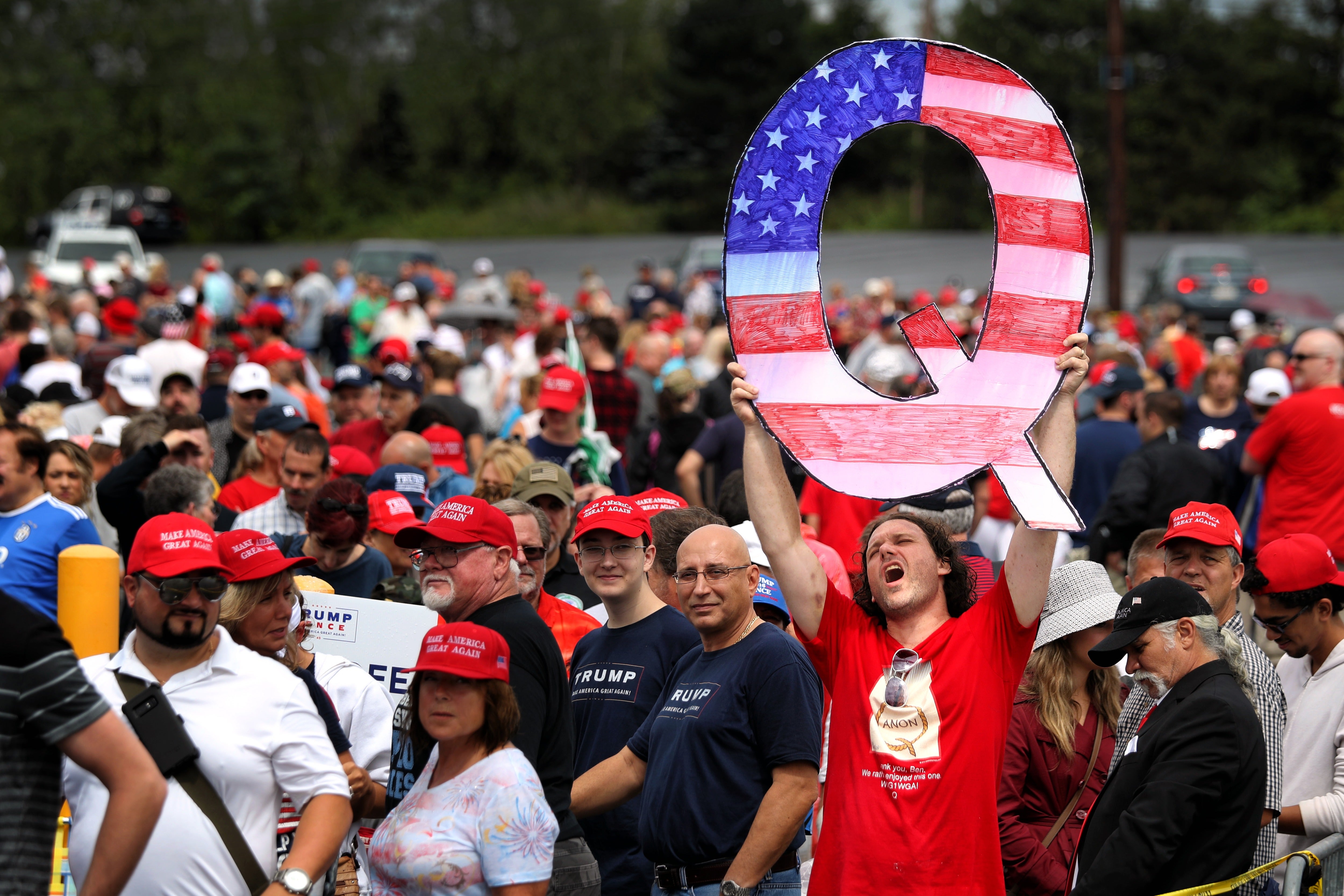
YouTube has cracked down on videos promoting QAnon, the far-right conspiracy theories that President Donald Trump refused to denounce in a Thursday night town-hall interview on NBC. YouTube said it had removed “tens of thousands” of videos and would “prohibit content that targets an individual or group with conspiracy theories that have been used to justify real-world violence”, citing QAnon and related conspiracy theory Pizzagate. Mr Trump said he didn’t know much about QAnon and then defended a retweet suggesting the killing of Osama bin Laden had been staged.
4. Bots, disinformation and free speech
Emily Bazelon has penned an enormous magazine article on the implications of free speech in the age of disinformation, suggesting it’s unclear that good ideas will triumph in the marketplace of ideas given how malicious actors can use social media to spread lies at unprecedented speed and scale. “The spewing of falsehoods isn’t meant to win any battle of ideas,” she writes. “Its goal is to prevent the actual battle from being fought, by causing us to simply give up.”
Tech tools

Pre-orders for the iPhone 12 flagship and 12 Pro began today in the US. The first batches are expected to ship by October 23 but MacRumours reports that “estimated delivery times are already slipping into November for select configurations in the United States.” The mini and Pro Max models are available for pre-order on November 6.
If you’re confused about the choices — four new 5G-enabled models, plus Apple is still selling the iPhone X, the iPhone 11, and the entry-level iPhone SE — the Verge breaks down all the differences here. If you’re wondering whether 5G lives up to the hype, check out what the average global speeds are across 15 markets, as tested by Opensignal.