Fact Check: Ukrainian General’s Bracelet Does NOT Feature Swastika — It’s A Motif Called Solomon’s Knot
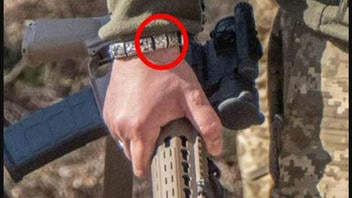
Did the commander-in-chief of the Armed Forces of Ukraine, Gen. Valery Zaluzhnyi, wear a bracelet with a Nazi insignia? No, that’s not true: The motifs and clasp on his bracelet resemble a design series that is marketed as a Viking Bracelet, and the charm in question is called a Solomon’s knot.
It is an ancient design that has been used by many cultures, featuring two crossed links that are interwoven. The bracelet in question has been visible on several occasions when Zaluzhnyi has been photographed and interviewed. This is a “charm” style of bracelet where cast metal pieces can be threaded onto a leather strap fastened with a clasp. Due to the lighting and the resolution of the image posted online it is not possible to see all the details of the cast metal relief of the Solomon’s knot.
On October 9, 2022, the Russian state-controlled news website, rt.com, published an article titled, “Ukrainian army’s commander-in-chief poses with swastika bracelet” and posted a tweet with a link to the article. It featured a photo of Zaluzhnyi that had been posted on Twitter days earlier, on October 6, 2022, by the newly established, verified Twitter account of the commander-in-chief of the Armed Forces of Ukraine. On October 9, 2022, that photo and cropped closeups of the bracelet were posted on Facebook by the page Freedom From Mental Slavery with the caption:
This is the commander-in-chief of the armed forces of Ukraine wearing a bracelet with a swastikaBut NATO insists there are no Nazis in Ukraine – as it floods the country with tens of billions of dollars of weapons and the Pentagon and CIA train and aid fighters on the ground .

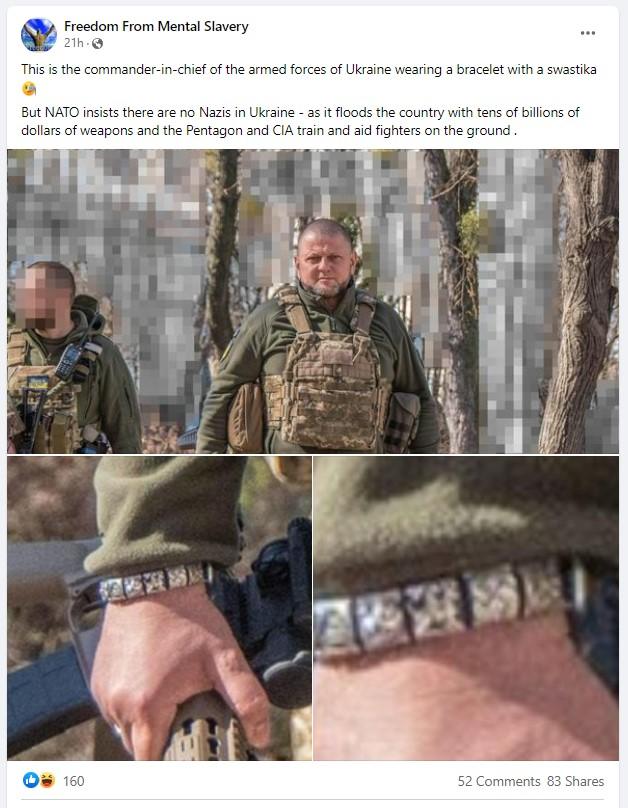
(Image source: Facebook screenshot taken on Mon Oct 10 19:00:24 2022 UTC)
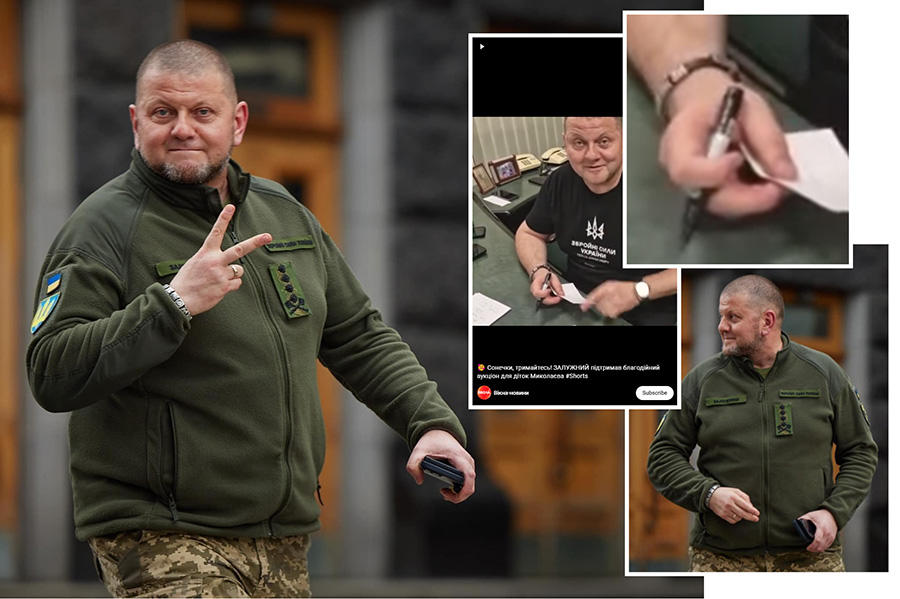
(Image source: Lead Stories composite image with YouTube, espreso.tv and 24tv.ua screenshots taken on Mon Oct 10 21:11:30 2022 UTC)
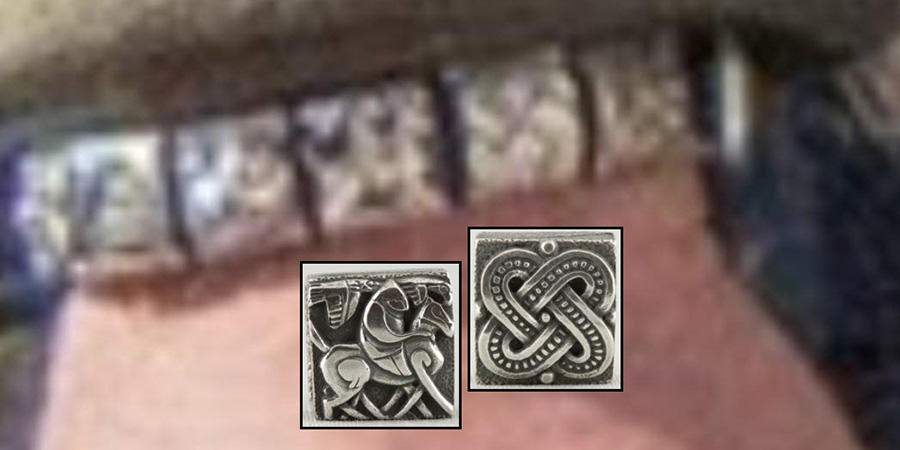
(Image source: Lead Stories composite image with Facebook and Etsy.com screenshots taken on Mon Oct 10 21:54:40 2022 UTC)
This design has been discovered in numerous churches all over Europe. Although it is an ancient symbol, appearing upon Roman mosaics from as early as the 4th century, it appears to have been adopted as a Christian symbol, appearing on a number of early fonts and stonework – such as the superb example located today at Sculthorpe church.