COVID-19 mRNA Vaccine Contaminated by Mystery DNAs and Truncated mRNAs: Health Implications
In this series, “Promise or Peril: Alarming COVID-19 mRNA Vaccine Issues,” we explore how the introduction of mRNA technology lacked an adequate regulatory framework, setting the stage for three major issues: 1) inadequate safety testing of lipid nanoparticles, 2) serious adverse events related to the spike protein, and 3) residual DNA- and lipid-related impurities, as well as truncated/modified mRNA species.
Previously: In Part 1, we introduced how the U.S. Food and Drug Administration (FDA) relaxed the rules for mRNA vaccines compared to mRNA therapies and discussed the available data regarding lipid nanoparticle (LNP) distribution throughout the body based on animal testing, the fact that human testing was not done, and the lack of mRNA or spike protein biodistribution data. In Part 2 and Part 3, we explored how the LNPs are constructed and how they behave in the body and potentially affect health. In Part 4 we took a deeper dive into the potential inflammatory and clotting effects of the spike protein and its subunits.
In Part 5, we turn to the third major issue related to DNA contamination with residual bacterial plasmids and truncated mRNA from the manufacturing process. Are the vaccines more contaminated than our regulatory agencies realize? Should this raise concerns about migration to the gut or their expression by cells?
Summary of Key Facts
- Concerns have been raised about DNA contamination in the mRNA COVID-19 vaccines. The specific concern is the presence of higher than expected residual DNA plasmids used in the original mRNA production. Independent investigations suggest that the Pfizer mRNA vaccine may have high levels of DNA contamination, potentially exceeding regulatory limits.
- There are theoretical risks associated with plasmid DNA expression and migration to the gut, which could affect human health and the microbiome. Additionally, concerns have been raised about the quality control and manufacturing oversight of mRNA vaccines.
- The European Medicines Agency (EMA), Europe’s drug regulatory authority, noted the presence of truncated and modified RNA as impurities in the mRNA COVID-19 vaccines, raising the need for oversight.
- Related to the manufacturing process, a Danish study compared the rate of adverse events to the batch size (number of doses in a batch) and found a correlation.
The Advisory Committee on Immunization Practices met last week to recommend the updated COVID-19 vaccine. (pdf) However, the manufacturers presented little data from testing in humans. Moderna was the only manufacturer to present safety and antibody response data from experience with 101 individuals. Pfizer presented antibody response data from 20 mice and is currently collecting data from 400 individuals in clinical testing. No data on manufacturing oversight was presented during the meeting.
As part of the safety evaluation of drug approval, the CMC process (chemistry, manufacturing, and controls) becomes critical in identifying and eliminating impurities. It sets strict standards and product specifications to maintain the purity of each batch. Compliance with these standards is essential for obtaining approval from global health authorities.
Related Stories

Imagine you are a coffee drinker, and you decide to buy a bag of premium, freshly ground coffee beans from your favorite store. You expect that each bag contains pure, high-quality coffee grounds to brew that perfect cup of coffee. However, when you open the bag, you discover that it’s not just coffee grounds; it also contains a mixture of sand and other foreign particles. This unexpected impurity completely ruins your experience.
Just as you rely on the purity of your coffee grounds for a great cup of coffee, the pharmaceutical industry, including vaccine production, has regulations in place to ensure good manufacturing practices. Patients and consumers expect that these guidelines mean drug or vaccine formulations are free from unwanted substances, ensuring their safety and effectiveness.
Controlling impurities in traditional chemical products is a well-established practice, but for biological products like mRNA-based vaccines, managing impurities presents unique challenges.
mRNA Products Contain ‘Gene Factories’
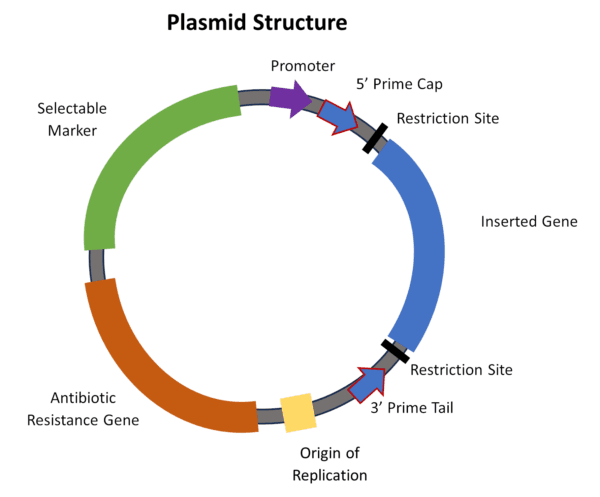
Double-stranded DNA (dsDNA) is used to make the mRNA contained in the COVID-19 vaccines. Tiny dsDNA plasmids are small engineered gene factories (Figure 1). These factories produce the mRNA strands contained in the LNPs. A plasmid appears like a tiny micro-bracelet with different segments representing different pieces of genes.
Regulatory agencies like EMA—Europe’s drug regulatory authority—set limits for the number of plasmids in the final lots distributed for injection. New questions have been raised about how much contamination there is, and whether the FDA is monitoring this. It is also unclear whether the plasmids can merge with human genes within the cell or travel to the gut.
There are at least two independent groups of investigators who have conducted lab tests and confirmed the mRNA vaccine of Pfizer has been contaminated by DNA.
Obviously, future investigations should attempt to establish contamination levels using unexpired doses with an intact cold chain.
Professor Phillip Buckhaults, who holds a doctorate in biochemistry and molecular biology and is considered an expert in cancer genomics research at the University of South Carolina, performed an independent analysis for the presence of DNA in Pfizer batches.
“The Pfizer vaccine is contaminated with plasmid DNA. It’s not just mRNA. It’s got bits of DNA in it. This DNA is the DNA vector that was used as the template for the in vitro transcription reaction when they made the mRNA. I know this is true because I sequenced it in my own lab.”
We will continue to follow this line of research.
Theoretical Risk of Plasmid DNA Contamination
While having some DNA in a sample is unavoidable and deemed acceptable, some have raised questions about the possibility for genomic integration of the DNA. Our cells use DNA in the nucleus to make protein, so if the plasmid DNA gets into the nucleus, there is a theoretical risk that it can get transcribed and make a protein.
Professor Buckhaults further commented in his testimony:
Concerns About DNA Migration to the Gut
Related to the DNA contamination is the concern about residual expression vectors, or plasmids, in the vials. To make a billion doses of mRNA vaccine, more than a kilogram of DNA is required. Plasmids help produce the DNA by splicing in the desired sequence into a bacterial plasmid (Figure 1).
Then workhorse bacteria, often E. coli, help spin out the DNA for production. These bacteria have an extra burden: They must replicate not only their own genome but also the plasmid DNA inserted within their genome. This takes slightly more time, so the bacteria without the additional DNA will eventually outcompete those with the DNA.
Truncated mRNA Contamination
Nucleic acid contamination with truncated, or shortened, mRNA fragments is something that EMA has been following since February 2021. On page 35 of the EMA assessment report (pdf) on the BNT162b2 mRNA vaccine reviewed in Part 1, the EMA states, “Truncated and modified RNA are present as impurities.” The agency noted that the impurities were found at different levels during production. For instance, levels may be higher in smaller test batches than in larger commercial batches.
The EMA asked for additional testing but allowed distribution to go forward. The scientists believed these fragments were unlikely to be intact mRNA fragments. An intact mRNA fragment needs to have a cap and a tail. The cap and tail are needed to tell the cell when to start and stop producing the spike protein.
Nevertheless, the EMA requested additional reports. The agency was concerned that an autoimmune reaction could be triggered if fragments’ potentially encoded proteins resemble human proteins. In other words, if the fragments “mimic” human proteins, antibodies could be developed against our own bodies.
“Any homology between translated proteins (other than the intended spike protein) and human proteins that may, due to molecular mimicry, potentially cause an autoimmune process should be evaluated. Due date: July 2021. Interim reports: March 2021, and on a monthly basis,” the EMA stated.
This issue of contamination by DNA and mRNA fragments should also be explored further to understand whether certain lots were affected more than others. We also need to know whether DNA contamination is linked to adverse events. The EMA should strictly follow its monitoring standards.
The issue of having any DNA contamination is biologically unavoidable given that the mRNA is transcribed from DNA vectors. The potential issue here is the unusually high level of DNA contamination involved in the mRNA vaccines.
◊ References
Alana F Ogata, Chi-An Cheng, Michaël Desjardins, Yasmeen Senussi, Amy C Sherman, Megan Powell, Lewis Novack, Salena Von, Xiaofang Li, Lindsey R Baden, David R Walt, Circulating Severe Acute Respiratory Syndrome Coronavirus 2 (SARS-CoV-2) Vaccine Antigen Detected in the Plasma of mRNA-1273 Vaccine Recipients, Clinical Infectious Diseases, Volume 74, Issue 4, 15 February 2022, Pages 715–718, https://doi.org/10.1093/cid/ciab465
Schmeling, M, Manniche, V, Hansen, PR. Batch-dependent safety of the BNT162b2 mRNA COVID-19 vaccine. Eur J Clin Invest. 2023; 00:e13998. doi:10.1111/eci.13998
Wong DWL, Klinkhammer BM, Djudjaj S, Villwock S, Timm MC, Buhl EM, Wucherpfennig S, Cacchi C, Braunschweig T, Knüchel-Clarke R, Jonigk D, Werlein C, Bülow RD, Dahl E, von Stillfried S, Boor P. Multisystemic Cellular Tropism of SARS-CoV-2 in Autopsies of COVID-19 Patients. Cells. 2021 Jul 27;10(8):1900. doi: 10.3390/cells10081900. PMID: 34440669; PMCID: PMC8394956.