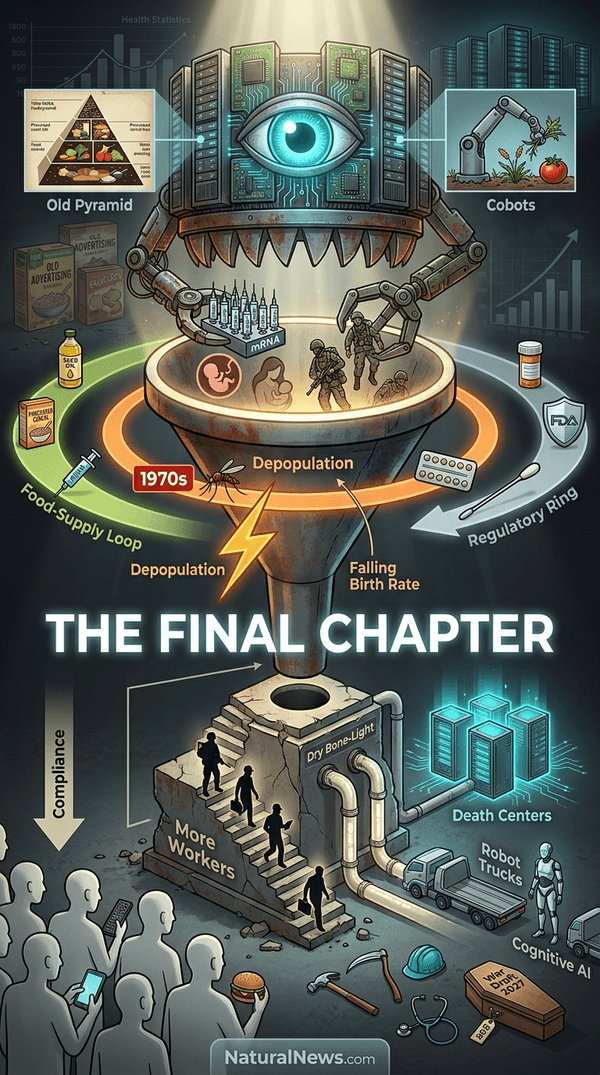
The Looming Shadow of the “Useless Class”
Harari’s Warning: A New “Useless Class” Emerges
In influential circles tied to global institutions, a chilling phrase has entered the conversation: the rise of a “useless class.” Historian and World Economic Forum advisor Yuval Noah Harari has repeatedly warned that rapid advances in artificial intelligence and automation will render vast numbers of people economically irrelevant. In his book Homo Deus and various public statements, Harari describes this emerging group not merely as unemployed but as unemployable, stripped of meaningful contributions to the economic and political systems that define modern power.
Superfluous People: What Happens When AI Replaces Humanity
He has pointed out that in the 21st century, the central economic question may become what to do with “superfluous people” once algorithms outperform humans in most tasks. This is not abstract futurism. It reflects observable trends: AI already displaces roles in manufacturing, transportation, customer service, coding, analysis, and creative fields. Entire professions face obsolescence. When millions cannot secure stable employment, societies risk labelling them burdens rather than citizens with inherent worth.

Echoes of “Useless Eaters”: From Nazi Eugenics to Modern Efficiency
This language echoes darker historical precedents. The term “useless eaters” originated in early 20th-century eugenics and Nazi propaganda, where authorities deemed the disabled, elderly, or unproductive as drains on resources unworthy of life. Those regimes justified sterilization, euthanasia, and gruesome experiments on living humans deemed irrelevant, using economic and efficiency as grounds. While today’s discussions avoid explicit calls for elimination, the underlying logic of sorting human value by productivity should alarm anyone who values individual dignity.
Schwab’s Fourth Industrial Revolution: Mass Redundancy Ahead
Harari’s warnings align with broader elite conversations about technological disruption. Klaus Schwab, founder of the World Economic Forum, has addressed the Fourth Industrial Revolution and its potential to create redundancy for many workers. The concern is real: without robust adaptation, large segments of the population could become dependent on state or corporate systems, vulnerable to control.
Georgia Guidestones: The Elite Blueprint for Drastic Population Cuts
This feeds into visions of a restructured world. The Georgia Guidestones, a controversial monument erected in 1980 in Georgia and later destroyed, laid out ten guiding principles for humanity. Its first commandment declared: “Maintain humanity under 500,000,000 in perpetual balance with nature.” That explicit target of drastic population reduction (over 90%) has fueled suspicions about long-term agendas among some influential figures who see overpopulation as a crisis. It underscores a mindset that prioritizes global limits over unfettered human flourishing.
15-Minute Cities and Depopulation: Easier Rule Over Fewer Subjects
Critics argue that depopulation pressures, whether through policy, technology, or subtle incentives, serve a strategic purpose. A smaller global population would make centralized rule far simpler for oligarchs and technocrats. Concepts like 15-minute cities, promoted as sustainable urban planning where residents access work, food, healthcare, and leisure within a short walk or bike ride, illustrate the point. Proponents highlight reduced emissions and convenience. Yet skeptics see them as prototypes for contained zones: easier to monitor, restrict movement within or between, and enforce compliance through digital systems and surveillance. In a depopulated world with AI handling production, the need for expansive human labor and freedom of movement diminishes. Elites could manage compact, dependent populations more effectively, where dissent or excess can be easily isolated.
AI Job Apocalypse: Creating the Perfect Storm of Control
The fusion of AI-driven job loss and these control-oriented frameworks paints a grim picture. Displaced workers, stripped of purpose and economic agency, risk being recast as “useless” burdens in the eyes of systems optimized for efficiency. Harari himself has noted the profound inequality this could create, with a small elite of data owners and tech masters holding unprecedented power over the masses.
Euthanasia Explosion: From Terminally Ill to Depressed, Mentally Ill, and Children
Compounding these concerns is the rapid expansion of euthanasia laws across several nations. What began as a limited option for the terminally ill has broadened dramatically to encompass the depressed, mentally ill, and even children. In Canada, Medical Assistance in Dying (MAiD) has surged since its introduction in 2016. By 2024, there were 16,499 reported MAiD provisions, accounting for over 5 percent of all deaths in the country, with cumulative totals nearing 76,000. Cases increasingly include individuals with non-terminal conditions, disabilities, and vulnerabilities tied to poverty or isolation. In the Netherlands, total euthanasia deaths reached 9,958 in 2024, a 10 percent rise from the prior year. Psychiatric cases alone jumped to 219 from 138 in 2023, with a sharp increase among younger people under 30. Belgium and other jurisdictions show similar patterns of extending to minors. This normalization risks categorizing those with chronic illness, depression, or mental health challenges as burdens on the system. It reinforces the “useless eaters” logic by offering death as a solution to suffering that could instead prompt investment in care, community support, and human dignity. Such policies align conveniently with broader depopulation narratives, reducing pressure on resources while framing elimination as compassion.
Reject the Dehumanization: Humanity Is Not Disposable
This is not inevitable doom, but a warning worth heeding. History shows that when governments and billionaires frame large groups as problems to solve rather than people to empower, liberty erodes. Policies must prioritize human adaptation, education for resilience, decentralized innovation, and above all, the principle that every individual possesses intrinsic value beyond their output in some grand economic machine.
The Elite Technocratic Trap: From Freedom to Tyranny
The elite push toward technocratic governance, population management rhetoric, and AI dominance demands scrutiny. Humanity is not raw material for utopian experiments or cogs in a machine. Rejecting the “useless class” label means affirming that people retain worth regardless of their role in elite spreadsheets. The alternative is a future where freedom contracts, surveillance expands, and entire generations are sidelined into irrelevance. That path leads not to balance with nature, but to tyranny over man.