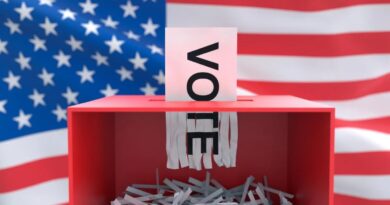
The Riverside Case: California’s Smoking Gun On Election Fraud
The carnival midway has always run on the same principle: the games look fair, but the house always wins. In Riverside County, California, that same principle appears to have been applied to an election.
Advertisement
After a citizen audit uncovered a discrepancy of roughly 45,896 ballots in the November 2025 special election on Proposition 50 (affecting redistricting), Sheriff Chad Bianco’s investigators obtained search warrants, seized more than 650,000 ballots, and began a criminal investigation. Within weeks, California Attorney General Rob Bonta intervened, raced the matter to the state Supreme Court, and obtained a pause that has effectively frozen the investigation. Oral arguments are set for August 24, 2026, with a ruling due within 90 days—potentially after the midterms.
This is not a complicated conspiracy theory. It is a straightforward case of alleged election irregularities followed by aggressive lawfare, including interference, obstruction, and abuse of power, to prevent those irregularities from being examined. All this regarding one of the cleanest, most actionable election-integrity cases in the country if the federal government acts before the midterms.
Advertisement
The Facts of the Sheriff Bianco Case
In early 2026, the Riverside Election Integrity Team (REIT), a local citizen group, completed an audit of the November 2025 special election using the county’s own official records. Their analysis identified a discrepancy of approximately 45,896 ballots between ballots received and ballots counted.
Advertisement
REIT has conducted detailed, document-based audits for several election cycles. The forensic Audit Team associated with REIT produced conclusions serious enough that Attorney John Eastman’s firm filed an amicus curiae brief in the California Supreme Court. REIT’s audit report is part of the court record, and their core finding remains unrebutted: the numbers could not be reconciled.
Following up on these concerns, Sheriff Bianco’s investigators obtained search warrants (here, here, here) from Riverside County Superior Court judges and seized more than 650,000 ballots. A preliminary review already showed shortfalls. One warrant requested a Special Master to avoid any appearance of impropriety.
Advertisement
AG Bonta responded with unusual speed. He asserted authority to exercise “direct supervision” over the Sheriff’s Department and directed the investigation to pause. AG Bonta eventually raced to the California Supreme Court and obtained an extraordinary pause.
In a normal criminal case, the issuing court would typically allow an investigation to proceed until charges are filed. Once a complaint is filed, the hearing court would then consider motions to quash the search warrants during pretrial hearings — ruling from the bench or holding a Franks hearing. Instead, AG Bonta jumped the gun. Through lawfare, he froze the investigation and locked the evidence away until after the midterms. Why?
Advertisement
AG Bonta’s background is in civil litigation and legislation, not criminal prosecution or search-warrant work. That context makes the speed of his intervention striking.
Bonta claims broad “direct supervision” over the sheriff and says the warrants lacked probable cause. Yet multiple judges found otherwise and signed them. Citizen informants who are presumptively reliable supplied specific information from the county’s own records that law enforcement is generally required to investigate. Bonta’s claim that only election officials may hold the ballots becomes circular when the process itself is under suspicion.
Advertisement
In my professional opinion, the search warrant affidavits established more than sufficient probable cause. AG Bonta’s claims that no felony was alleged and that probable cause was lacking do not withstand scrutiny (See briefs filed for oral argument).
The Pattern
In California’s June 2026 primary, late shifts elevated Xavier Becerra to first place and Steve Hilton to second (effectively knocking Sheriff Chad Bianco out of contention in the gubernatorial race), while elevating Nithya Raman over Spencer Pratt in the Los Angeles mayoral contest.
In Wisconsin’s Democratic gubernatorial primary, polls showed progressive state Rep. Francesca Hong with double-digit leads. Nevertheless, the result was a razor-thin victory for establishment-backed David Crowley.
In Minnesota’s Republican gubernatorial primary, polling had shown Mike Lindell competitive or ahead after President Trump’s endorsement; he finished second to Lisa Demuth.
The simplest explanation is not that every major poll failed. It is that the final reported totals no longer matched the votes cast (See Frank Luntz).
In Michigan, Secretary of State Jocelyn Benson directed clerks to delete electronic poll book records within seven days of certification, conflicting with the federal 22-month retention requirement. In Wisconsin’s August primary, five of nine USB sticks used to transfer Milwaukee results contained only audit logs instead of vote totals. Officials called it “human error.” Similar resistance to scrutiny appears in Minnesota.
When the casino is rigged, the public odds and the final payout diverge for reasons beyond normal sampling error.
The Motive: Election Fraud Protects the Money
The same states that fight hardest to block election audits often defend the largest federal-program fraud schemes.
In Minnesota, federal prosecutors have described staggering losses across child nutrition, autism services, taxpayer-funded childcare, and other programs, potentially reaching into the billions. California and Minnesota recently had more than $1 billion in federal Medicaid payments deferred by HHS over high-risk claims. HHS Secretary Robert F. Kennedy Jr. has accused his predecessor, Xavier Becerra, of gutting the Department’s program-integrity staff—reducing oversight of $2.2 trillion in annual payments from roughly 80 people to a handful—and thereby enabling billions in theft.
This same apparatus also diverts federal taxpayer money into social services and housing for illegal aliens—often at higher benefit levels than those available to American citizens. As I detailed in my February 2026 American Thinker article on Washington State’s Health Care Authority, these funds flow through NGOs that extract overhead and recycle money into political campaigns. Election control protects the money pipeline; the pipeline finances the political machine.
Becerra is now the leading candidate for governor of California after a late primary surge. The question writes itself: is the same apparatus that protected the fraud at HHS now working to install one of its architects as governor of the nation’s most populous state?
Election fraud and federal-grant fraud are two sides of the same coin. Control of the vote protects control of the money. That is why cases like Sheriff Bianco’s are met with such ferocious lawfare.
The Legal Opening
This case offers a relatively clean federal opportunity. A focused indictment under 18 U.S.C. §§ 241 and 242 can be built using the court documents already on file. It does not require fully proving the underlying election fraud first. That evidence can come later through superseding indictments, including in the RICO investigation led by Joseph DiGenova in the Southern District of Florida before Judge Aileen Cannon.
The immediate goal is a solid charge at the probable-cause level that puts a clear marker on the wall before the midterms.
Technical Reality
California, including Riverside County, uses a version of the Dominion system (Democracy Suite DS 5.19). The major vendors treat their source code as proprietary and refuse meaningful public examination or real-world red-teaming. Top-tier cybersecurity professionals who work on classified systems consider this unacceptable from a national-security. When results cannot be forensically reconciled—as the forensic Audit Team associated with REIT has shown—the system fails basic standards of verifiability. The current certification regime is largely a feel-good exercise. In short, the casino is rigged.
Conclusion
The Riverside case remains open but frozen. Oral arguments are set for August 24, 2026. Even if the Court eventually rules against AG Bonta and allows the investigation to resume, the delay has already ensured it will be too late to affect the November election.
If the DOJ is serious about election integrity, this is one of the clearest opportunities to act. A focused prosecution for the interference, obstruction, and abuse of power would send a message that the carnival midway is no longer protected by the political party in power.
The house has always counted on no one looking too closely under the counter. That era needs to end.
<img alt captext="American Thinker AI” src=”https://images.americanthinker.com/mi/mifopvrtkxekkl9q01br_640.jpg”>
Image created using AI.
Ron Wright is a retired detective who served 35 years with Riverside P.D., Calif. Ron earned a B.A. in political science from Cal State University, Fullerton, and a Master of Administration from the University of California, Riverside. X @RonTcop