US isn’t importing horse meat and selling it as beef in supermarkets, despite online conspiracies
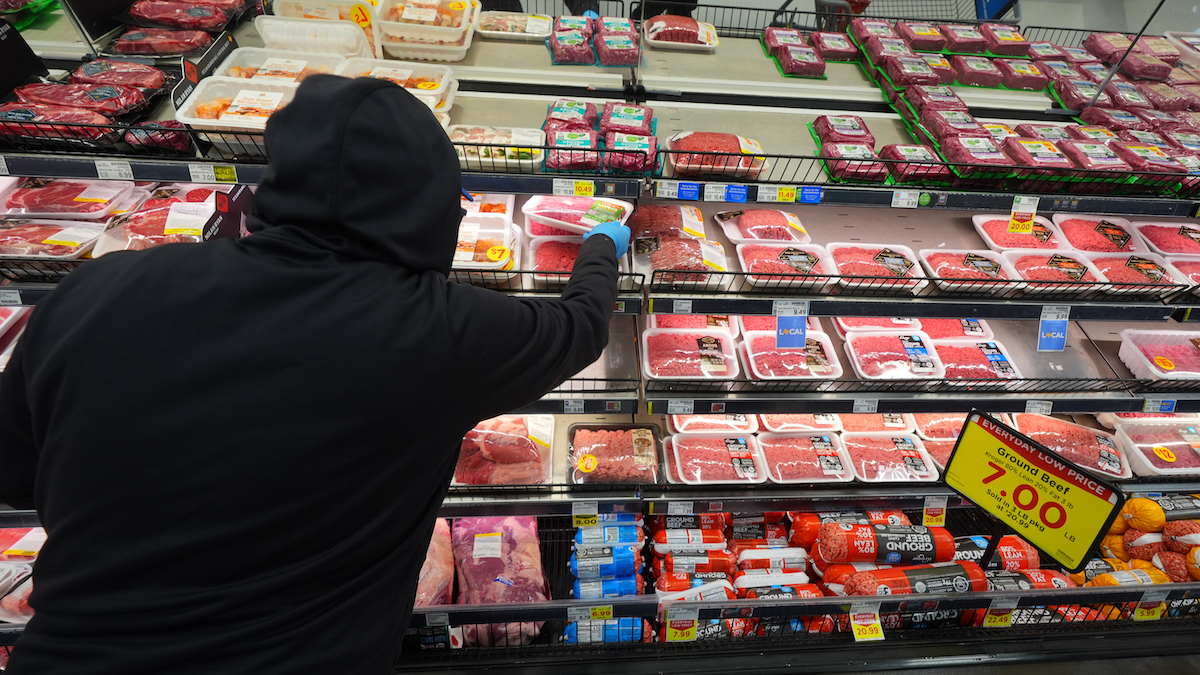
A combination of President Donald Trump’s comments about striking a deal with other countries to ease U.S. beef prices and recent reporting about slaughtered horses ignited online conspiracy theories that horse meat is being covertly sold in U.S. supermarkets.
An Aug. 23 TikTok post has text that says, “Wild Horses are Rounded up for the Slaughter just in time for ‘big beef deal’ with Foreign Governments.”
The man in the video also said, “The beef that you’re eating on store shelves might just be from a foreign country that was buying horses from the U.S. government for the slaughter…So people are now speculating that the beef you are buying from the store might just be horse meat.”.
The post included a brief clip of Trump responding to a reporter’s question about a “beef deal.” In that Aug. 21 clip, he tells a reporter he doesn’t want to say which countries the beef is coming from, but that it will be “highest-quality beef.”
“Stop buying beef immediately. Dont create a market for horse meat,” said the caption of a TikTok post, omitting punctuation.
Other users on X also said the Trump administration is selling horses to foreign countries, which are then importing the meat to the U.S.
A U.S. Department of Agriculture spokesperson told PolitiFact these claims are false, that the U.S. doesn’t import horse meat for human consumption and that it’s illegal to sell horse meat as beef.
Trump’s announcement and The New York Times’ reporting
The USDA said in January the U.S. had its lowest cattle inventory since 1951. Yet consumer demand for beef has grown about 9% over the past decade, the agency said.
Trump said Aug. 21 on Truth Social that to lower ground beef prices for Americans, for the next 90 days, the U.S. will allow up to 300,000 metric tons of beef to be imported tariff-free.
The United States Cattlemen’s Association said in an Aug. 21 statement that importing beef would hurt more U.S. ranchers, who are already facing historically high production costs, international competition, prolonged drought and extreme wildfires that have reduced access to grazing land in many states.
A day before Trump’s announcement, The New York Times reported that the federal government has been rounding up thousands of American horses to control wild populations on public lands. The report said actions by the Bureau of Land Management, the agency in charge of protecting wild horses, created a loophole leading to the cheap selling of horses to buyers who resell them to be exported alive, processed into cuts of meat and sold abroad. Slaughtering wild horses is illegal in the U.S.
The bureau didn’t respond to the Times’ questions about the horses’ sale. The Times reported that “an unattributed statement from the agency said it ‘remains dedicated to placing animals into good homes, protecting their welfare and upholding its statutory responsibilities on behalf of the American public’.”
The bureau also says on its website that it does not sell or send wild horses or burros to slaughter.
How does the meat inspection process work?
The USDA’s Food Safety and Inspection Service ensures that imported meat is safe and accurately labeled. The USDA spokesperson said the agency verifies the certification, labeling and condition of imported meat, poultry and egg products.
The USDA does laboratory sampling of imported products to confirm the product is the species stated on the label, and tests for pathogens and chemical residues, the agency said.
Only USDA-approved meat can be commercially sold; horse meat is not sold for human consumption in the U.S. Some states, such as Texas and Illinois, have laws that specifically ban selling, giving and possessing horse meat intended for human consumption.
Sam Gazdziak, American Association of Meat Processors’ communications manager, told PolitiFact that any beef that enters into a U.S. port is inspected by the inspection agency.
“The U.S. only allows meat imports from selected countries that have an inspection system that is robust enough to be considered equivalent to the U.S. system,” Gazdziak said. “If the shipment isn’t what it says it is, it isn’t permitted into the U.S. marketplace.”
The USDA’s inspection agency coordinates with the government of the importing country before accepting the product, rather than dealing with individual companies.
These imported food products are also expected to go through health inspections in their own countries and are reinspected in the U.S.
Gazdziak said that if a product isn’t inspected in the U.S. and lands on a grocery store shelf, then it’s recalled. As an example, he pointed us to an Aug. 7 recall of about 30,000 pounds of raw beef that were imported from Argentina without being reinspected in the U.S.
“That beef came from a country that was permitted to export to the U.S., but it wasn’t inspected once it got here, prompting the recall,” Gazdziak said.
Typically, the USDA sends experts to a country that wants to import meat to the U.S., so that they audits that country’s meat regulatory system. It also compares the other country’s sanitary measures of inspection with the ones in the U.S., to make sure they’re equivalent.
As of Aug. 25, there are no news reports or USDA recalls regarding beef for being sold as horse meat.
There is no evidence that American horse meat is being imported into the country as beef, and there are guardrails to prevent that from happening. We rate this claim False.