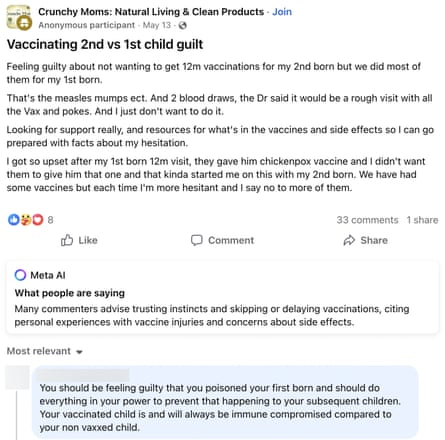
Former Trump Administration Health Adviser Misleads About mRNA Flu Vaccine
Former Health and Human Services Department adviser Calley Means has misleadingly suggested that the new mRNA influenza vaccine from Moderna isn’t safe and doesn’t work well. Less is known about it because it is a new vaccine, but trial data suggest it works better than standard flu vaccines and does not have any serious safety risks.
For the first time, some Americans have the option to receive an mRNA vaccine to protect against seasonal influenza. In August, after a review that found the benefits of the vaccine outweighed the risks, the Food and Drug Administration approved the shot for people ages 50 and up.
The American Academy of Family Physicians has also endorsed it as one of several recommended flu vaccines, including it among preferred options for those 65 years of age and older.

The new vaccine was tested in a large, randomized controlled clinical trial against a standard flu vaccine. The trial included 40,703 people. The group that received the Moderna vaccine had around 27% fewer cases of lab-confirmed illness from influenza than the group that received the regular vaccine, with no apparent major safety risks.
Means, a prominent figure within the “Make America Healthy Again” movement and brother of withdrawn surgeon general nominee Dr. Casey Means, has distorted trial data and some circumstances surrounding the vaccine’s approval to imply in recent interviews that the vaccine is dangerous and ineffective.
Speaking on Joe Rogan’s podcast on Nov. 6 after resigning from his HHS role last month, Means said the vaccine “didn’t work,” with an “almost negligible” reduction in flu, and came with “massive side effects.” When Rogan asked him what these side effects were, Means replied, “It can’t be definitively said, but there were deaths.” Means did not correct Rogan when, in following along with Means’ commentary, the podcast host said the vaccine would “kill people.”
“The FDA sent a study back on the Moderna mRNA vaccine showing that there were deaths in the study group, and showing that it had a paltry absolute benefit, and that there were severe side effects, and they asked for another study to begin,” Means also said in a Nov. 8 interview on CBS News’ “Face the Nation.” An advisory committee ultimately “approved a vaccine that the FDA thought was not safe and effective,” he continued.
Dr. Anna Durbin, director of the Center for Immunization Research at Johns Hopkins Bloomberg School of Public Health, told us that Means’ statements “are not accurately reflecting the safety or efficacy of the vaccine.” Durbin is a member of the FDA advisory committee that reviewed data on the vaccine and voted unanimously that the benefits outweighed the risks.
The FDA did not find that deaths in the trial were vaccine-related, as we’ll explain. The agency also found the vaccine was effective compared with a standard-dose vaccine. But because the standard vaccine already works to reduce illness from flu, the absolute difference was relatively small — even though the results showed Moderna’s vaccine was superior. In addition to providing another flu vaccine option now, having an approved mRNA flu vaccine platform could help in the future if there is a flu pandemic, since mRNA vaccines can be rapidly updated.

Means’ remarks are also contradicted by reporting about the events at the FDA. In February, Dr. Vinay Prasad, then the Trump administration appointee in charge of vaccines at the FDA, initially prevented the agency from reviewing Moderna’s vaccine submission, reportedly over the objections of FDA staff, according to STAT. Prasad objected to the design of the primary clinical trial used to test the vaccine. The trial compared the mRNA vaccine to a standard-dose flu vaccine, and not the vaccines preferentially recommended for adults 65 and older.
The FDA, however, had previously approved Moderna’s plans, and the company was seeking an approval for people 50 years of age and older, not only those 65 and older. Prasad did not cite safety concerns when he initially rejected Moderna’s submission, and he reversed his decision after complaints from Moderna and, according to reporting from multiple news outlets, White House intervention. (The White House has denied being involved.)
Once review was permitted to begin, FDA staff and a committee of independent vaccine experts reviewed the data on Moderna’s vaccine and each concluded it supported the vaccine’s approval. The committee does not approve vaccines but makes recommendations that the FDA then can accept or reject.
In this case, the Moderna vaccine was given full FDA approval for those between ages 50 and 64, for whom the regular vaccine is a standard option. The agency gave the vaccine an accelerated approval for adults 65 and up on the basis of immune response data, with full approval pending a direct clinical comparison to high-dose flu vaccines. Under an accelerated approval, a vaccine is approved for use based on anticipation of a clinical benefit, but that approval can be pulled if additional data do not confirm the benefit. That data is expected in 2030.
We reached out to Means, Moderna and the FDA for comment, but we did not receive replies.
How Well Does the mRNA Flu Vaccine Work?
Experts acknowledged gaps in the data on the mRNA flu vaccine’s efficacy compared with enhanced flu vaccines, but they pushed back against the notion that the vaccine was approved despite being ineffective.
“It’s another effective influenza vaccine, as far as we can tell,” Dr. William Schaffner, a professor of infectious diseases at the Vanderbilt University Medical Center, told us.
Dr. Céline Gounder, an infectious disease specialist and epidemiologist and editor-at-large for public health at KFF Health News, said in comments shared via email that Means’ characterization of the vaccine as having a “paltry absolute benefit” was misleading.
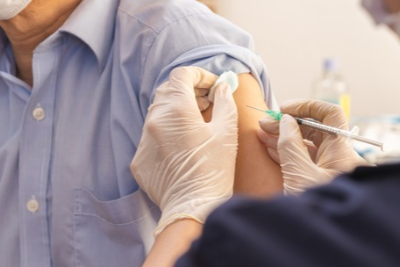
On the Joe Rogan podcast, Means specifically mentioned that the new Moderna vaccine “had a 0.8% absolute risk reduction, which is almost nothing.” This is a figure from a clinical trial that tested the shots.
“About 2% of the mRNA group got flu versus 2.8% of the standard-shot group,” Gounder explained. “That is under one percentage point in absolute terms, but it is measured against another vaccine, NOT against placebo.” That is to say, the mRNA vaccine in clinical trials was more effective than standard flu shots, which already work to reduce a person’s risk of getting sick with flu.
Dr. Margot Savoy, chief medical officer of the American Academy of Family Physicians, told us that this works out to the mRNA vaccine preventing “about one in four of the flu cases that occurred despite vaccination with an existing, FDA-licensed flu vaccine.”
Dr. Keipp Talbot, a professor of medicine at Vanderbilt University who studies viral respiratory diseases in older adults, called the improvement “modest” but told us that even incremental gains in flu vaccine efficacy can have a “big impact,” given the number of deaths and hospitalizations flu continues to cause.
Flu season in the U.S. is underway, and the AAFP recommends that people 6 months of age and older get a flu vaccine. The organization has endorsed the Moderna mRNA vaccine as an “age-appropriate option” for people between 50 and 64, without giving it any preferential status over other available flu vaccines for that age group.
“A small absolute difference in a single flu season is not surprising when both groups receive a flu vaccine,” Savoy said. “For my patients, the added benefit is a lower chance of getting flu on top of the protection a standard shot already gives.” She said that the clinical trial data also indicate people who got the mRNA vaccine were less likely to need to seek medical care or get higher-level care for flu, although the study “was not designed to establish those outcomes definitively.”
Talbot explained that this sort of data on more serious flu outcomes would come as the vaccine is used in larger numbers of people.
For those 65 and up, the mRNA vaccine joins three preferentially recommended vaccines: two higher-dose shots, high-dose Fluzone and Flublok; and Fluad, a flu vaccine with an adjuvant, which boosts the immune response. The Centers for Disease Control and Prevention’s vaccine advisory committee first preferentially recommended these vaccines for this older age group in 2022, based on data indicating they were more effective than the standard shots as people aged. Older people, who are at higher risk of severe complications from flu, often don’t mount as strong of an immune response to vaccines because the immune system weakens with age.
It remains unclear exactly how the mRNA vaccine compares to these preferentially recommended vaccines in older people. Moderna tested immune responses in about 3,000 people in this older age group randomly assigned to either get its new vaccine or high-dose Fluzone, finding better immune responses to the mRNA vaccine.
“I think the messenger RNA vaccine probably is very similar” in efficacy to the enhanced flu vaccines already recommended for older adults, Talbot said. She explained that compared with standard flu vaccines, the mRNA vaccine offers a similar relative improvement in efficacy to the high-dose Fluzone vaccine. Talbot was the lead author of the primary study demonstrating that this high-dose vaccine works better than standard flu vaccines in this older age group.
The AAFP guidelines, together with guidance from other medical organizations, fill a gap left by changes to the CDC’s vaccine advisory committee that would ordinarily review the data on new vaccines and issue recommendations on who should take them.
In June 2025, HHS Secretary Robert F. Kennedy Jr. disbanded and reconstituted the group, which proceeded to make various vaccine recommendations that vaccine experts said were not rooted in the scientific evidence. A judge subsequently found that the new committee had not been properly assembled under administrative procedures and temporarily blocked its changes to vaccine recommendations. Since then, the committee has not met, and the CDC website says that recommendations for seasonal flu vaccines as of July 2025 remain in place.
Not everyone agrees that the mRNA vaccine should necessarily be placed on par with the existing enhanced flu vaccines for older adults.
Schaffner, who has served on the CDC advisory committee and its work groups in the past, said he thought that the panel would not have included the new vaccine among the preferred options this year “because we don’t have sufficient efficacy data over a series of years.”
“The direct comparison with high-dose vaccine showed better immune responses with the mRNA vaccine, but it wasn’t a clinical-efficacy trial,” Dr. Paul E. Sax, clinical director of infectious diseases at Brigham and Women’s Hospital and a professor of medicine at Harvard Medical School, wrote in an opinion piece in NEJM Voices, while noting the increased side effects after vaccination such as soreness and headache, called reactogenicity.
“Until we have clinical evidence showing that this increased reactogenicity buys us something over the enhanced vaccines we already have, I’m sticking with those established options for my patients over 65,” he said.
What’s Known About the mRNA Flu Vaccine’s Safety?
While the mRNA flu vaccine does come with more expected and temporary side effects and vaccine safety monitoring is ongoing, the clinical trials did not reveal serious safety issues.
“We have been telling doctors that if your patients want the mRNA vaccine, let them know that they’re going to expect a bit more of a sore arm, redness and tenderness in the arm, and maybe a little bit of fever or feeling puny for a day or so,” Schaffner said.
In the New England Journal of Medicine article describing the clinical trial results, the researchers reported that more than 65% of people who got the mRNA vaccine had pain at the injection site, versus just around 30% of those who got a standard vaccine, for example. About 45% of people who received the mRNA vaccine reported fatigue, versus around 20% of those getting the standard shot, and 38% versus 18% reported headache.
Savoy said that increased side effects such as a sore arm or feeling “tired or achy for a day or two” are “trade-offs” that she discusses with patients considering the new vaccine. “Serious adverse-event rates were similar in the published trial, although that does not mean every rare risk has been ruled out,” she added.
The New England Journal of Medicine article noted that 0.2% of the people participating in each arm of the trial died, but that these deaths were not believed to be related to vaccination. Some deaths are expected to occur naturally in vaccine trials for reasons unrelated to the vaccines, particularly in a study population with people who are older and have various health conditions, Talbot said.
In reviewing the vaccine, FDA staff pooled safety data from multiple clinical trials including more than 70,000 people, again finding similar rates of serious adverse events and death among people getting the mRNA vaccine versus the standard dose. However, after drilling down into more specific categories of death, the FDA found there were 23 deaths from unspecified causes among people who got the mRNA vaccine versus nine among those who got the standard vaccine.
“Sometimes our information on death is not very good,” Talbot explained, and there is no listed cause. In the case of the unspecified deaths in people who received the mRNA vaccine, there was no autopsy data or systematic review of the cause of death, making it difficult to determine definitively what caused them, the FDA reviewers wrote.
However, the FDA reviewers noted that these deaths occurred a median of 131 days after vaccination and there was no clustering of when the deaths occurred. As we’ve said, they concluded it was “unlikely” the deaths represented a safety signal related to vaccination with the mRNA vaccine, based on the timing of the deaths, the lack of a difference in total mortality between trial arms, and the high rate of health conditions among those who died. The FDA noted that Moderna has committed to further study to monitor for deaths and certain other serious problems.
If there were an imbalance in total deaths among people getting the mRNA vaccine versus the standard vaccine, “I would be much more concerned” than only seeing an imbalance in unspecified deaths, Talbot said.
Because clinical trials are not large enough to capture very rare serious problems following vaccination, she said, such as an event happening in 1 in a million people, continued safety monitoring is “really important.”
But contrary to Means’ suggestions, there is no overt safety problem with the Moderna vaccine, according to the clinical trial data.
Editor’s note: FactCheck.org does not accept advertising. We rely on grants and individual donations from people like you. Please consider a donation. Credit card donations may be made through our “Donate” page. If you prefer to give by check, send to: FactCheck.org, Annenberg Public Policy Center, P.O. Box 58100, Philadelphia, PA 19102.